











Mumbai: The scrambler was never designed in a boardroom. It was built in a backyard. In the 1920s and 1930s, British riders began stripping down production motorcycles, raising exhausts, fitting knobbier tyres, and removing anything that was not essential, to race across the mixed unpaved terrain of rural England in events simply called scrambles. They swapped heavy frames for lighter ones, replaced road tyres with knobby ones, and sent fenders into retirement. Every rider ended up looking, as the period phrase went, like a mud merchant. BSA was among the marques most closely associated with this early culture.
By the 1940s and 1950s the format had matured from backyard rebellion into serious competition. Jeff Smith, a BSA factory rider, won the 500cc Motocross World Championship in 1964 and 1965 on BSA machinery, becoming the first British rider to claim the premier division title and the last to win it on a four-stroke engine before two-stroke technology changed the sport entirely. Women riders were also at the front from the beginning, their wins, as the BSA archive shows, taking the world by storm at a time when motorsport was assumed to belong to men. Smith passed away in March 2026 at the age of 91, just weeks before BSA launched its new Scrambler 650 in India. The timing is coincidental. The resonance is not.
The scrambler's cultural life extended well beyond competition. As the format crossed the Atlantic, it found a home in California's desert landscape, where riders would cruise the streets of Los Angeles and veer straight into the Mojave. It became the motorcycle of choice for people who refused to be defined by a single surface. It was never quite a road bike and never quite an off-roader. That was entirely the point. The modern scrambler revival came in the early 2000s, led by Ducati and Triumph, who understood that a generation of riders was looking for something that felt real and unpolished in an era of increasingly managed, digital motorcycling experiences. The scrambler became a cultural object as much as a performance one: instinct-led, aesthetically conscious, uninterested in rigid categories.
"Scramblers will redefine Indian riding culture the way SUVs redefined passenger four-wheelers. Between the Yezdi 350 and the BSA 650, we have just defined what the Indian scrambler can be."
Anupam Thareja, Co-Founder, Classic Legends
In India, that identity arrived late and slowly. Classic Legends made the first serious attempt to bring the format to mainstream Indian buyers when it launched the original Yezdi Scrambler in 2022, the country's first factory-custom scrambler built for the premium segment. It landed in a market still largely defined by utility-first thinking. Boman Irani, Co-Founder of Classic Legends, describes growing up around an underground scrambler movement in India, riders adapting machines for roads that were not always roads, finding the scrambler's spirit before they had a name for it. That history is real. Classic Legends is now trying to formalise it into a category.
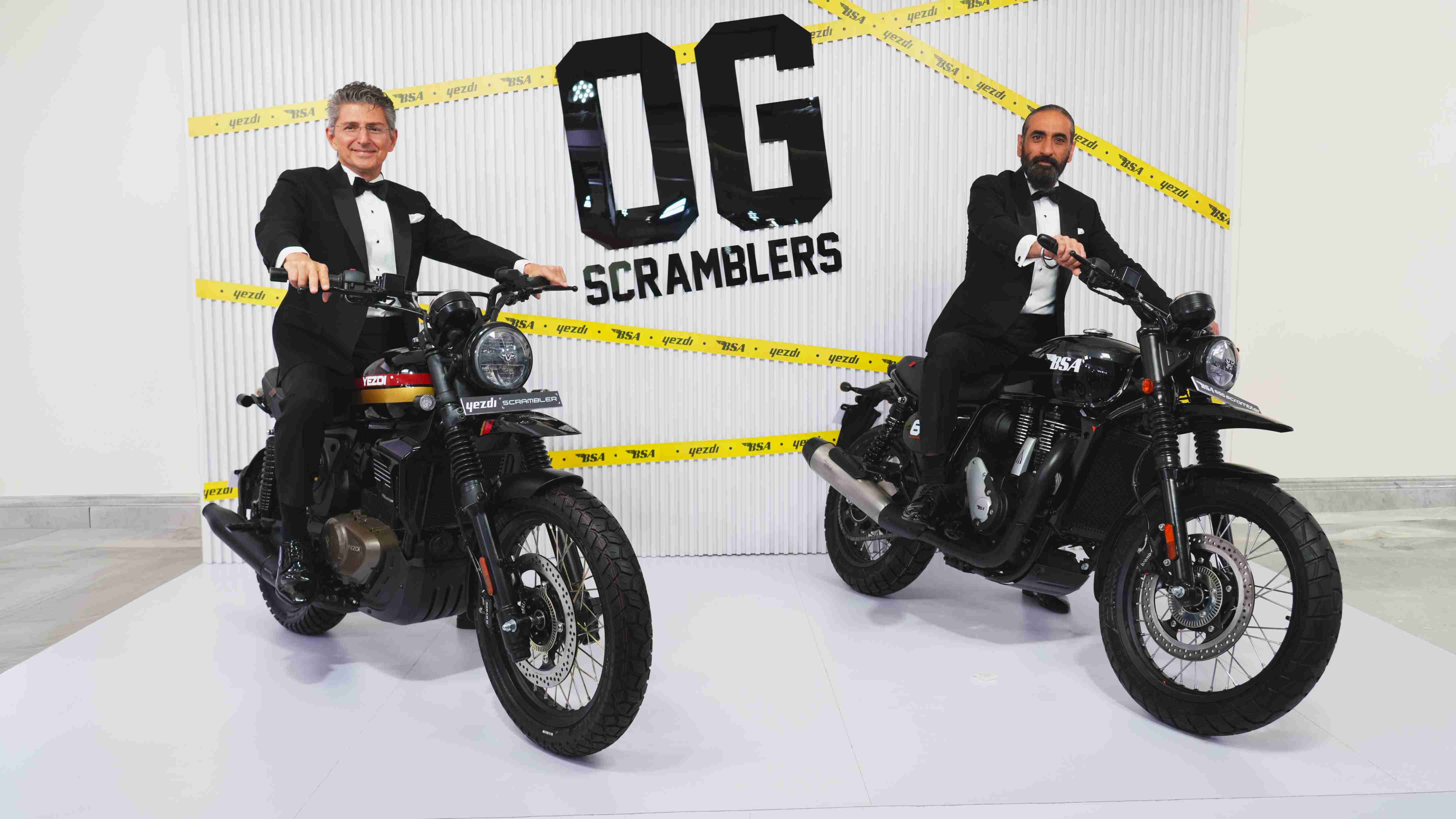
Boman Irani and Anupam Thareja, Co-Founders, Classic Legends, with the new Yezdi Scrambler 350 and BSA Scrambler 650 | Image credit: Classic Legends
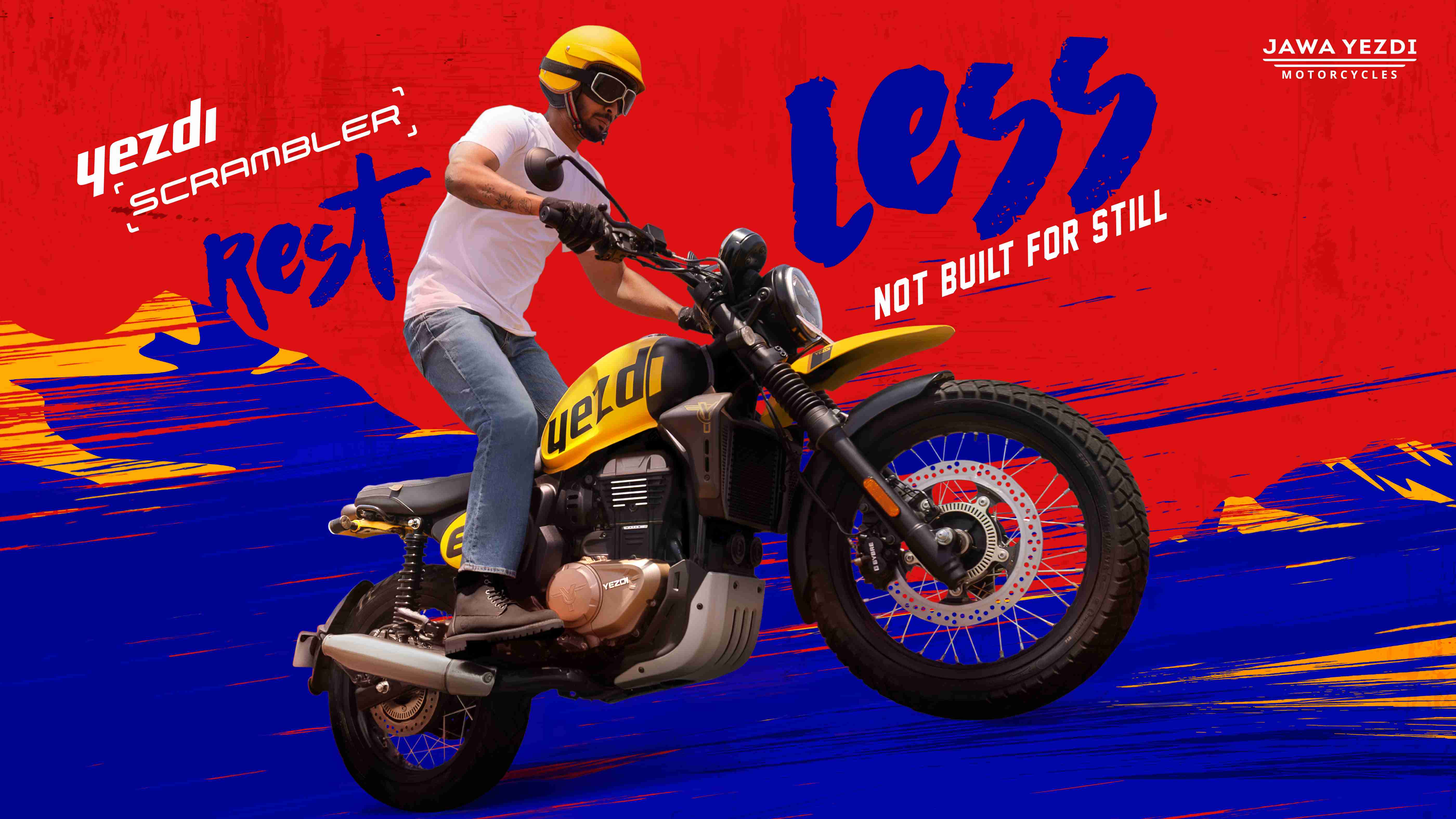
The two new launches bracket that category at both ends. The Yezdi Scrambler 350, starting at Rs 1,99,950, is built around an all-new liquid-cooled 350cc engine called Katar, India's lightest scrambler at 174 kg. The performance brief is calibrated for real Indian conditions: 30 PS, 30 Nm, 30 km/l. A horizontally oriented radiator manages thermal load for urban riding through Indian summers. The design carries the visual grammar of the original scrambler: raised front beak, tight rear fender, factory-custom aesthetic, with a nod to Yezdi's rallying legacy in the 69 graphics. Available in Legacy Black, OG Yellow, Rogue Red, and Rally Blue.
The BSA Scrambler 650, starting at Rs 3,24,950, draws directly from the same lineage that Jeff Smith raced to two world titles. India's only 650cc single-cylinder engine in the segment produces 45 PS and 55 Nm, with peak torque at 4,000 rpm. The design references the Gold Star Catalina, the A10 Spitfire, the A65 Firebird. Chrome accents, sculpted tank, flat ribbed bench seat, exposed subframe. This is not a motorcycle inspired by scrambler culture. It is a motorcycle made by one of the original architects of it. Available in Raven Black, Victor Yellow, and Thunder Grey.
"Yezdi has always belonged to riders with a flair for style and little patience for rigid labels. Each ride carries a sense of mischief that has always been a part of the Yezdi experience."
Boman Irani, Co-Founder, Classic Legends
What Classic Legends is doing with these two launches is using cultural legitimacy as a market-building tool. BSA's scrambler lineage is real and documented, stretching from the hand-modified machines of the 1940s through Jeff Smith's world championships to the Gold Star Catalina that the Scrambler 650 draws from today. Yezdi's Indian roots are genuine. By placing both brands together in a single launch, Classic Legends is making a claim on the entire history of the format, from the British dirt tracks of the 1930s to the Indian backroads of the 1970s to the premium motorcycling market of 2026.
The question the dual launch still leaves open is whether the cultural argument translates into category scale. Royal Enfield's Scram 411 and Triumph's Scrambler 400 X have added serious competition to the segment since Yezdi created it in 2022. Classic Legends is betting that being the format's originator in India, combined with the heritage weight of BSA at the top end and Yezdi's emotional resonance at the entry level, gives it a differentiation that engineering alone cannot replicate. That is the right bet to make. Whether the numbers follow is what the next year will show.


