











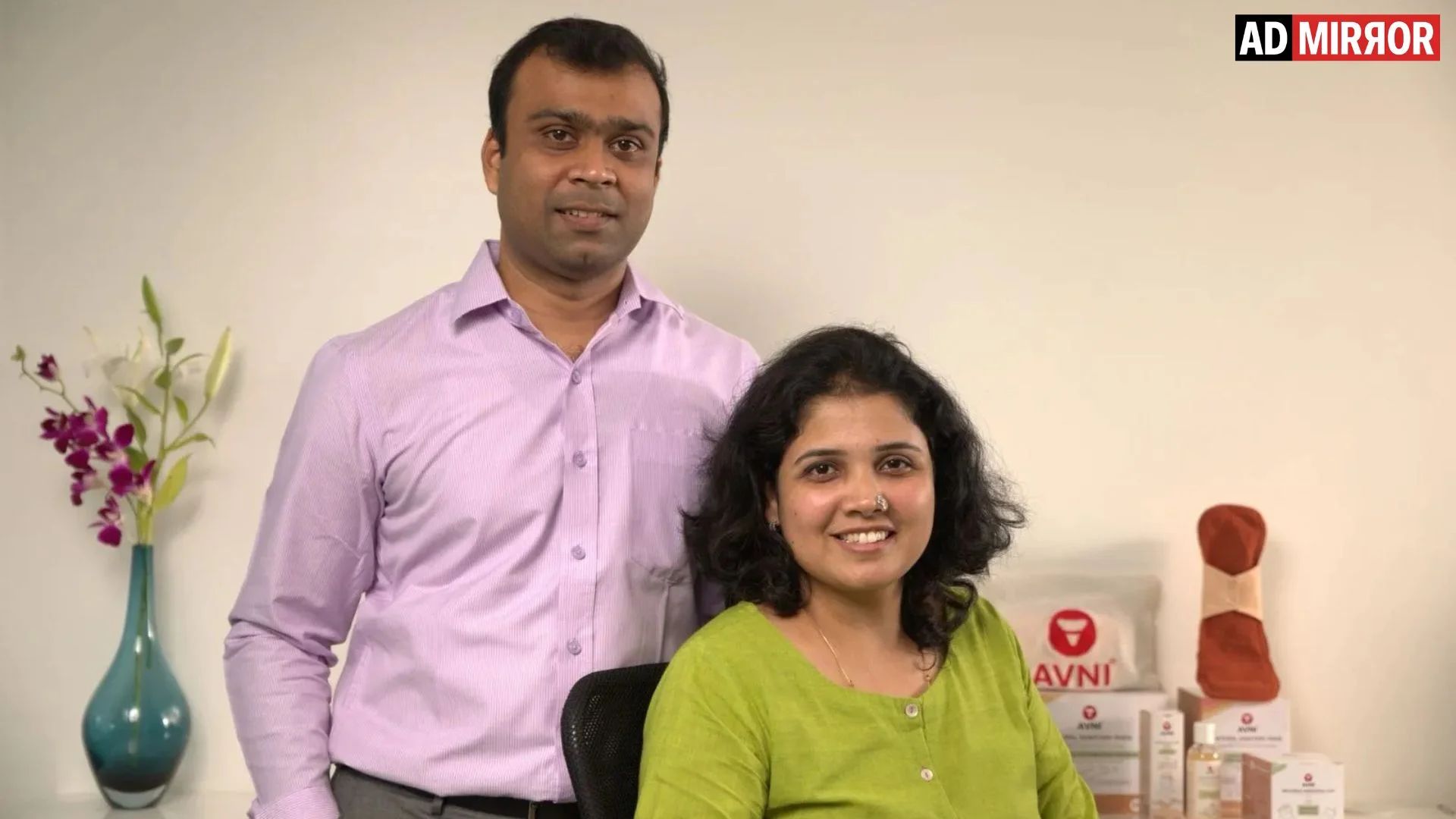
Mumbai: Women's wellness in India has long been fragmented around a few days of the menstrual cycle. Avni Wellness is betting on a much bigger opportunity: the entire 28-day cycle and the broader health needs of women across life stages.
In an conversation with Admirror, Sujata Pawar, Founder, Avni Wellness, discusses the brand's ambition to move beyond conventional menstrual hygiene and build an integrated women's wellness ecosystem spanning menstrual care, cycle-based nutrition, iron deficiency, PCOS, calcium support, UTI and vaginal health.
With the business already crossing Rs 7 crore in ARR, Pawar outlines how Avni is balancing science-backed products, consumer education, sustainability and digital-first distribution. She also explains why the next phase of growth will require moving beyond D2C and marketplaces into quick commerce, offline retail and a women-led micro-entrepreneur network targeting 10,000 entrepreneurs.
Avni is positioning itself beyond the five days of menstruation to address the entire 28-day cycle. How are you building this proposition into a distinct women's wellness category rather than simply extending a period-care brand?
When we started Avni, we saw that women's health was often viewed too narrowly. We usually talk about periods for just a few days each month, but the changes women go through last much longer. Nutrition, energy, hormones, PCOS, iron levels, and overall well-being are all part of the bigger picture. This is why we are shaping Avni to support the whole menstrual cycle, not just menstrual hygiene. Our products cover both menstrual care and nutrition, and we want these areas to work together. Instead of simply adding more period-care products, we aim to create a system where women can find solutions for different needs throughout their cycle and at every stage of life.
Safety, sustainability, and science-backed formulations are increasingly common claims in women's wellness. How do you ensure these become meaningful differentiators for Avni rather than just marketing language?
For us, these qualities must be clear in the product itself. They can't just be claimed on the packaging. We pay attention to the materials we use, how each product is designed, what goes into the formula, and whether there's a clear reason for offering it. For example, our antimicrobial reusable pad was created to make reusable menstrual care more practical and address hygiene concerns. We use the same approach for our nutrition products. When we talk about iron deficiency, we focus on the formula, how well it's absorbed, and the real nutritional need, instead of just labeling it as a wellness product.
"Many women with iron deficiency may think their tiredness is just due to a busy life, not their nutrition. We want to help them understand this, but not make them feel like every problem needs a product."
Menstrual health still requires considerable consumer education in India, particularly when introducing concepts such as cycle-based nutrition. How much of Avni's marketing investment is focused on category education versus conventional brand and performance marketing?
Education is a big part of our work because many of these topics are still new for consumers. Just because a product is available online doesn't mean consumers know why they need it or how it fits into their health. That's why we first explain the problem, then talk about the product. This is especially important for nutrition. For example, many women with iron deficiency may think their tiredness is just due to a busy life, not their nutrition. We want to help them understand this, but not make them feel like every problem needs a product. Performance marketing helps us reach new consumers, but education is what builds a lasting relationship after that first contact.
What has been Avni's marketing playbook so far? Which campaigns, platforms, or creator partnerships have delivered the strongest consumer engagement and, more importantly, translated into acquisition and repeat purchase?
We combine education, digital commerce, and community-led discovery in our approach. Much of our business comes from D2C and ecommerce, so platforms like Amazon and other marketplaces are key for discovery and sales. We also work with content creators to explain our products and the bigger issues around menstrual health and nutrition. But we don't just focus on engagement. For us, repeat purchases and retention matter more because they show if our product has become part of someone's routine. We're still figuring out which formats work best for each category. A reusable menstrual product and a nutrition product need different types of communication, so we don't use one marketing formula for everything.
"Repeat purchases and retention matter more because they show if our product has become part of someone's routine."
As Avni scales, how do you see the media and distribution mix evolving between D2C, marketplaces, quick commerce, and offline retail and what will it take to turn Avni from a digital-first challenger into a mainstream women's wellness brand?
D2C and e-commerce will continue to be important for us because they allow us to understand consumers directly and build new categories. Today, these channels contribute a large part of our revenue. But if we want to reach the next set of consumers, particularly across Bharat, we need to go beyond digital. That is why we are building our women-led micro-entrepreneur network, with a target of reaching 10,000 entrepreneurs. Quick commerce will also play a role in categories where convenience and immediate availability matter. Offline distribution will help us reach consumers who may not discover the brand through digital channels. To me, becoming a mainstream women's wellness brand isn't just about being in more stores or on more platforms. It's about helping women understand our values and offering products they can keep using. That's what we're working toward for the long term.
Who is Avni's core consumer today in terms of age, geography, and life stage? As you scale, do you see the greater growth opportunity coming from metros or from Tier 2 and Tier 3 cities in India?
Most of our customers today are women who want safer menstrual products and are interested in learning about what they use. We have customers of all ages, but younger working women make up a big part of our online community. We also believe women's wellness is not just a metro-city opportunity. Much of the gap we want to address is found across Bharat. The main challenges there are awareness, affordability, and access, not demand. So, we don't plan to choose between metro cities and smaller towns. Digital commerce lets us reach people all over India, and our women-led micro-entrepreneur network helps us build distribution in places where online discovery might not be enough.
Women's hygiene and wellness has become an increasingly crowded space, with established FMCG players, D2C brands and newer wellness companies competing for attention. What is Avni's current market position, and what share of the category are you targeting over the next three to five years?
We don't see our opportunity as just being about sanitary pads. That would limit what we want to achieve. We focus on the bigger picture of women's health and wellness, where hygiene, nutrition, and preventive care are often seen as separate. We want to create a brand that brings all these needs together. Right now, we are less focused on setting a specific market-share goal and more on building our distribution, product range, and consumer trust to become a bigger player in this space. We have already crossed Rs 7 crore in ARR and are investing in growing our portfolio and reaching more women.
"Menstrual hygiene is still a key way for consumers to discover us. It's often the first product they try, and it helps them see our focus on safer and reusable menstrual care."
From reusable antimicrobial pads to supplements and cycle-based nutrition, Avni operates across very different product behaviours. Which categories are currently driving the business, and where do you expect the next phase of growth to come from?
Menstrual hygiene is still a key way for consumers to discover us. It's often the first product they try, and it helps them see our focus on safer and reusable menstrual care. We also see nutrition as a big part of our next phase. Iron deficiency is common among Indian women, and it's an area where menstrual health and nutrition are closely linked. That's why we developed our liposomal iron supplement. We're also creating products for PCOS care, calcium support, UTI and vaginal health, and cycle-based nutrition. Over time, we want our range to reflect the many health needs women have, not just focus on one category.


