











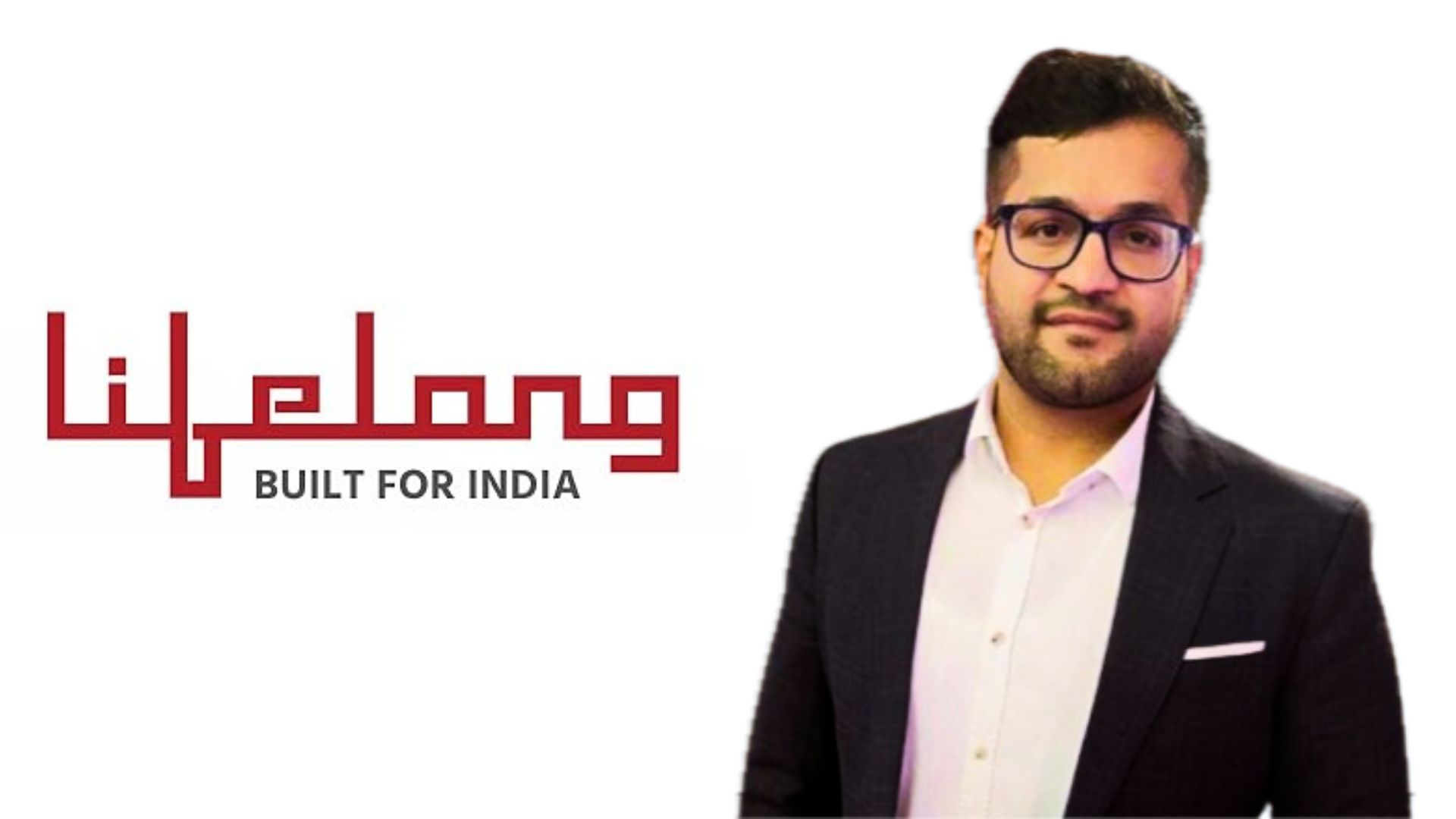
Lifelong Online began as a fitness equipment brand targeting a clear gap in the Indian market: accessible, practical wellness products designed for Indian homes. Today, the brand has crossed ₹1,000 crore in revenue in FY26 and spans fitness, home appliances, personal care and kitchen products, with an offline presence that is generating demand of its own.
In this conversation with AdMirror, Himanshu Mehta, Head of Marketing at Lifelong Online, talks through the brand's expansion logic, the D2C brand-building playbook, how Lifelong balances performance marketing against longer-term brand investment, and where the brand wants to be three years from now.
(Edited Excerpts)
Lifelong started as a fitness equipment brand and has since expanded into home appliances. Walk us through that journey. Was the expansion a planned strategy from the beginning or did the market pull you in that direction?
Lifelong's journey has really been shaped by a combination of strategic intent and market signals. We began with fitness because we saw a clear gap: Indian consumers wanted accessible, practical wellness products, but the market was either too premium, too bulky, or simply not designed for Indian homes.
That insight gave us a strong entry point. Over time, as we studied customer behaviour across marketplaces, reviews, and search trends, we realised the same value gap existed in several adjacent categories such as home and kitchen, personal care, and small appliances.
So the expansion was not random diversification; it was a natural extension of the same philosophy. We asked ourselves where else Indian consumers were overpaying, underserved, or forced to compromise. That is what pulled us into new categories. In that sense, the market showed us the whitespace, but the larger strategy was always about building a trusted value-for-money consumer durables brand for everyday India.
Brand building in a D2C environment is fundamentally different from traditional brand building. You do not have a shop floor, a salesperson, or a physical touchpoint working for you. How has Lifelong approached building brand equity purely through a screen?
In digital-first commerce, your product page becomes your showroom, your reviews become your word of mouth, and your service experience becomes your sales pitch. That is the lens through which we have built Lifelong.
We have not relied on large, traditional brand spends to create perception first and product later. Instead, we have focused on building trust through visibility, ratings, sharp value communication, and a product experience that feels honest.
On a screen, consumers make decisions fast, so clarity matters: what problem does the product solve, what features truly matter, and why is it the right value. That is why we spend a lot of time understanding search behaviour, reviews, and feedback loops.
In many ways, digital brand equity is built transaction by transaction. When a customer finds you easily, sees strong reviews, feels reassured by the proposition, and gets a reliable experience, the screen stops being a barrier. It becomes the brand-building engine itself.
In digital-first commerce, your product page becomes your showroom, your reviews become your word of mouth, and your service experience becomes your sales pitch.
Himanshu Mehta, Head of Marketing, Lifelong Online
The home appliances and fitness equipment categories in India are crowded with legacy brands, aggressive Chinese players, and a wave of new D2C entrants. Where does Lifelong position itself in that landscape, and how do you protect that positioning?
We position Lifelong in the sweet spot between unorganised low-cost players and expensive legacy brands. We are a value-for-money brand, but not a race-to-the-bottom brand. That distinction is very important to us.
Our consumer is not simply looking for the cheapest option; they are looking for dependable features, relevant innovation, and pricing that feels fair. We protect that positioning in three ways.
First, by listening obsessively to demand signals and identifying gaps where consumers are underserved. Second, by keeping tight control over supply chain and manufacturing so that value is built into the system, not just into the pricing strategy. And third, by removing features customers do not really need while investing in the ones that genuinely improve utility.
That helps us stay differentiated even in noisy categories. In a crowded market, positioning is protected not by saying more, but by consistently delivering a product that feels smarter, more relevant, and better priced than the alternatives around it.
Performance marketing can drive sales but it rarely builds brands. How do you balance the pressure of immediate ROI from performance spends against the longer-term investment that brand building requires?
For a digital-first company, performance marketing is often the first growth lever because it is measurable, immediate, and tied closely to revenue. We have certainly benefited from that discipline.
But as a brand evolves, especially into higher-value categories and omnichannel formats, you realise that conversion alone cannot do all the heavy lifting. Brand begins to matter more when the consumer is comparing, trusting, upgrading, or considering you beyond one transaction.
Our approach is to treat performance and brand not as opposing forces, but as stages of the same funnel. Performance helps us capture intent efficiently, while brand investment improves the quality of that intent over time. It lowers friction, improves recall, and creates preference.
Historically, our spends have gone where the customer is, which made sense in an online-first journey. But the next phase requires broadening that playbook. The balance, therefore, is not about choosing one over the other; it is about ensuring short-term efficiency does not come at the cost of long-term pricing power and consumer trust.
Marketplaces like Amazon and Flipkart give D2C brands reach but they also reduce control over pricing, customer data, and brand experience. How does Lifelong manage that tension, and how important is your own website as a channel today?
Marketplaces have played a critical role in Lifelong's scale story because they gave us reach, discovery, and real-time demand intelligence at a national level. They allowed us to understand what consumers were searching for, where the gaps were, and how products were performing across price points.
At the same time, every D2C brand knows the trade-off: marketplaces are fantastic for scale, but they do compress control over customer relationships and brand storytelling. So the answer is not to reject marketplaces, but to use them strategically.
For us, marketplaces remain extremely important because that is where a large part of Indian digital demand already exists. But our own website matters for a different reason: it gives us a more direct brand environment, better merchandising control, stronger service integration, and a clearer long-term relationship with the consumer.
The future is not marketplace versus owned channel. It is about building a healthy channel mix where scale, control, and customer trust reinforce one another rather than compete.
Customer retention is one of the hardest problems in D2C, especially in a category like home appliances where purchase frequency is naturally low. What does Lifelong's post-purchase strategy look like, and how do you keep the brand relevant between purchases?
In categories like ours, retention cannot be viewed only through repeat purchase frequency. It has to be understood as continued relevance, trust, and recall across life moments.
A customer may not buy another appliance every month, but if their experience with installation, service, support, and durability is strong, they are far more likely to come back when the next need arises, or recommend us to someone else. That is why post-purchase is a critical brand-building stage for us.
Our focus is on dependable support, faster issue resolution, warranty and service visibility, and reducing friction after the sale. We also think retention in our category comes from cross-category migration. Someone may enter through a treadmill, then discover a power bank, air purifier, or kitchen appliance.
The brand stays relevant when the consumer sees you not as a one-product company, but as a dependable everyday-value brand. In durables, retention is earned through experience long after checkout.
Most D2C brands in India are eventually pushed toward offline retail as they scale. Is that a direction Lifelong is considering, and what would offline expansion change about how you market the brand?
Yes, offline is clearly becoming an important part of Lifelong's next phase, but we see it as an extension of trust rather than a departure from our digital roots. What is interesting is that our stores initially started as experience centres, but they are now generating meaningful demand on their own.
That tells us there is real value in physical touchpoints, especially in categories where installation, service, or product feel influence purchase decisions. Offline also brings us closer to consumers in markets where organised options are still limited.
But it changes marketing in a major way. Online, products can win through visibility, ratings, and price comparison. Offline, consumers evaluate the brand more holistically. Store experience, merchandising, service promise, and even the confidence of the salesperson begin to shape perception.
So offline expansion pushes the brand from being transaction-led to perception-led. It raises the bar for recall, consistency, and trust. In that sense, offline is not just another channel; it is a catalyst for brand maturity.
Category leadership is not just about market share. It is about owning a conversation. What does Lifelong want to own in the consumer's mind, and are you there yet?
We want Lifelong to own the idea of smart value for everyday living. Not cheapness, not compromise, but intelligent value. We want consumers to think of us as the brand that understands real Indian needs and delivers products that are practical, reliable, and worth the price.
That is the mental space we are trying to build across categories. It is especially powerful because it can travel from fitness to home appliances to other everyday-use products without losing coherence.
Are we fully there yet? I would say we have built strong transactional trust, but the larger emotional and perceptual ownership is still a work in progress. Our scale, category spread, and consumer access have moved significantly, but owning a conversation requires going beyond search-led demand into stronger recall and clearer brand meaning.
That becomes even more important as we expand offline and move into more premium, innovation-led segments. So we are on the path, but the next chapter is about deepening perception, not just increasing presence.
Content, community, influencer marketing, and performance ads are all competing for the same marketing budget. How does Lifelong decide where to put its money, and what has delivered the most consistent returns?
In our case, performance-led channels have historically delivered the most consistent and measurable returns because many of our categories are intent-driven. Consumers are searching for a treadmill, an air fryer, a power bank, or an air purifier with a clear use case in mind. So being visible at that moment matters enormously.
But as the brand becomes broader and more aspirational, the role of content and influencer-led storytelling increases. Content helps explain utility and lifestyle fit. Influencers help add relatability and proof. Community becomes more valuable in categories linked to fitness, wellness, and daily living habits.
So we do not see it as one budget pool being split mechanically. We allocate based on category maturity, average selling price, consideration window, and the role each lever plays in trust creation. Performance has likely been the most consistent driver so far, but brand-led content will become more important as recall and premiumisation grow.
Marketing is ultimately accountable to revenue. How has Lifelong's investment in brand building, performance marketing, and content translated into measurable revenue growth? And as the brand has scaled, which marketing lever has been the most consistent driver of actual rupees?
For us, the strongest proof point is that the business scaled from an online-first model into a company that has crossed the ₹1,000 crore revenue mark in FY26, after reporting more than ₹540 crore revenue in FY25, while also broadening into multiple categories and channels.
That scale did not come from one marketing lever alone; it came from a strong fit between demand sensing, product relevance, channel presence, and conversion efficiency.
In pure rupee terms, performance-driven commerce has likely been the most consistent immediate revenue driver because it captures existing purchase intent and links closely to measurable outcomes. But as the business becomes more omnichannel and enters higher-value segments, brand building starts contributing in a different way.
It improves conversion quality, supports premiumisation, and makes the business less dependent on being the most visible or discounted option at any given moment. So if performance has been the engine of short-term revenue, brand is increasingly becoming the multiplier of sustainable revenue quality over time.
If performance has been the engine of short-term revenue, brand is increasingly becoming the multiplier of sustainable revenue quality over time.
Himanshu Mehta, Head of Marketing, Lifelong Online
Where does Lifelong want to be three years from now, in terms of scale, category presence, and brand perception? And what is the single biggest obstacle standing between where you are today and that version of the brand?
Three years from now, Lifelong should ideally be seen not just as a successful digital-first seller, but as one of India's most trusted consumer durables brands across channels. In scale terms, the ambition would be to deepen leadership across existing categories, expand intelligently into adjacent ones, and build a much stronger omnichannel presence.
In brand terms, we would want to move from being recognised primarily for value to being respected for value plus innovation, reliability, and relevance. That is a very different kind of brand equity.
The single biggest obstacle in reaching that version is execution complexity. As you grow across ecommerce, quick commerce, owned channels, offline retail, and more premium categories, every weakness gets magnified. Supply chain precision, after-sales service, perception management, and operational discipline all become mission-critical.
In my view, after-sales and service consistency will be especially decisive, because in durable products, trust is not built only at purchase. It is built in what happens after the box is opened.


