











Mumbai: As India Inc celebrates International Women’s Day, the conversation around women in leadership is shifting from representation to real influence and decision-making power. Over the past decade, more women have entered boardrooms, leadership panels and CXO roles across sectors from media and marketing to technology and finance. Yet the deeper structural question remains: are women equally present where capital, revenue and growth bets are decided?
Despite progress in visibility, women remain underrepresented in P&L ownership, revenue-driving roles and succession pipelines, the positions that ultimately lead to CEO and board-level leadership. Industry studies repeatedly show that while companies have improved hiring diversity, the transition from inclusion to institutional power remains uneven.
To mark International Women’s Day, AdMirror is bringing together a series of candid conversations with women leaders across industries who are shaping business, communications, marketing and technology in India. In this special series, they unpack the realities behind leadership journeys from bias and career inflection points to the structural changes organisations must make to build more equitable and future-ready leadership pipelines.
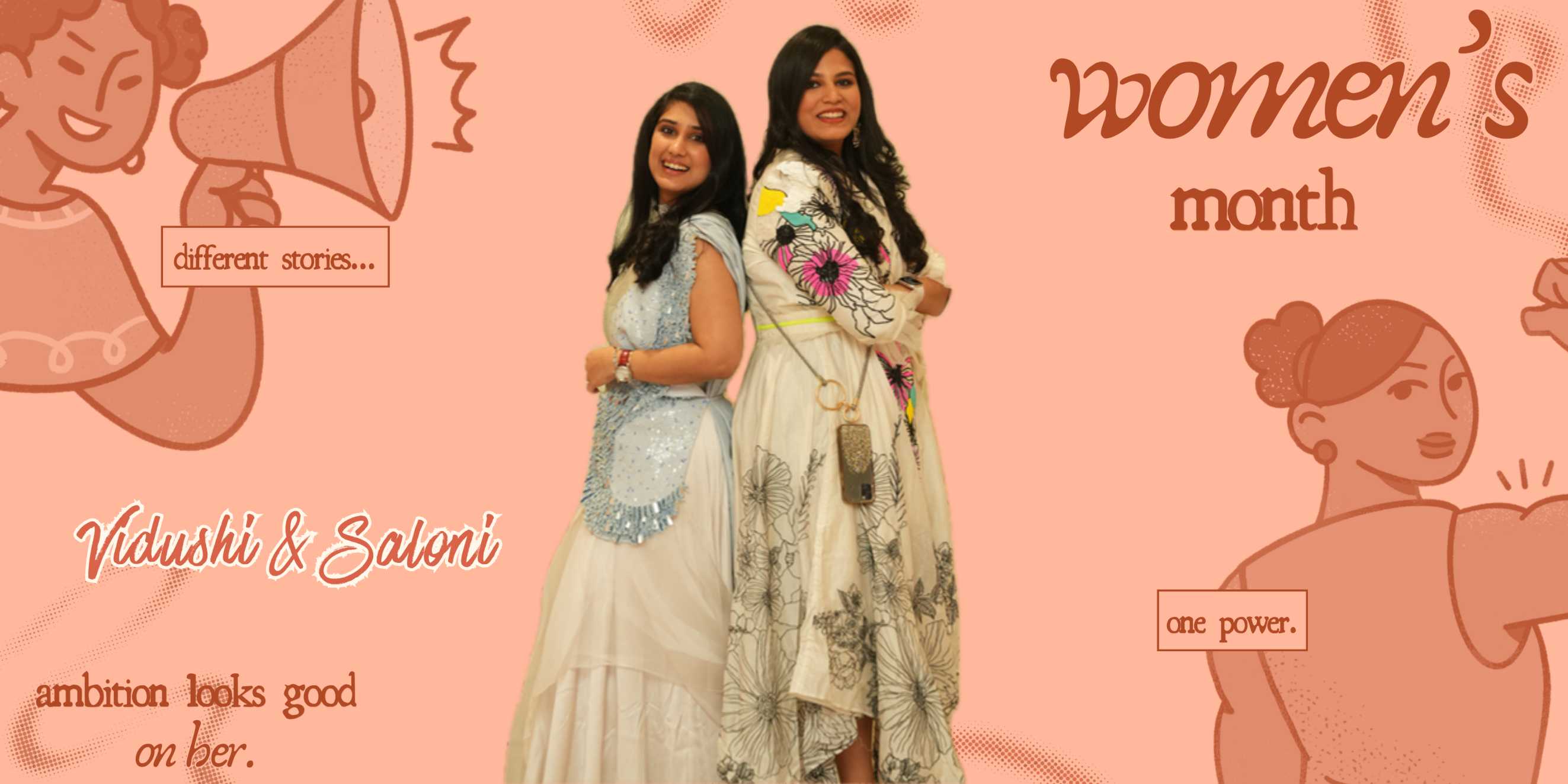
In an industry that often rewards playing it safe, Vidushi Jain and Saloni Shah chose a different path one that celebrates the unconventional. As Co-Founders of Attrangi, they are not just building a creative business, but shaping a mindset that embraces bold ideas, distinct storytelling, and fearless experimentation.
This Women’s Day, they share their journey of navigating entrepreneurship, breaking stereotypes, and creating a brand that stands out by design proving that being ‘attrangi’ is not just an identity, but a strategic advantage in today’s cluttered marketplace.
Edited Excerpts
We've made progress on representation but not necessarily on redistributing power. In your sector, are women included in leadership, or are they actually influencing capital allocation, hiring priorities, and strategic direction? Where does the real decision-making still remain male-dominated?
In the fashion and jewellery space, the optics can be deceiving. You see women everywhere — as designers, as brand faces, as creative directors — and it creates an illusion of equity. But when you follow the money, the picture changes. Who is writing the cheques? Who sits across the table when a D2C brand is raising its Series A? Who controls the supply chain negotiations, the manufacturing relationships, the logistics partnerships? Overwhelmingly, those rooms are still male-dominated.
When Vidushi and I started Attrangi, we made a deliberate choice: we would not just be the "creative" co-founders while someone else handled the "serious" business side. We run operations, finance, vendor negotiations, growth strategy all of it. That was non-negotiable for us. But I'll be honest, we've sat in meetings where people instinctively looked past us to find the "decision-maker," assuming there had to be a man somewhere in the background. That tells you everything about where power still sits not in the titles we hold, but in the assumptions others carry about who is qualified to hold them.
True redistribution of power means women deciding where capital flows, which markets to enter, which bets to take — and being trusted to get it wrong sometimes too, just as men are.
Across industries, data shows that women leaders are often held to higher performance and behavioural standards than men in similar roles. Have you experienced this "prove it again" bias and how does it quietly shape promotion pipelines and leadership evaluations within organisations today?
Absolutely. The "prove it again" bias is not loud it doesn't announce itself. It shows up in small moments: having to over-prepare for a pitch that a male founder might walk into with a back-of-napkin plan, being questioned twice on numbers that would be taken at face value from someone else, having your confidence read as aggression while a man's aggression is read as conviction.
As entrepreneurs, Vidushi and I have felt this acutely in fundraising conversations and vendor negotiations. But I think the more damaging version of this bias lives inside large organisations, in performance reviews and promotion discussions. Women are often evaluated on proof of what they have already delivered while men are evaluated on potential what they could deliver. That single distinction quietly filters out women at every rung of the leadership ladder. By the time you get to the C-suite, the pipeline has been so systematically narrowed that the scarcity of women at the top starts to look like a pipeline problem rather than what it actually is: a trust deficit.
Organisations need to audit not just who gets promoted but how the conversations around those promotions happen. If the language for men is "he's ready" and for women it's "let's see one more quarter," you've found your problem.
Despite progressive policies, senior leadership pipelines still see a sharp drop-off post-motherhood. Is this a policy failure, a cultural failure, or a measurement failure in how organisations define leadership commitment and productivity?
It's all three, but if I had to name the deepest one, it's a measurement failure because that's what feeds the other two.
We still measure leadership commitment through proxies that were designed around men's lives: hours at the desk, availability at 9 PM, willingness to relocate at short notice, uninterrupted career trajectories. The moment you measure commitment this way, any woman who takes a break for motherhood or anything else automatically scores lower. And once the measurement framework is biased, even the best policies become performative. You can offer six months of maternity leave, but if the unspoken culture says "she's not serious anymore" the day she returns, the policy is just a brochure.
As someone building a brand that celebrates women, this is personal for me. Many of the incredibly talented women in our team, in our vendor network, in our industry their ambition doesn't reduce when they become mothers. Their available hours might shift, but their strategic thinking, creativity, and drive are intact. Organisations that can't see that are not progressive they're just performative. The companies that will win in the next decade are the ones that redefine productivity around output and impact, not physical presence and unbroken tenure.
Corporate India often speaks about male allyship but in practice, how many male leaders are willing to sponsor women into profit-and-loss roles or revenue-driving positions rather than support roles like HR, marketing, or communications? What needs to change structurally for that shift to happen?
This is one of the most honest questions in this conversation. The truth is, most male allyship in Corporate India is still performative it's a LinkedIn post on Women's Day, a panel appearance, a quote in a press release. Real allyship is uncomfortable. It means a male leader saying, "I'm going to put my credibility on the line to sponsor this woman into a P&L role, even though the board hasn't seen someone like her in that seat before." Very few are willing to do that because sponsorship has cost and most men are not incentivised to bear it.
What needs to change is structural, not attitudinal. First, tie leadership KPIs to the gender composition of revenue-driving roles, not just overall headcount. If a business unit head's performance review includes whether women are leading profit centres under them, behaviour changes overnight. Second, create deliberate rotation programmes that move high-potential women through finance, operations, and commercial roles early in their careers, so the "she doesn't have P&L experience" excuse gets dismantled before it can be used. Third and this is the hardest one normalise women failing in these roles the same way men are allowed to fail. Men get second chances after a bad quarter. Women get reassigned to "safer" roles. Until that asymmetry is addressed, sponsorship alone won't fix the pipeline.
Many companies now meet diversity hiring targets yet boardrooms and executive committees remain skewed. Are DEI initiatives becoming a compliance checkbox rather than a business transformation lever? How should organisations link diversity to measurable business outcomes like innovation, market expansion, or shareholder value?
Let me be blunt: most DEI initiatives in India today are a compliance exercise. Companies hire diversely at junior levels to meet targets, put out a report, and call it a day. But when you look at who is in the room when the annual budget is being set, when the acquisition target is being debated, when the next market expansion is being planned the composition hasn't changed in a decade. That's not diversity. That's decoration.
The reason DEI stays cosmetic is that it's measured as an input number of women hired, number of training hours, number of ERG events l rather than as a business outcome. If you want diversity to be a transformation lever, link it to what the business actually cares about. For example: track the correlation between diverse leadership teams and new product launches. Measure whether mixed-gender teams capture more market share in emerging consumer segments. In our industry fashion and jewellery the consumer is overwhelmingly female. Brands that have women in decision-making roles understand their customer better, move faster, and make fewer expensive missteps. That's not a feel-good argument. That's a margin argument.
At Attrangi, being a women-led brand is not our DEI story it's our competitive advantage. We understand our consumer because we are our consumer. Every product decision, every campaign, every pricing call is informed by that lived experience. Organisations need to stop treating diversity as a cost centre and start treating it as a growth driver. The moment DEI sits in the strategy deck instead of only the compliance deck, everything shifts.


