











Mumbai: As India Inc celebrates International Women’s Day, the conversation around women in leadership is shifting from representation to real influence and decision-making power. Over the past decade, more women have entered boardrooms, leadership panels and CXO roles across sectors from media and marketing to technology and finance. Yet the deeper structural question remains: are women equally present where capital, revenue and growth bets are decided?
Despite progress in visibility, women remain underrepresented in P&L ownership, revenue-driving roles and succession pipelines, the positions that ultimately lead to CEO and board-level leadership. Industry studies repeatedly show that while companies have improved hiring diversity, the transition from inclusion to institutional power remains uneven.
To mark International Women’s Day, AdMirror is bringing together a series of candid conversations with women leaders across industries who are shaping business, communications, marketing and technology in India. In this special series, they unpack the realities behind leadership journeys from bias and career inflection points to the structural changes organisations must make to build more equitable and future-ready leadership pipelines.
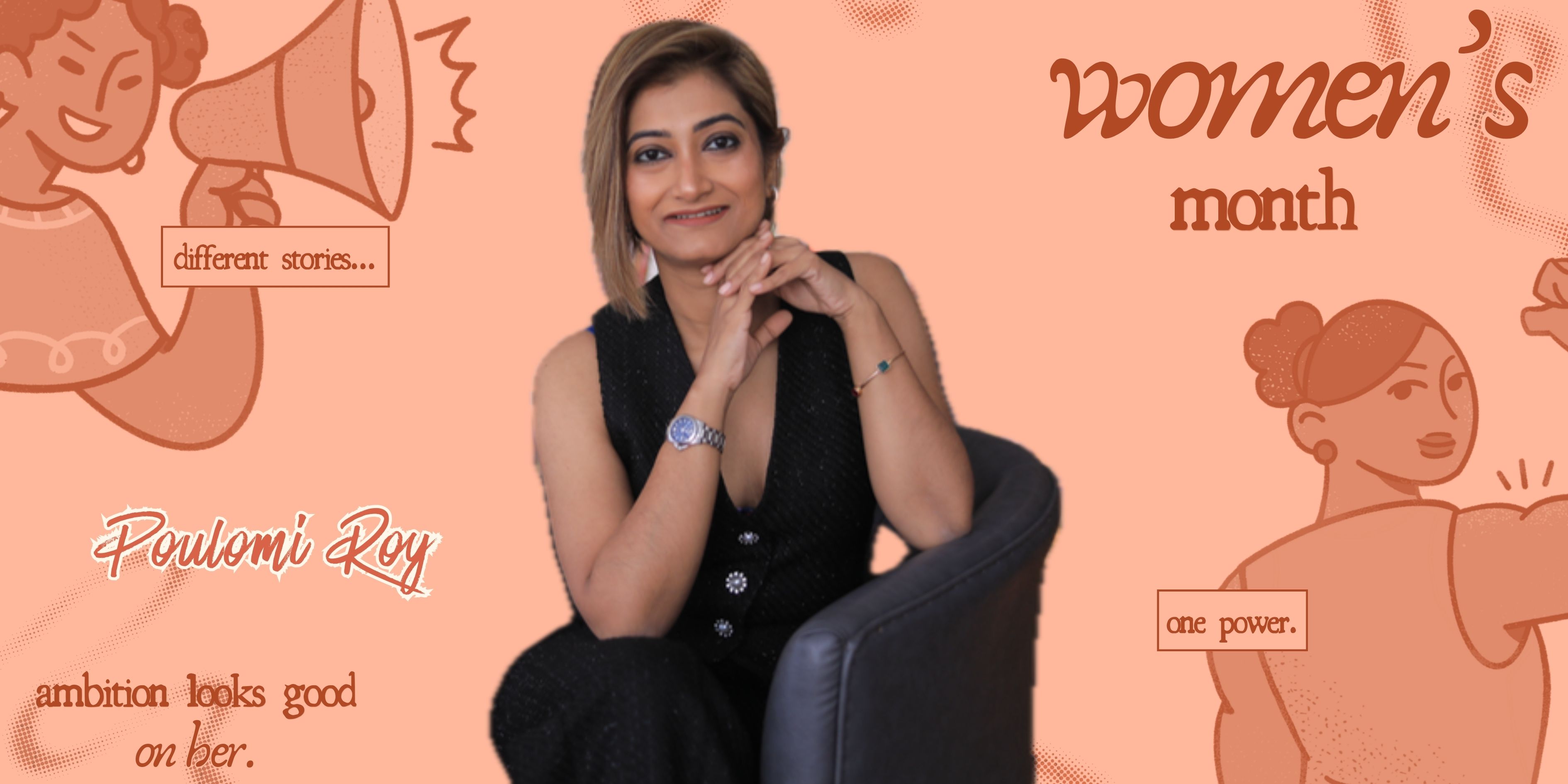
At a time when corporate India is celebrating progress on gender representation, deeper questions around power, leadership access and structural bias remain unresolved. In this candid conversation with AdMirror, Poulomi Roy, Chief Marketing Officer at RSH Global (Joy Personal Care), unpacks the uncomfortable realities behind boardroom diversity, the silent pressure of the “prove it again” bias, and why motherhood continues to derail leadership pipelines.
Drawing from her own leadership journey, Roy argues that the real barriers are not ambition or capability, but systemic gaps in infrastructure, policy and cultural conditioning. She also explains why businesses must stop treating diversity as a compliance exercise and instead view it as a driver of innovation, market insight and long-term growth.
Edited Excerpts
We’ve made progress on representation but not necessarily on redistribution of power. In your sector, are women being included in leadership… or are they actually influencing capital allocation, hiring priorities, and strategic direction? Where does the real decision-making still remain male-dominated?
I’ve been vocal about this for a long time, and I believe conversations like these matter. I’m aware that I come from a place of privilege, and if sharing my perspective can influence even one person, it’s worth it.
Becoming a mother was a turning point for me. I remember receiving a “Power Women” award the same year. Listening to other women speak about their support systems made me reflect on how many talented women I know who had to choose between their careers and their children. I was fortunate — my support system made it possible for me to continue working. But that made me realise the real issue isn’t individual families, it’s the ecosystem.
If organisations and policymakers were more empathetic and practical — with basic infrastructure like hygienic workplaces, daycare facilities, and better childcare support — we could bring back 10–20% more women into the workforce. The issue isn’t capability; it’s the lack of systems that allow women to sustain their careers after motherhood.
Today, women are often welcomed in consumer-facing roles or junior positions. But as they move towards mid and senior leadership, personal responsibilities begin to collide with professional growth. At that point, many women are forced into making a choice — something men rarely have to do.
We talk a lot about representation, but the real conversation should be about structural change. Work-life challenges are not only about office culture; they’re also about city infrastructure, commuting stress, and overall quality of life. When people spend four hours commuting after a nine-hour workday, it affects everyone — but it impacts women more because stress hormones biologically affect them faster.
Another issue is perception. There’s still a subtle bias that women are great at creativity and people management but less suited for strategic or financial decision-making. That perception continues to influence leadership pipelines.
Representation at the top is also a numbers game. When the candidate pool at senior levels is skewed — often 7:3 in favour of men — conversations about “merit” become misleading. True meritocracy only works when representation is balanced.
“Representation is improving, but real power will shift only when we fix the ecosystem — infrastructure, policies, cultural conditioning, and leadership perceptions.”
There’s also the cultural dimension. Society often measures a man’s success by his income, but judges women differently. An ambitious woman is still questioned about whether she’s a good mother or homemaker. Ambition is celebrated in men but often scrutinised in women.
Changing this will require shifts not just in organisations but also in parenting and social conditioning. We need to raise boys who see empathy and shared responsibility as strength, not weakness.
Finally, there’s the networking gap. Many leadership opportunities are shaped through informal networking — after-work gatherings, industry meetups, and social circles. Men often have the freedom to participate in these spaces, while many women prioritise family or personal well-being after work. Over time, this creates an invisible advantage that reinforces the “old boys’ club.”
Progress on representation is happening, but real power will shift only when we fix the ecosystem — infrastructure, policies, cultural conditioning, and leadership perceptions.
Across industries, data shows that women leaders are often held to higher performance and behavioural standards than men in similar roles. Have you experienced this “prove it again” bias and how does it quietly shape promotion pipelines and leadership evaluations within organisations today?
I think this is a very real truth, and I won’t deny it. Many women are constantly trying to prove themselves. Part of this comes from the fact that women still form a smaller percentage of the workforce, especially at senior levels. That creates a constant pressure — Am I doing enough? Will I get another chance?
Because representation is limited, many women also struggle with imposter syndrome. You often question yourself — Am I good enough? What did I do to deserve this role? When you don’t see many women rising to leadership positions around you, self-doubt becomes natural. I’ve seen this far more frequently among women than men.
“Because representation is limited, many women struggle with imposter syndrome and constantly question whether they deserve the roles they’ve earned.”
There is also a double standard when it comes to age and leadership. Men above 50 are often seen as experienced and mature enough for senior roles. For women, however, the perception can shift in the opposite direction, as if their relevance is declining. I don’t fully understand why that happens, but it is a bias that exists.
Just because someone hasn’t personally experienced it doesn’t mean it isn’t happening. Many women may not face every barrier themselves, but we see it around us every day. In my own case, I was fortunate to have a strong support system — for instance, my mother’s presence helped me continue working after motherhood. But that doesn’t mean I don’t recognise the challenges many other women face.
The drop-off of women from leadership pipelines after motherhood is both a policy failure and a cultural failure.
We still lack strong policies that support new families — not just mothers, but fathers as well. In urban India, most families are nuclear, and raising a child genuinely requires support. When that support system is missing, one partner — usually the woman — steps back from her career.
But the impact doesn’t stop there. When a woman pauses her career, the financial and emotional pressure on the male partner also increases because he becomes the sole earner. Instead of thriving as a family, many young couples end up operating in survival mode. And that is not because of personal choices; it’s often the result of weak policy frameworks and inadequate social infrastructure.
If governance and workplace systems were stronger — better childcare support, flexible work structures, and more empathetic policies — the cultural shift would follow naturally.
At its core, the issue is not just about gender equality; it is about equal access to opportunity.
For example, imagine two equally qualified professionals, one able-bodied and another with a physical disability. Even if both are equally capable, the one with limited mobility will face far greater barriers simply because our infrastructure is not designed to support them. That means the opportunity itself is unequal.
In the same way, when workplaces and cities are not designed to support caregiving responsibilities, women disproportionately fall behind.
So when we talk about gender equity in leadership, we must look beyond emotional narratives. Governance, infrastructure, and cultural conditioning all play a critical role in shaping opportunity.
Corporate India often speaks about male allyship, but in practice, how many male leaders are willing to sponsor women into profit and loss roles, or revenue driving positions rather than support roles like HR, marketing, communication? What needs to change structurally for the shift to happen?
Male allyship will only become meaningful when organisations rethink how they define value inside a business.
Traditionally, roles like sales or revenue are treated as “credit” functions because they directly generate money, while marketing, HR or communications are often seen as “debit” functions where money is spent.
That mindset itself is flawed. These roles should be viewed as investments, not expenses.
“Marketing, HR and communications should be viewed as investments, not expenses.”
If leadership fails to understand how marketing builds brand equity, how HR shapes culture and talent retention, or how communication drives reputation and trust, then the problem isn’t gender bias alone — it’s also a misunderstanding of how modern businesses create long-term value.
The moment organisations start seeing these functions as strategic growth drivers, the leadership pipeline automatically expands. People from these roles — many of whom are women — begin to be seen as capable of taking broader business decisions and P&L responsibilities.
So structurally, the shift requires a change in how companies measure contribution and growth. When businesses recognise that investing in people, policies, culture and brand ultimately drives revenue, they will naturally start giving these leaders a seat at the decision-making table.
Many companies now meet diversity hiring targets, yet boardrooms and executive committees remain skewed. Are DEI initiatives becoming a compliance checkbox rather than a business transformation level? How should organizations link diversity to measurable business outcomes like innovation, market expansion or shareholder value?
In many cases, DEI has unfortunately become a checkbox exercise because diversity itself is a complex concept that requires deeper understanding. Unless leaders truly understand how diversity influences business outcomes, it remains a symbolic initiative rather than a strategic one.
From a business perspective, diversity directly impacts consumer engagement and brand loyalty. In some campaigns we ran featuring members from smaller or underrepresented communities, I noticed something interesting while analysing audience reactions. The engagement from those communities was far deeper and more meaningful than campaigns driven purely by celebrity appeal. When people feel seen and represented, they become strong advocates for the brand.
“When people feel seen and represented, they become strong advocates for the brand.”
That’s where the real business value lies. Diverse communities often have a strong sense of belonging and shared identity, and when brands engage with them authentically, the level of advocacy and loyalty can be far stronger than traditional mass marketing.
The second aspect is innovation and perspective. Without diverse voices in the room, brands risk stagnation. A homogeneous leadership team can only see the market from a limited lens. But when people from different cultures, identities and experiences contribute to decision-making, it expands the organisation’s understanding of consumers and unlocks new opportunities for growth.
Ultimately, diversity should not be viewed only through the lens of gender. It includes different identities, experiences, cultures and viewpoints. The real shift will happen when organisations recognise that diversity fuels market insight, innovation and long-term business expansion, rather than treating it as a compliance requirement.


