











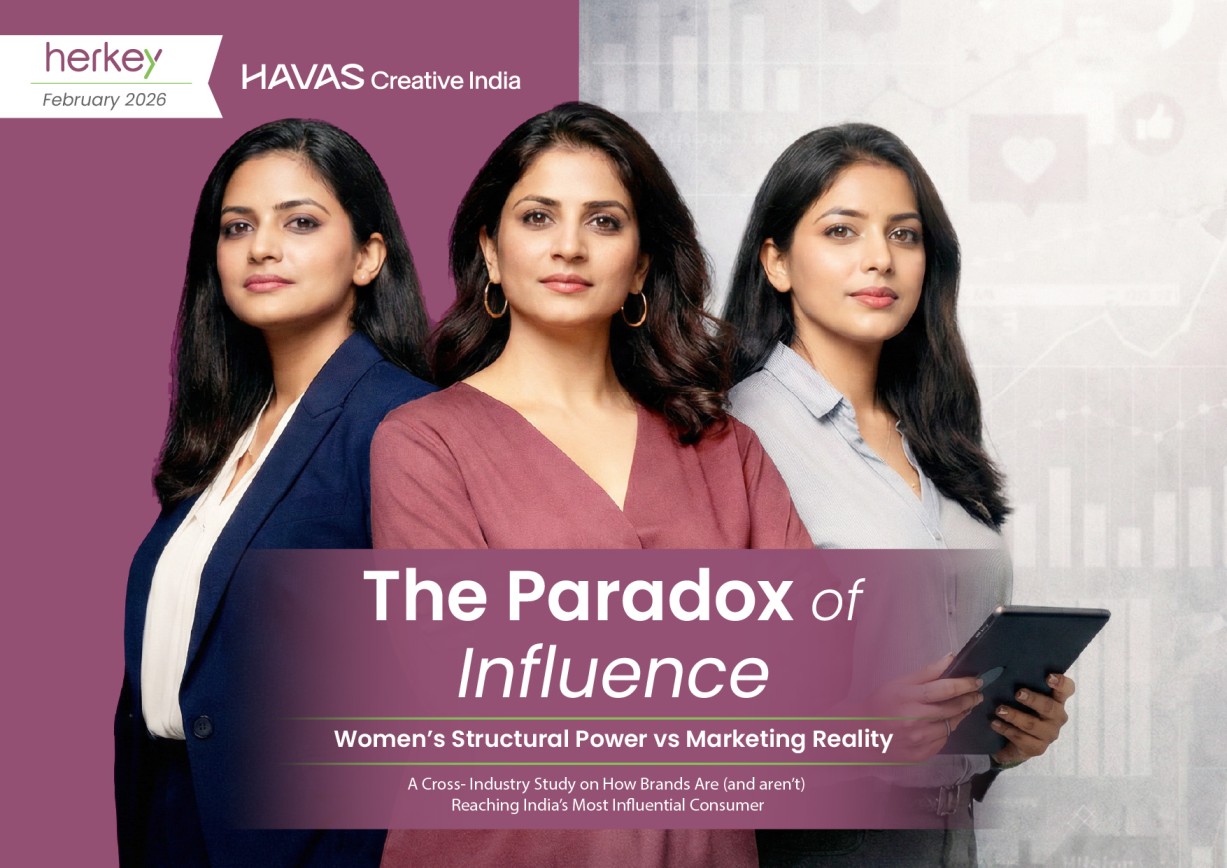
MUMBAI: HerKey, in association with Havas Creative India, has released a report titled “The Paradox of Influence: Women’s Structural Power vs Marketing Reality,” examining how brands engage women consumers in India.
The study finds that women influence between 70% and 85% of purchase decisions across consumer categories, highlighting their growing economic and cultural influence in the marketplace.
Despite this influence, the report suggests that many brands have yet to fully integrate women-centric strategies into their marketing plans.
The research draws insights from marketing leaders across sectors including FMCG, retail, fashion, BFSI, healthcare, automotive and personal care. The findings combine survey responses, interviews and secondary research to analyse how brands approach women-focused marketing.
According to the report, 79% of marketers believe women’s influence has increased over the past two years, yet only 14% consider their organisations leaders in women-centric marketing.
The report also highlights gaps across sectors. In categories traditionally associated with women such as fashion, personal care, FMCG and retail, only 50–70% of brands run women-focused campaigns regularly.
In sectors such as automotive, BFSI and real estate, where women’s purchasing influence is growing rapidly, marketing strategies remain limited or experimental.
The research also identifies lack of consumer insight as a key barrier to effective women-focused marketing. Data gaps, legacy assumptions and limited qualitative research continue to shape how brands approach women audiences.
The report further notes that nearly one-third of brands still portray women primarily as caregivers in advertising, even as marketers acknowledge that such portrayals can be limiting.
Looking ahead, marketers are increasingly exploring community-driven engagement models (43%), AI-led personalisation (39%) and regional relevance (37%) to connect more meaningfully with women consumers.
The study also highlights what it describes as the “occasion trap,” where brands focus on symbolic moments such as Women’s Day or Mother’s Day rather than building sustained engagement throughout the year.
Neha Bagaria, Founder and CEO, HerKey, said, “Women already influence the majority of purchase decisions across categories, yet the way brands engage with them has not evolved at the same pace. Our study with Havas Creative India highlights a critical gap. While women are widely recognised as powerful consumers, that recognition rarely translates into core business strategy. Truly understanding women requires moving beyond surface assumptions to the motivations and realities that shape their choices. For brands willing to invest in that depth of insight, the opportunity is not just better marketing, but meaningful and sustained growth.”
Anupama Ramaswamy, Managing Director and Chief Creative Officer, Havas Creative India, added, “Women are not just an audience segment anymore; they are a decisive force shaping how categories evolve. But recognition alone isn’t enough. Brands need to build deeper understanding and stronger cultural connection. At Havas, our philosophy of growth powered by desire is rooted in the belief that brands grow when they tap into real human motivations. This study with HerKey is intended to help marketers rethink how they engage women not as a moment or message, but as a strategic driver of growth.”


