











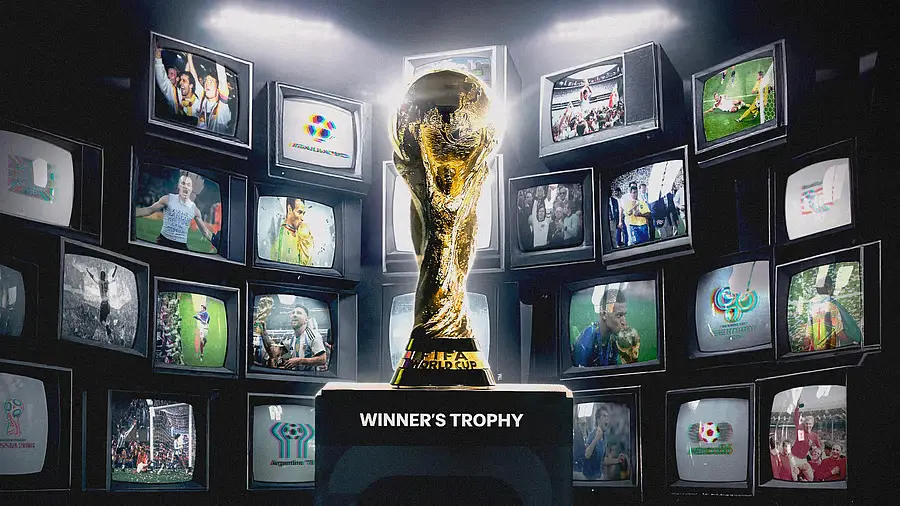
Mumbai: Zee Entertainment's acquisition of FIFA's India broadcast rights through 2034 has become one of the most talked-about media deals of the year, reigniting debate over football's commercial potential in a market traditionally dominated by cricket. JioStar reportedly walked away from the rights at $15 million, Sony stepped back, and Doordarshan passed. Zee stepped in at a reported $40 million and launched an entirely new sports network, Unite8, around the bet.
On whether football is now a credible alternative to cricket for brands, Yasin Hamidani, Director at Media Care Brand Solutions, says football is unlikely to replace cricket in India but has certainly become a credible complement. "Football offers brands access to a younger, urban, digitally engaged audience that is often harder to reach through traditional sports properties," he says, framing the World Cup itself as just one moment inside a much bigger picture. "The World Cup is only the peak moment of a much larger culture. Brands that merely buy media during the tournament often disappear once the event ends."
Manoj George, Founder of Scara Gaming, agrees cricket will continue to dominate on scale but argues football is no longer competing on scale alone. "What football offers is a highly engaged, younger, urban and digitally native audience that is often harder for brands to reach through traditional media," he says. On the gap between Zee's reported $40 million and
JioStar's $15 million offer, George says it reflects two different strategic lenses rather than a simple difference in valuation, with one broadcaster evaluating the property through near-term monetisation metrics, and another treating football as a long-term audience acquisition and platform-building opportunity.
"For us, the FIFA World Cup is more than just a marquee event. It's a strategic entry into a rapidly expanding fan ecosystem."
Bavesh Janavlekar, Chief Business Officer, Unite8, Zee Entertainment Enterprises
Janavlekar confirms the deal was never meant to be read as a single-tournament play, with the eight-year partnership spanning the 2026 and 2030 World Cups, the 2027 Women's World Cup, the U17 and U20 World Cups, the Futsal World Cups, and the FIFA Intercontinental Cup. While he did not disclose specific advertiser commitments following the announcement, he pointed to growing interest around football properties such as the Calcutta Football League and Bengal Super League as indicators of the sport's increasing appeal among brands.
Both George and Janavlekar, without prompting each other, point to the same regional markets as football's real stronghold in India. George says football is a deeply rooted part of local identity in regions like Kerala, West Bengal, the Northeast, and Goa, where matchdays function as community events passed down through generations rather than entertainment. Janavlekar confirms the same geography from inside Zee, citing West Bengal, Kerala, Goa, and the Northeast as markets where football fandom already runs deep, with interest now spreading into urban centres as well.
On what separates brands that genuinely understand football culture from those treating it as a seasonal sponsorship, George draws a sharp line: "The difference is participation versus presence. A brand that simply shows up for the World Cup tends to focus on logo placements, tournament-themed creatives and short-term campaigns. Once the tournament ends, so does the conversation."
On the challenge of matches airing at unconventional hours in India due to the tournament being hosted across North America, Janavlekar says Zee is leaning on more than live viewership alone, pointing to highlights, replays, and curated content built to let fans engage on their own schedule, alongside dedicated language feeds in English, Hindi, Bangla, and Malayalam aimed at lowering the barrier for casual viewers.
For George, the real payoff is not the audience this World Cup delivers but the one it builds for the next one. "The most effective approach is to build continuity between World Cups rather than activating only every four years. Football's biggest value for brands is not just the audience it delivers today, but the audience it is creating for tomorrow," he says.


