











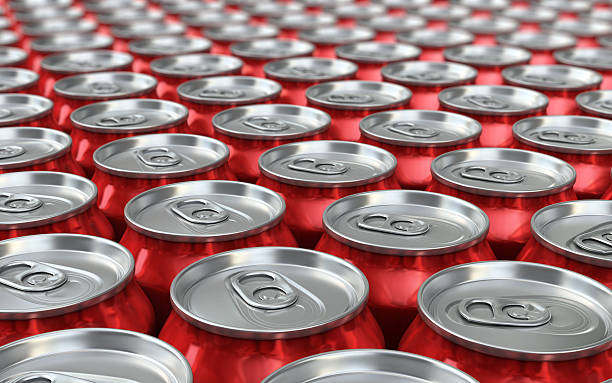
Mumbai: Somewhere in urban India right now, someone is refreshing Blinkit for the fifth time this morning. The answer has not changed since mid-April. Out of stock. The familiar silver can has disappeared from kiranas to dark stores, with apps like Blinkit, Zepto, and Swiggy Instamart showing it unavailable across Mumbai, Bengaluru, Ahmedabad, and Gurugram. Checking for Diet Coke availability has gone from a one-time frustration to a morning routine. The refresh has become the ritual.
What started as a handful of frustrated out-of-stock notifications on quick commerce apps has escalated into a full-blown cultural moment. Reels are circulating. Reddit threads are tracking availability neighbourhood by neighbourhood. Creator Viraj Ghelani posted a video of himself walking with his hands chained, a friend on a scooty offering him other canned drinks, captioned: "Yeh shortage kab khattam hoga?" The comments filled up with people who understood exactly what he meant. Another format doing the rounds: "How to kidnap a Gen Z kid," with the twist being a truck stacked with Diet Coke. One user in Thane even posted: "Available in Thane. Kindly DM for location." The silver can has acquired the scarcity logic of a limited sneaker drop.
On social media, the shorthand has sharpened quickly. "Diet Coke is the new LPG," went one widely shared post. "GPU shortage, RAM shortage. Now Diet Coke shortage. Life is tough for an ML engineer who is constantly balding," went another. The internet has even named the community. Diet Coke Paglus: a fandom built on fizz. No brand created that identity. No campaign coined that name. The consumer did both.
"Diet Coke shortage bothering me more than the LPG shortage."
User on X, April 2026
The supply disruption is real, even if social media has made it feel considerably larger than it is. The most credible explanation traces back to a tightening in global aluminium supply. According to metal market intelligence firm Ryerson Holding Corporation, aluminium prices rose roughly 14 to 20 per cent in the weeks heading into April 2026, driven by geopolitical instability in West Asia affecting key producing regions, disruptions along critical shipping routes including the Strait of Hormuz, smelter outages, and steady demand that has shown no sign of relenting. In short: the product exists, the factories are running. There are simply not enough cans to put it in.
The Coca-Cola Company has previously acknowledged that increased at-home consumption, combined with aluminium and ingredient shortages, has affected supply chains in certain regions, and that it is working with customers and suppliers to ensure availability. The disruption appears localised to select metros, with intermittent stocks reported in Delhi-NCR on Flipkart Minutes and select Zepto dark stores in Bengaluru.
This was never just about a drink. What went missing from those shelves was identity, routine, and comfort, and for a hyper-connected urban demographic, that absence hits differently than an ordinary out-of-stock notification. Diet Coke sales in India actually doubled last year, as low-sugar beverages surged to represent 30% of Coca-Cola India's total volumes in 2025, up from just 5% in 2020. The fanbase is real, large, and very online. In a category long defined by legacy mass-market brands, Diet Coke had quietly built something considerably more valuable than market share: a consumer base that treats a beverage as a daily identity marker.
"Diet Coke Paglus: a fandom built on fizz. No brand created that identity. The consumer did."
From a brand and marketing perspective, this is the kind of earned attention no campaign budget reliably buys. Marketer Samiksha Bhatt explained the mechanics on LinkedIn through the lens of the availability heuristic: the more frequently you encounter something being discussed, the more real and widespread it seems. A few Reels about empty shelves became "it is everywhere." A handful of out-of-stock notifications became "it is completely gone." The algorithm did the rest. A single reel framing the moment as "LPG shortage? Fine. Diet Coke shortage? Absolutely not" became one of the most engaged pieces of consumer content in India this week. That is not influencer reach. That is a cultural temperature reading.
Coca-Cola did not manufacture this moment. But it inherited the benefits of years of building a brand with genuine emotional resonance among a hyper-connected demographic. The shortage did not erode loyalty. If anything, it surfaced it. When a product goes missing and the reaction is grief rather than indifference, that is a brand health signal most marketing teams spend years trying to engineer.
The more pointed marketing question, however, is the one nobody answered. Pepsi Black, the direct zero-calorie competitor, is reportedly being offered as a substitute in some stores where Diet Coke has run out. Yet no major competing brand publicly engaged with the moment. No newsjacking. No "we have stock" post. No cultural riff on the shortage from any rival. In a week when Diet Coke was the most talked-about consumer product in urban India, the conversation floor was left entirely to Coca-Cola's fans and Coca-Cola's absence. That is either extraordinary discipline or a significant missed window, depending on who you ask.
The silver can will return. The aluminium crunch is a constraint, not a verdict. But what this moment leaves behind is proof of something brands spend decades trying to build. The internet said it plainly: Diet Coke is not a beverage. It is a personality in a can.


