











Mumbai: Artificial intelligence is no longer merely an efficiency tool for media agencies. It is increasingly becoming the operating layer through which brands understand consumers, predict intent, connect content with commerce and measure marketing against business outcomes. For WPP Media, the ambition is to move beyond automation through WPP Open, its agentic marketing platform designed to bring human expertise, real-time data and specialised AI agents into a single growth ecosystem.
In a market as fragmented and culturally complex as South Asia, however, scale cannot come at the expense of relevance. As consumer journeys become increasingly fluid across media, creators, retail media, streaming, commerce and content, the traditional marketing funnel is giving way to a more interconnected ecosystem.
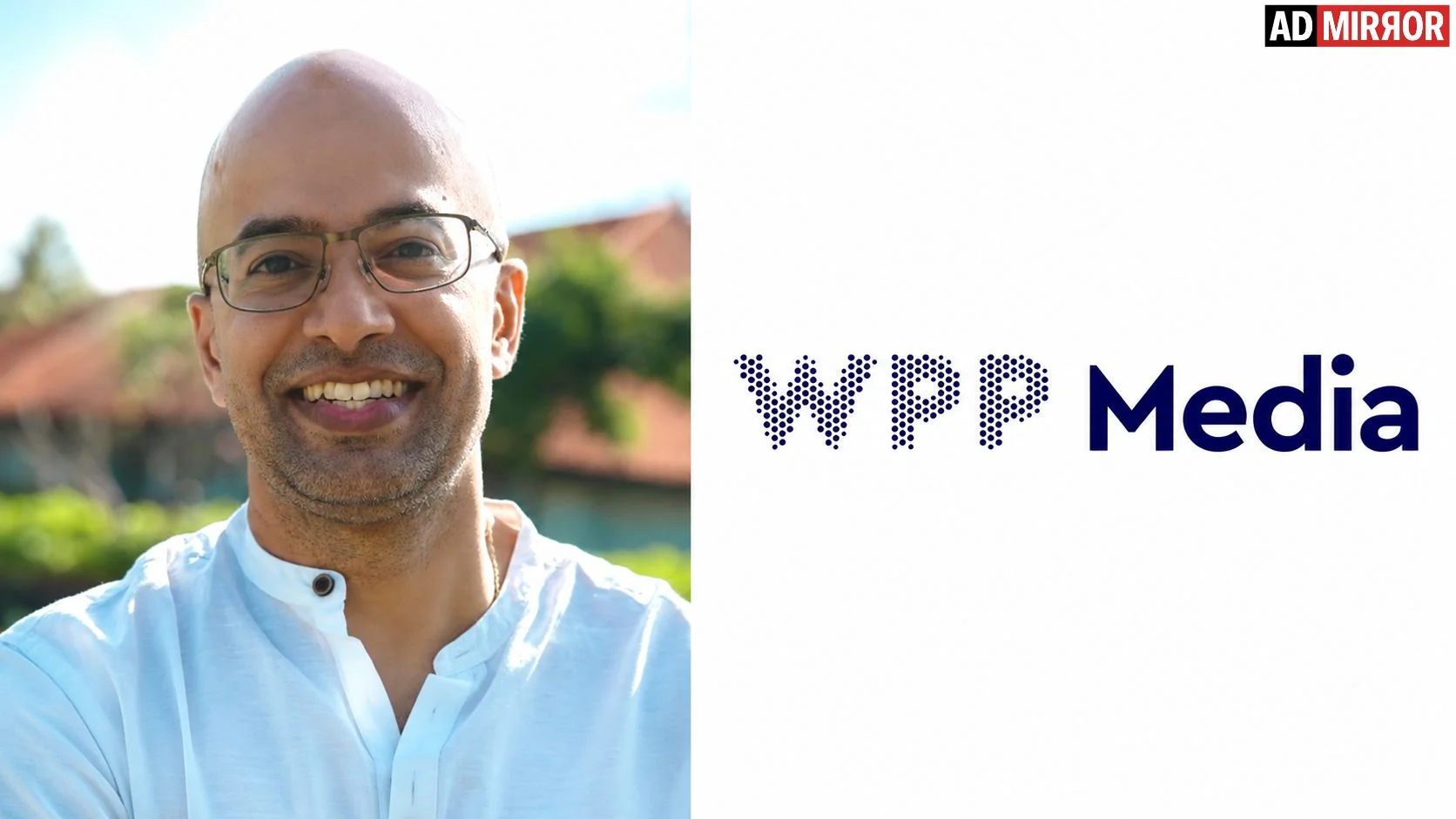
In this conversation with Admirror, Praseed Prasad, President – Growth & Marketing, WPP Media, South Asia, outlines how AI is shifting media from reactive planning to predictive intelligence, why hyperlocalisation remains critical in an AI-led world, how agencies are evolving from media-buying partners into business growth partners, and why marketing effectiveness is increasingly being measured by growth, conversion, customer quality and long-term demand creation rather than impressions and CPMs alone.
WPP Open is positioned as a transformational AI platform for the marketing ecosystem. Beyond efficiency, where do you see AI genuinely changing the strategic thinking behind media and consumer engagement?
WPP Open is our innovative, agentic marketing platform that provides a secure workspace where top-tier talent and specialized AI agents collaborate to drive brand growth. Fuelled by our foundational "Open Intelligence" layer, the platform securely integrates real-time data from clients, partners, and WPP. This allows us to convert consumer behaviour into predictive insights without ever sharing or compromising the underlying data. AI is no longer just an efficiency layer for agencies; it is fundamentally changing how marketing decisions are made. At WPP Media, we see AI shifting the industry from reactive planning to predictive intelligence. Traditionally, media was about analysing past behaviour and optimising campaigns around it.
Today, platforms like WPP Open are enabling us to identify patterns, predict consumer intent, and build far more adaptive engagement systems in real time. The bigger transformation is strategic. AI is collapsing silos between content, commerce, data, and media. Every interaction is becoming both a signal and an opportunity. What excites us most is how AI enables better decision-making across the entire DPAM framework, Discover, Plan, Activate, and Measure. It allows brands to move beyond broad demographic targeting toward contextual, personalised engagement at scale, while still operating in a privacy-centric environment.
"AI is no longer just an efficiency layer for agencies; it is fundamentally changing how marketing decisions are made."
South Asia remains one of the most fragmented and culturally layered markets globally. How do you balance AI-led scale with the need for hyperlocal creativity and contextual relevance?
South Asia's diversity is both its biggest challenge and its biggest opportunity. AI gives us the ability to scale intelligence, but relevance still comes from understanding culture, language, behaviour, and context deeply. The future is not about choosing between automation and human creativity. It's about combining both intelligently. We're seeing increasing fragmentation in content consumption, whether through regional creators, micro-dramas, vernacular platforms, or local commerce ecosystems. That means hyperlocal relevance is becoming more important, not less. Our approach is to use AI as the backbone for scale and insights, while empowering local teams, creators, and specialists to shape communication that feels authentic to each audience cohort. In a market like India, scale without relevance simply doesn't work.
Today, media agencies are increasingly being evaluated not just on planning and buying, but on business outcomes, commerce integration, and data intelligence. How is WPP Media redefining its role in this new ecosystem?
The role of media agencies has fundamentally evolved. We are no longer just media-buying entities we are broader business and growth partners. The lines between media, commerce, technology, analytics, and consulting are blurring rapidly, and clients increasingly expect integrated solutions tied directly to outcomes. At WPP Media, we've internally reclassified advertising into four broad buckets, content-led, intelligence-led, commerce, and other digital ecosystems. Commerce and intelligence-led formats are already driving a significant share of incremental growth. This reflects how consumer journeys themselves are changing.
Our investments today are heavily focused on commerce capabilities, retail media, sports and content ecosystems, influencer marketing, and data intelligence. Platforms like WPP Open help unify these capabilities so clients can move seamlessly from planning to activation to measurement. Ultimately, the conversation today is less about impressions and more about growth, conversion, demand generation, customer intelligence, and long-term business impact.
"The conversation today is less about impressions and more about growth, conversion, demand generation, customer intelligence, and long-term business impact."
With platforms, creators, retail media, and streaming ecosystems all competing for attention, do you think the traditional media funnel has completely collapsed? What replaces it?
The traditional linear funnel has absolutely become far less relevant today. Consumer journeys are no longer sequential. Discovery, consideration, engagement, and purchase can happen almost simultaneously, sometimes within minutes, especially inside commerce and content ecosystems. What used to be considered bottom-funnel platforms are now influencing awareness, while top-funnel media is becoming increasingly shoppable. Every touchpoint can potentially drive both brand-building and transactions.
I don't think the funnel disappears entirely, but it becomes far more fluid and interconnected. The replacement is really an ecosystem model where content, commerce, creators, data, and media continuously interact with each other. The real challenge for brands now is not just visibility but creating connected experiences across these touchpoints.
The industry is aggressively adopting AI tools, but many brands still struggle with organisational readiness and talent adaptation. What capabilities do you believe agencies and marketers urgently need to build over the next 2–3 years?
Talent and adaptability will become the biggest differentiators over the next few years. AI adoption is not just about tools, it's about people, processes, learning, and organisational mindset. At WPP Media, we are investing heavily in continuous learning and certifications because the pace of change is extremely rapid. The biggest risk for organisations today is not technology disruption itself, but the inability to evolve alongside it.
There are a few critical capabilities the industry needs to build urgently. First is data and AI literacy across functions, not just within specialist teams. Second is integrated problem-solving, the ability to connect media, content, commerce, analytics, and technology into unified solutions. Third is agility. The industry can no longer rely on static playbooks because platforms, formats, and consumer behaviour are changing continuously.
"The biggest risk for organisations today is not technology disruption itself, but the inability to evolve alongside it."
As someone leading growth and marketing for one of the world's largest media networks, what are the biggest shifts you are seeing in how brands define 'effectiveness' today compared to even three years ago?
Effectiveness today is being defined much more holistically than before. Three years ago, conversations were still heavily centred around media efficiency metrics, reach, impressions, CPMs, and short-term performance indicators. Those metrics still matter, but they are no longer enough. Brands today are looking at effectiveness through the lens of business outcomes: growth, market share, commerce impact, customer acquisition quality, retention, and long-term demand creation.
They also want stronger accountability and clearer measurement frameworks tied to actual business performance. Another major shift is that brands increasingly expect integration. They don't want fragmented agency outputs across media, commerce, creators, content, and analytics. They want unified solutions that solve larger business problems. At the same time, effectiveness is now deeply tied to adaptability. Brands are asking whether their marketing ecosystems are future-ready, whether they can respond quickly to changing consumer behaviour, emerging platforms, and new commerce environments. That mindset shift is perhaps the biggest change we're seeing today.


