











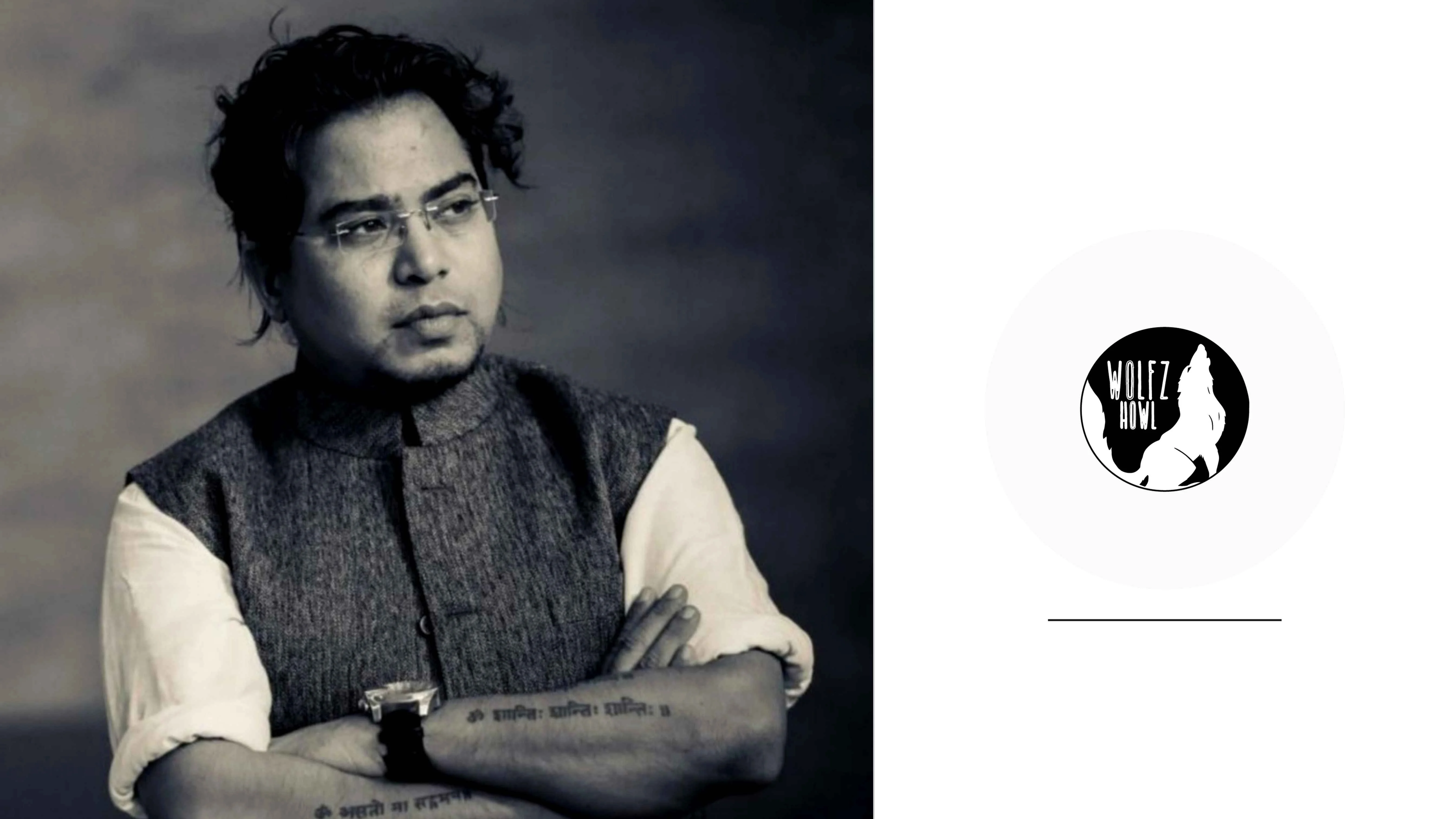
Mumbai: AI may be transforming how brands create content, analyse data and automate marketing, but its deeper impact could lie elsewhere: in changing what consumers believe about their own lives.
As jobs become less predictable, skills face faster obsolescence and AI lowers the barriers to entrepreneurship, traditional markers such as income, geography and demographics may no longer explain consumer behaviour adequately. A new divide is emerging between those who feel in control of their future and those who increasingly feel uncertain about it. That shift could fundamentally alter how people work, save, spend, relocate, consume and define aspiration.
In this conversation with Admirror, Kalyan Raam Challapali, Founder – Wolfzhowl, on how AI could reshape consumer behaviour over the next five years, from the rise of multiple income streams and a growing demand for calm and mental wellness to communities becoming new forms of social infrastructure. It also argues that as AI makes content abundant, lived human experiences, participation and trust will become more valuable to brands. The larger implication for marketers is significant: the future may be less about communicating products and more about helping consumers navigate their lives. Less interruption, more participation. Less messaging, more facilitation.
The paper suggests the next divide won't be urban versus rural or rich versus poor, but between people who feel in control of their lives and those who don't. What does this mean for brands that have traditionally relied on income or geography-based segmentation?
Income, geography etc. continue. They don't disappear. LSM mapping itself was a step in that direction decades ago because marketers realised income alone doesn't explain behaviour. But in the post AI context, another lens gets added: control. Do I believe I have a career or just a job? How long before my skills become obsolete? What else can I do? Should I diversify my sources of income and build a basket of revenue streams instead of depending on one employer? Which of those income sources do I believe are relatively more resilient to AI? Those beliefs will influence behaviour.
As more work becomes project based or outcome based for many knowledge workers, I think a growing section of people may start living a little like farmers. Not literally, but in terms of income cycles. There may be periods of harvest followed by quieter periods. That changes how people save, spend and consume. Consumerism itself could become more contextual and variable instead of simply monthly salary driven. That also means people may choose to relocate, reverse migrate or simply live differently because the relationship between livelihood and location is changing again.
So brands will have to understand not just what consumers earn, but what they believe about the stability of what they earn and the control they have over their future. Two people earning the exact same salary could behave completely differently if one believes their future is expanding while the other believes they are one AI update away from uncertainty. Income and geography will still matter. But they will increasingly be accompanied by a new behavioural lens: how much control people believe they have over their own lives.
Young consumers today seem caught between relentless ambition and growing anxiety. How can brands inspire aspiration without adding to the pressure and comparison culture that social media and AI are already amplifying?
I think brands will increasingly play another role: that of calm. Helping people feel collected. Helping them anchor in the now. One way of looking at anxiety is that it often comes from the gap between where we are today and where we think we should already be. Social media widened that gap. AI, by changing what is possible almost every week, could widen it even more.
Brands will play a part in addressing that, not just through communication, but through product design, experiences, content and even purpose. Brands like Mia, for example, are already encouraging consumers to celebrate everyday moments instead of waiting only for big life milestones. That is one way of making the present feel worthy.
I think mental wellness will become a mainstream innovation platform across categories, not just a healthcare category. We have already seen products like weighted blankets become popular. Why not weighted hoodies or travel wear that gives the same feeling of comfort? Why not everyday objects that become small rituals of calm? Wearables that remind you to pause, breathe or reset? I think there is going to be a whole new market around products that do not just solve functional problems but help people feel steadier, calmer and more in control. Maybe the next aspiration will not just be success, but peace.
You argue that future winning brands won't simply help people do things but help them move forward, stay steady, or feel less alone. Can you share examples of brands already moving in that direction and what separates them from the rest?
I think we are going to see many more brands and platforms helping people move forward, stay steady and feel less alone. Not because it sounds nice, but because loneliness, uncertainty and the need for belonging are becoming much bigger parts of modern life.
If you notice, some of the strongest examples are not even trying to build brand communities in the traditional sense. The Buy Nothing Project is not really about giving away things. It is about neighbours helping neighbours. PatientsLikeMe is not just about managing disease. It is about finding someone who says, "I have been through this too." OLIO is less about reducing food waste and more about creating trust within neighbourhoods.
In India, platforms like Apna have become much more than job portals. People mentor each other, refer each other, answer questions and help each other grow. Kutumb is another example where communities themselves become the product. Even India's Self Help Groups are a great reminder that when people feel they belong to something bigger than themselves, behaviour changes much faster than when they are left to struggle alone.
I think that is the shift. The future will not belong only to brands that build customer communities. It will increasingly belong to brands and platforms that become social infrastructure. Places where people find support, exchange knowledge, help one another and simply feel that they are not navigating life by themselves.
AI is making content creation easier than ever, but human attention and trust are becoming harder to earn. In this environment, what will become the biggest competitive advantage for brands? Creativity, empathy, authenticity, or something else entirely different?
I actually do not think it is any one of those in isolation. Not creativity, empathy or authenticity. It is authenticity demonstrated through human experiences. AI is going to create a flood of good communication. Good ads, good copy, good videos, good visuals, all at scale. Good itself will become boring because everyone will have access to it. What AI cannot manufacture at scale is a genuine human response to lived experiences.
I think brands will increasingly create phygital experiences around their purpose, positioning or product. Not events for the sake of events, but experiences that people genuinely participate in, believe in and remember. A person's experience with a brand will become the communication for another person, the person's behaviour towards a brand will become the content for another person. Communities will become part of this too. Not just social media groups, but people coming together around a shared interest, belief, challenge or purpose and creating stories that no AI can script in exactly the same way.
"I think the next era of branding will be less about creating content and more about curating experiences that naturally create content, conversations and communities. Brands will not just produce communication. They will produce experiences worth communicating."
Kalyan Raam Challapali, Founder, Wolfzhowl
Do you think AI will ultimately create a generation that is more entrepreneurial and self reliant, or one that is more uncertain and emotionally dependent on technology? What signals are you already seeing?
Yes. I think AI will create both generations simultaneously. One will become more entrepreneurial because AI itself will force them to. Not everyone will lose jobs, but many will realise that depending on one job is no longer enough. As AI lowers the barriers to starting businesses, building products and offering services, more people will become consultants, creators, educators, builders and solopreneurs.
We are already seeing early signals. One person AI agencies. Independent consultants packaging AI into their services. Micro SaaS founders building products alone. Creators turning into businesses. Students launching AI powered ventures while still studying. These are still early days, but I think they will become far more common over the next few years. At the same time, another generation will become emotionally dependent on technology. We are already seeing people increasingly asking AI not just for information but for judgement, reassurance and decisions.
So I do not think AI creates one future, it creates two. One uses AI as leverage and the other uses AI as a crutch. The difference will not be intelligence. It will be what people believe AI is for.
Your paper ends by saying the future will be shaped less by what people do and more by what they come to believe about their lives. If that is true, what responsibility do brands, media and technology companies have in shaping those beliefs?
I actually do not think brands, media or technology companies will have the luxury of deciding whether they want to be responsible or not. It will not be optional anymore. The more they influence beliefs, the more consumers, communities and governments will expect them to be accountable for the behaviours those beliefs create.
Brands will not just be asked what they sold. They will increasingly be asked what they made people believe. Media's role too will expand. It will not just report news. It will increasingly report, inspire, curate, connect, debate and instigate conversations that shape society. Technology's role will be even bigger. It will facilitate beliefs into behaviours: how we learn, how we earn, how we share, how we build relationships and ultimately how we live. That is why I believe the first shift is always belief. Once beliefs shift, behaviours follow, and when behaviours shift at scale, culture itself changes.
If you had to give one piece of advice to every CMO today, what is the one consumer behaviour they should stop chasing and what is the one emerging behaviour they should start paying attention to over the next five years?
I would tell every CMO to start thinking of their brand, category and business not just in the present tense, but in the present continuous and future tense. Markets are changing faster than annual planning cycles now. So do not just ask, "What business are we in today?" Keep asking, "What business are we becoming?"
The second thing is stop chasing communication. Start facilitating consumers. Start curating experiences relevant to your category, product and brand. I do not mean brand purpose. I do not mean doing social good for its own sake. I mean helping consumers navigate their lives better through your category.
AI gives us a huge opportunity here. Products can become product plus service brands. Service brands can become product companies. The boundaries are blurring. I think marketing will increasingly move from communicating products to facilitating consumers and communities. Less interruption, more participation. Less messaging, more facilitation. Insight led consumer, community and life facilitation and curation is where I think marketing is going over the next five years.


