











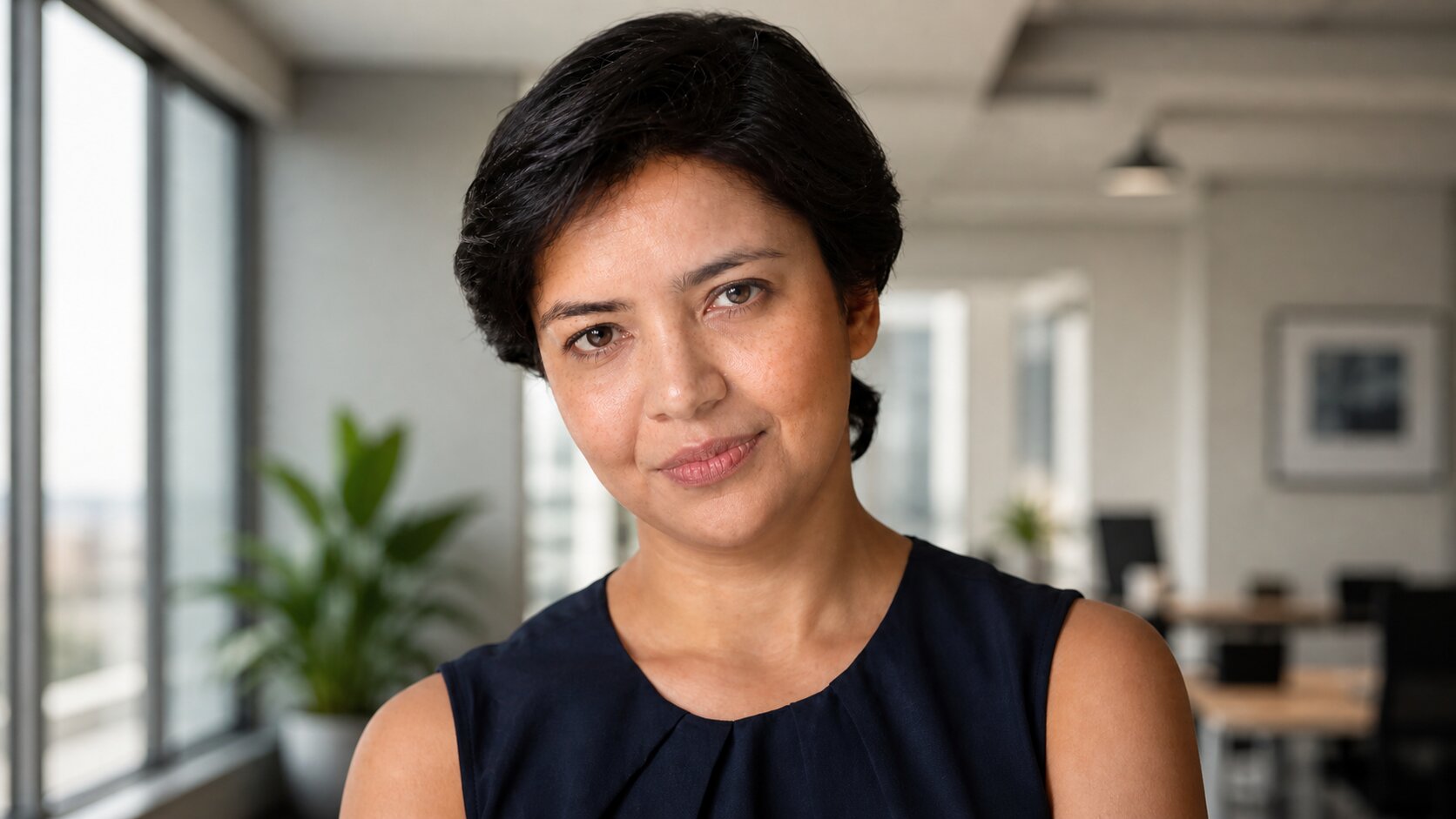
Mumbai: Taniya Pandey has spent two decades crossing categories that most marketers would never attempt in sequence: insurance, automotive, skincare, and now beauty and wellness at VLCC. She joined as Chief Marketing Officer for India, South East Asia, and the Middle East at a moment when the brand was already mid-transformation. The Carlyle Group's acquisition in 2023 had shifted VLCC from 30 company-operated clinics to over 90, with aggressive targets ahead. The brief was not just to market a brand. It was to build marketing infrastructure for a company scaling faster than it ever had before.
In this conversation with AdMirror, Pandey talks about why the consumer VLCC was built for finally arrived, what PE-backed growth demands from a marketing function, how you hold a brand together across three geographies with fundamentally different beauty cultures, and why the most dangerous thing a brand can do is optimise only for the immediate transaction.
(Edited Excerpts)
How would you describe VLCC today compared to what it was when it was founded, and what has that evolution meant for how the brand is positioned and communicated to a new generation of consumers?
VLCC didn't modernise wellness. The world finally caught up to where we already stood. In 1989, beauty was cosmetic in both senses of the word — surface-led, transactional, performative. We entered with a heavier proposition: that confidence is built through expertise, discipline, and time. Unfashionable then. Foundational now.
The consumer no longer separates skin from sleep, weight from hormones, hair from stress, beauty from health. She experiences herself as one system. Our founding philosophy was waiting for her. So the brief for a younger audience writes itself. Gen Z is fluent in filters and suspicious of them. Polished promises bounce off. Borrowed aspiration gets called out. Less perfection, more progress. Less ideal, more agency.
Less looking different, more feeling aligned. That is not a rebrand. That is a brand whose time arrived.
The Indian beauty and wellness consumer has changed significantly. Weight loss has become body sculpting, facials have become IV therapies, and seasonal beauty routines have become daily regimens.
The Indian beauty and wellness consumer has changed significantly. Weight loss has become body sculpting, facials have become IV therapies, and seasonal beauty routines have become daily regimens. How has VLCC's marketing kept pace with a consumer who is now far more scientifically aware and harder to impress?
The modern consumer isn't harder to impress. She's harder to mislead. She reads ingredient lists. She compares technologies. She watches the reviews you wish she wouldn't. That is not a problem for the category — it is the category finally being treated like an adult.
For decades, beauty marketing ran on mystery. Miracle language. Vague outcomes. Words doing the work that evidence should have done. That era is closing on its own. Our response: reduce theatre, increase truth. Consultations over claims. Expert voices over endorsements. Education over exaggeration. Before-and-after grounded in real timelines, not lighting tricks.
And we segment by life stage, not lifestyle. A 22-year-old with early hair thinning is not the same brief as a 42-year-old navigating hormonal shifts. Treating them as the same audience is a marketing failure dressed up as efficiency. The future of beauty marketing is not louder persuasion. It is informed guidance.
VLCC operates across a very wide services portfolio, over 1,100 services and 1,000 product SKUs. That is an enormous range to market coherently. How do you build a single brand narrative around something that broad without the brand losing focus in the consumer's mind?
Breadth only confuses when the centre is hollow. VLCC's centre holds: transformation through science-led beauty and wellness. Once that is non-negotiable, scale organises itself. Hair, body, skin, nutrition, grooming, education — these are not adjacencies. They are different doors into the same human want: to feel better in the body you already live in.
Consumers don't catalogue brands the way marketers do. They don't carry 1,100 services in their head. They carry one meaning. If the meaning is trust, expertise, outcomes, care — the portfolio feels generous. If the meaning is empty, three SKUs feel scattered. The job is not to simplify the range. It is to deepen the meaning.
The Carlyle Group's acquisition in 2023 marked a clear inflection point for VLCC — taking the brand from 30 clinics to over 90. How did that shift change the marketing function, and what does the next three years of expansion look like in terms of markets, formats, and building presence before a single clinic opens?
Capital changes pace. It also changes accountability. A founder-led phase builds on instinct. A growth-backed phase has to scale on architecture. Instinct doesn't replicate across 200+ clinics. Systems do.
So marketing moved from stewardship to infrastructure. Launch playbooks. Clinic-opening demand models. CRM journeys built like roads, not campaigns. Unified brand codes. Regional agility inside national consistency.
When you expand fast, inconsistency becomes your most expensive line item. Every new clinic is not an operational opening. It is a reputational one. The consumer doesn't care that the location is two weeks old. She expects the same trust signal she'd get in a clinic that has stood for twenty years.
Marketing stopped being campaign-led and became infrastructure-led. That is how brands scale without diluting what made them worth scaling.
India remains our deepest runway, particularly beyond the metros where aspiration has outpaced access. Tier II and Tier III are not "emerging" in mindset. They are under-served in organised beauty and wellness. The next three years will be geographic and format-led in equal measure.
Internationally, we deepen where we already have trust equity. But the bigger discipline is this: a clinic should not open into silence. Search intent, local familiarity, pre-bookings, referral curiosity, community trust — all of it should already exist before the shutter rolls up. The first opening should happen in the consumer's mind. The real estate is the second.
"A clinic should not open into silence. The first opening should happen in the consumer's mind. The real estate is the second."
Taniya Pandey, CMO, VLCC India, SEA and Middle East
VLCC operates across India, South East Asia, and the Middle East — three very different geographies. How do you hold one brand together across markets so fundamentally different, and how does the approach shift when you move from metro India to Tier II and III?
You don't globalise by standardising. You globalise by protecting meaning. Our essence stays fixed: science-backed expertise, visible outcomes, trusted care, confidence through transformation. The expression has to move. Beauty codes differ. Privacy norms differ. Media diets differ. The consumer in Mumbai is not the consumer in Dubai or Dhaka, and pretending otherwise doesn't help. Belief stays stable. Expression travels intelligently. That is how a brand stays one thing without becoming the same thing everywhere.
Start by retiring the assumption that she is somehow behind. She is digitally fluent, sharply aspirational, comparison-driven, and often more financially disciplined than her metro counterpart. She makes slower decisions. She also makes better-considered ones.
Marketing there earns trust before it seeks scale. Local language relevance. Visible proof. Testimonial culture. Referral momentum. Community presence. Educational storytelling. Sharper value articulation. She wants outcomes, but she also wants to feel intelligent about the decision she made. In metros, novelty creates trial. In Tier II and III, credibility creates trial. And once she trusts you, the loyalty is harder to dislodge.
The beauty and wellness category is one of the most crowded and influencer-driven spaces in India. Between a brand with VLCC's legacy and a creator with a million followers recommending a competing product, how does a legacy brand stay top of mind and protect its trust without simply outspending the competition?
Attention is rented. Trust is owned. We compete on three assets that are harder to copy than spend: physical experience, expert credibility, visible outcomes. Anyone can buy an ad claiming transformation. Far fewer can deliver it in-clinic, repeatedly, across decades.
And we think past the point of acquisition. The real battleground is memory after purchase. Progress reminders. Consultation follow-ups. Preventive check-ins. Cross-category journeys. Post-service care that doesn't disappear when the invoice clears. Top of mind is often won long after the campaign ends.
Neither of us owns it. The consumer lends it. Temporarily. A creator may own attention. A legacy brand may own memory. But trust sits with her, and she re-evaluates it constantly — sometimes mid-scroll.
In our category, recommendation can spark curiosity. Proof closes belief. A million followers can sell a lipstick shade. When the conversation turns to hair loss, pigmentation, body confidence, skin correction — she stops counting followers and starts counting credentials. Expertise. Safety. Consistency. Results.
Which is why we work selectively with creators. Reach is not the brief. Resonance is. The right creator amplifies a truth that already exists. The wrong one only amplifies spend. Protecting the brand means being disciplined about who speaks for us. No borrowed voice should ever become louder than our own credibility.
"Transaction matters. Education precedes it. Optimise only for immediacy and you win the click while losing the lifetime."
Taniya Pandey, CMO, VLCC India, SEA and Middle East
VLCC's approach is deeply consultative, but marketing in a PE-backed company demands hard commercial accountability. How do you translate a consultation-first brand into performance marketing, and how do you connect the marketing function's work directly to revenue internally?
Not every category should be sold like a fast-moving product. When the decision involves skin, body, confidence, long-term wellness — the first conversion is rarely payment. It is curiosity. Assessment. Trust.
So we design digital funnels that mirror consultation logic. Diagnostic quizzes. Expert content. Virtual assessments. Guided recommendations. Treatment explainers. Appointment nudges that feel like care, not pressure.
Transaction matters. Education precedes it. Optimise only for immediacy and you win the click while losing the lifetime. We are not chasing conversion. We are building informed conversion. That is a different number, and a much better one.
Marketing has to be tied to commercial outcomes. The serious question is whether you measure intelligently or just count. We track acquisition cost, booking conversion, clinic-level revenue attribution, repeat visits, cross-sell ratios, product attachment, lifetime value, reactivation efficiency, cohort behaviour over time.
But numbers without judgement are dangerous. A cheap customer today can become an expensive one tomorrow. An expensive customer today can compound into the most profitable one you have. Spreadsheet logic alone will mislead you. So the internal conversation is not "what did we spend?" It is "what quality of growth did we create?" Revenue without retention is leakage. Growth without quality is noise.
VLCC has a strong legacy built on trust. How do you protect that equity while making the brand feel current and relevant to a 22-year-old who has never walked into a VLCC clinic before?
Legacy is an asset. Young consumers do not reject heritage. They reject staleness. A 22-year-old will trust an older brand if it feels honest, current, culturally awake, digitally fluent. What she rejects is inherited authority with no present relevance — the brand that is still expecting respect for who it used to be.
So we preserve what is worth preserving — expertise, results, credibility, care — and modernise everything that should never have ossified. Visual language. Creator partnerships. Content formats. Clinic experience. Platform behaviour. Tone of voice.
The aim is not to look young. It is to remain alive. When she walks into a VLCC clinic for the first time, she should feel she has discovered something current — that happens to carry decades of expertise. Not inherited something old.
Two decades across insurance, automotive, skincare, and now beauty and wellness is an unusual marketing journey. What has crossing those categories taught you about building brands, and what does VLCC demand from you that no previous role did?
Categories change. Human behaviour changes far less than we like to admit. Insurance, automotive, skincare, wellness — the surface vocabulary shifts, the underlying questions don't. Can I trust this? Will this improve my life? Is the promise believable? Will I regret it?
Trust, clarity, emotion, perceived value. The constants survive every category jump. What VLCC uniquely demands is dual fluency. You have to speak the language of science precisely enough to be credible, and the language of aspiration intimately enough to be moving. Evidence and hope. In the same sentence. In the same consumer journey.
Few categories ask for both. Fewer still punish you for getting either one wrong. That is what makes this role uniquely demanding. And uniquely worth doing.


