











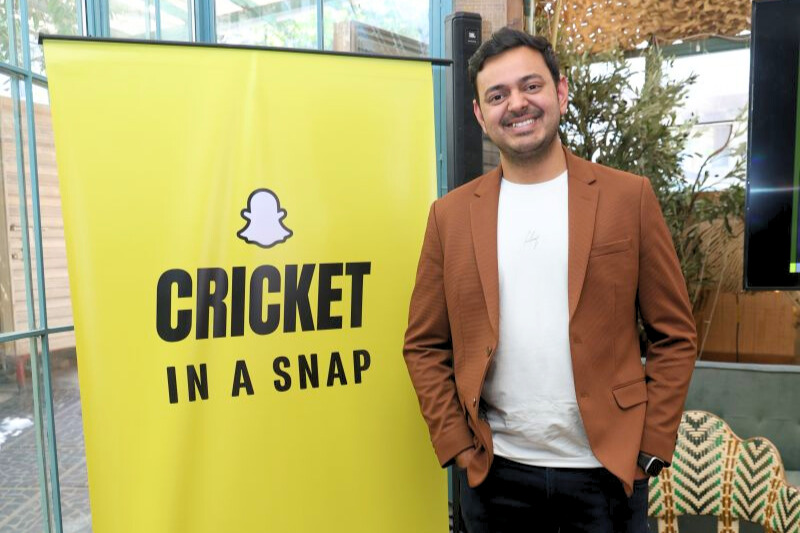
Mumbai | As India moves deeper into another high-intensity cricket season, with the Men’s ICC T20 World Cup final scheduled for 8 March and the Indian Premier League set to run from 28 March to 31 May, the sport is once again set to dominate screens across the country. At the same time, the cricket economy is expanding beyond traditional television into a multi-screen digital ecosystem where matches are increasingly accompanied by real-time conversations on smartphones.
While the broadcast continues to deliver the spectacle on television or streaming platforms, fan reactions, memes and instant commentary increasingly unfold on smartphones through chats and social platforms as the match progresses.
In this evolving viewing environment, the contest for audience attention is no longer limited to who streams the match, but also to who captures the conversations and reactions that follow every boundary, wicket or turning point in the game.
As companies compete to capture second-screen attention, platforms such as YouTube, Instagram and X largely revolve around highlights, commentary and real-time content streams. Snapchat, however, is positioning itself differently by leaning into private conversations and spontaneous fan reactions shared among close friend networks during key match moments.
With India’s Gen Z population crossing 370 million and 85% of them actively following cricket, Snapchat sees tournaments like the IPL as high-velocity social moments rather than just content consumption events. On the platform, cricket is also the most followed sport among Snapchat users, reflecting the scale of fan interest during major tournaments.
Usage behaviour further highlights the platform’s role as a companion screen during live matches. Snapchat says more than 90% of its users second-screen while watching cricket, with 55% viewing matches on television and 54% through streaming platforms, often switching between the live broadcast and their phones to react to match moments in real time.
As part of this push, Snapchat has introduced “Cricket in a Snap,” an advertising initiative designed to help brands participate in these real-time fan conversations through creators, immersive formats and camera-led experiences.
In a conversation with AdMirror, Yagnesh Ravi, Head of Ads Business, Snapchat India, discusses why Gen Z is central to cricket’s digital future, how the platform is tapping into second-screen behaviour during major sporting moments, and why Snapchat believes creation-led engagement offers brands a different kind of attention in the high-clutter IPL advertising environment.
Edited excerpts:
With platforms like Instagram and YouTube dominating digital conversations around cricket, what makes Snapchat relevant during a high-attention event like the IPL and how are you positioning the platform differently for brands this season?
Cricket in India is increasingly being shaped by Gen Z, the country’s largest demographic cohort at nearly 370 million people. The oldest Gen Z consumers are now approaching their late twenties, which means they are not just fans but also active decision-makers in consumption and brand engagement.
What’s interesting is that 85% of Gen Z in India actively follow cricket, making them one of the most influential cohorts in shaping the sport’s digital culture.
On Snapchat specifically, around 90% of our community falls in the 13–34 age bracket, and the platform now reaches roughly 250 million users in India. These users primarily come to Snapchat to connect with their closest friends and family, which makes moments like the IPL or a major India match particularly high-engagement occasions. During these cultural spikes, we consistently see significant surges in Snaps being sent between users, reflecting how live sporting moments trigger real-time conversations.
Another key insight we observed relates to second-screen behaviour. While many platforms talk about second-screening, few focus on what users are actually doing on that second screen. Our data suggests that 80% of Snapchatters are messaging friends or family while watching live matches.
That behaviour is important because it indicates that fans aren’t necessarily looking to consume more content while watching cricket. They are reacting to the match in real time with their social circle.
This is where Snapchat’s role becomes distinct. Instead of competing for attention with the match through scrolling feeds or long-form content, the platform functions as a parallel layer of live fandom a place where fans share reactions, celebrate wickets, debate decisions, and experience the emotional highs and lows of the game together.
For brands, this creates a very different opportunity. Much of digital advertising during major sporting events sits in passive consumption environments. Snapchat, by contrast, is fundamentally a creation-led platform users come to take photos, record videos, and communicate. That means brand formats can be immersive, interactive, and opt-in, rather than simply appearing as interruptive ads.
During a high-clutter period like the IPL, that ability to engage users through active participation rather than passive viewing becomes a meaningful differentiator for marketers.
“Instead of competing with the match itself, Snapchat functions as a parallel layer of live fandom where fans react, celebrate and debate moments in real time with their friends.”
Attention has become one of the most debated metrics in digital advertising, especially when Gen Z is often described as having shrinking attention spans. Snapchat claims it delivers significantly higher attention. What does the data actually show, and what explains that difference?
The conversation around attention spans especially with Gen Z often gets oversimplified. The reality is that attention is less about duration and more about context and user behaviour on a platform.
To understand this better, we conducted a large-scale attention study with Lumen Research, one of the world’s leading firms specialising in attention measurement, in collaboration with WPP.
One of the key findings was that adding Snapchat into a media mix can increase overall campaign attention by around 22%, particularly when targeting Gen Z audiences.
The reason largely comes down to how the platform is used. Snapchat is not primarily a passive scrolling environment. Users come to the app to create and communicate they take photos, send Snaps, chat with friends and share moments in real time. Because of this behaviour, the environment naturally generates active attention rather than passive exposure.
When brands start using multi-format, adaptive creative formats on Snapchat, the impact becomes even stronger. Gen Z users interact with content differently on the platform compared with traditional social feeds they engage through camera-based experiences, messaging, and participatory formats.
For advertisers, this means that Snapchat isn’t just another content feed competing for attention. Instead, it sits within a creation-led environment where users are already actively participating, which tends to translate into higher levels of engagement and attention for brands.
“Adding Snapchat into a media mix can increase overall campaign attention by around 22%, particularly when targeting Gen Z audiences.”
You mentioned “multi-format adaptive” advertising on Snapchat. What exactly does that mean in practice, and how does it differ from the way brands typically run digital campaigns today?
Traditional digital campaigns often rely on repeating the same video creative across multiple impressions, perhaps in different lengths such as a 30-second or 10-second cut. The challenge is that users quickly experience creative fatigue by the second or third exposure, the impact of the message drops significantly.
Snapchat approaches this differently through what we call multi-format adaptive storytelling.
Instead of repeating the same asset, the message evolves across different formats on the platform. For example, the first two exposures may appear as video, the next two could deliver the same brand idea through augmented reality (AR) experiences, and later impressions may surface through chat-based formats or interactive placements.
So when we talk about “multi-format,” we don’t mean minor variations of the same creative. We mean fundamentally different ways of experiencing the brand video, camera-based AR, messaging interactions, and immersive formats.
This approach allows users to encounter the same brand narrative in different contexts while they are actively using the platform, which significantly reduces fatigue and improves engagement.
Which categories or brands are currently leaning into Snapchat’s Gen Z strategy, and how significant is this cohort for marketers in India today?
The starting point for brands today is understanding the economic influence of Gen Z in India.
In a study conducted with Boston Consulting Group, we looked at how this demographic is shaping consumption patterns. The research found that Gen Z is expected to contribute roughly $930 billion in consumption in India by 2025, and around 43% of total consumption in the country is already directly or indirectly influenced by them.
That makes Gen Z not just an emerging audience for the future but a major driver of business today.
Because of that, interest in the platform isn’t limited to a few categories. We’re seeing brands across FMCG, technology, fashion, beauty, entertainment and consumer services increasingly explore ways to engage with this audience.
“Gen Z already influences nearly 43% of India’s consumption decisions, making them impossible for brands to ignore.”
Are you exploring partnerships with cricket leagues, teams, or creators to build branded content around the IPL and other cricket events?
One of the key ways we are enabling brand participation around cricket is through scaled collaborations with Snapchat creators, or “Snapstars.”
Brands can partner with multiple Snapstars to create content that captures the excitement and conversations around live matches. These creators already have strong engagement within their communities, which allows brands to connect with fans in a more authentic and conversational format.
In many cases, brands then take the content created by these creators and amplify it through paid media on Snapchat, which allows the message to reach a wider audience across the platform.
What is Snapchat’s core revenue model, and how do these creator or brand collaborations fit into that structure?
Snapchat is primarily an advertising-led platform, with the majority of our revenue coming from brand advertising on the platform.
Globally, we also offer Snapchat+, a subscription product that provides users with additional features and experiences.
Augmented Reality has been a major focus area for Snapchat globally. Are you seeing Indian brands increasingly adopt AR-based advertising, and which sectors are leading this shift?
We are seeing strong adoption of AR across the marketing funnel in India.
Initially, AR was largely used for brand-led campaigns focused on engagement and awareness. Today, brands are increasingly using it as a performance channel as well, enabling consumers to interact with products before making a purchase decision.
For example, AR allows users to virtually try on products such as apparel, accessories, or beauty items, which can directly influence purchase decisions.
From a performance standpoint, studies have shown that AR lenses can drive up to 2.4x faster engagement compared to traditional formats, which is why brands are increasingly exploring AR as part of their marketing mix.
As cricket increasingly evolves into a multi-screen, socially driven viewing experience, platforms are no longer competing only for viewership but for the real-time fan conversations happening alongside the match.
Snapchat’s strategy reflects this shift, positioning the platform as a conversation layer around live sporting moments, particularly among Gen Z audiences who already influence nearly 43% of India’s consumption.
With brands experimenting with multi-format storytelling, creator collaborations and AR-led experiences, the focus is gradually moving beyond reach to participation and shared reactions.


