











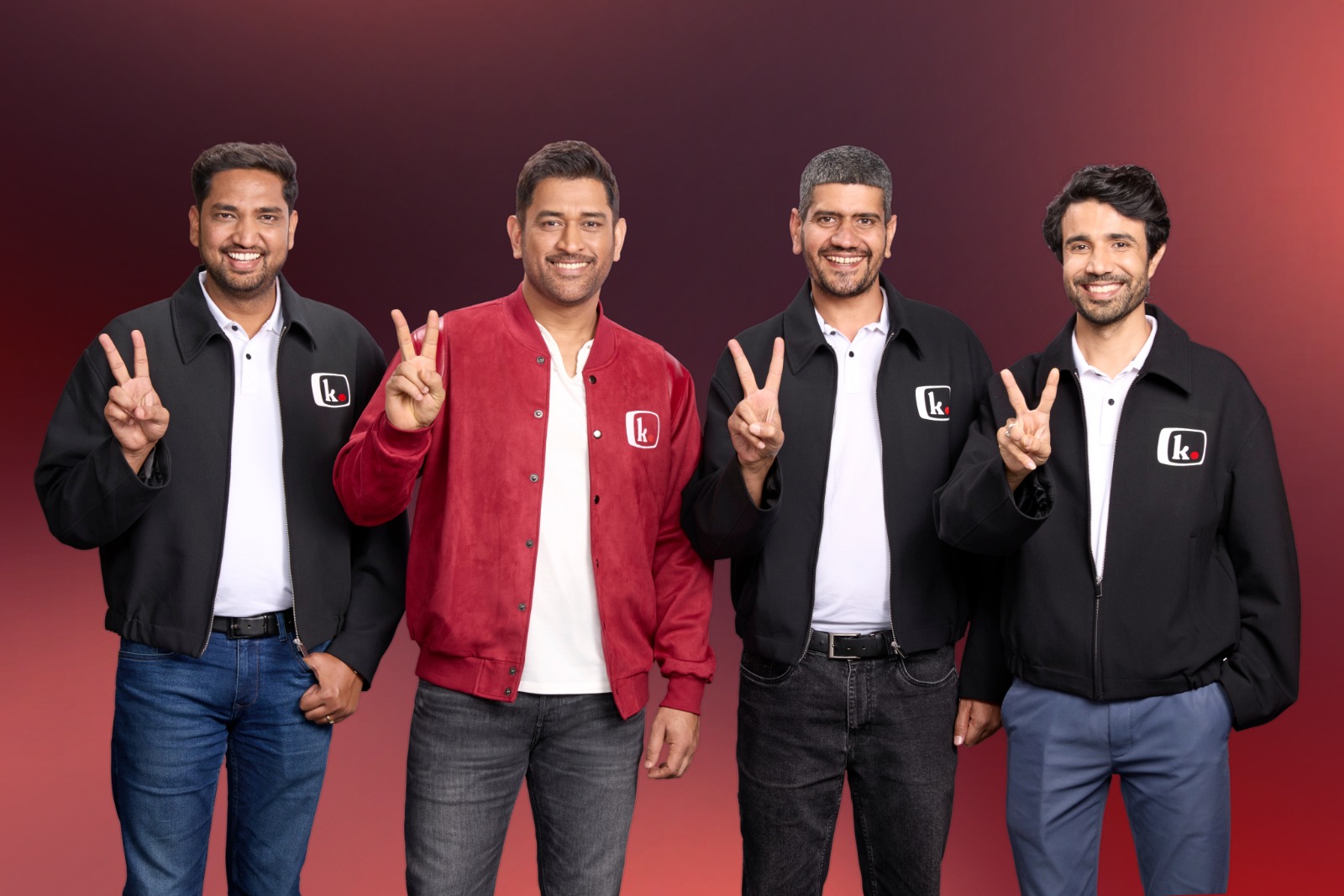
Mumbai: MS Dhoni, former India men’s team captain, has invested in AI-driven storytelling platform Kuku and joined its microdrama app Kuku TV as brand ambassador, signalling growing investor interest in short-format digital content.
The move reflects a broader shift in India’s content ecosystem, where consumption is moving from long-form streaming to high-frequency, short-duration formats driven by mobile-first audiences.
For over a decade, OTT platforms have defined digital entertainment through long-form storytelling. But that model is beginning to show signs of maturity, particularly in urban markets where subscription growth is slowing and content costs continue to rise.
Is microdrama becoming the next scalable content format in India?
In contrast, microdrama platforms are building a different consumption model. Episodes typically run for a few minutes, designed for repeat viewing across the day rather than long sessions. The shift is not just from long-form to short-form, but from passive viewing to habitual, high-frequency consumption.
Founded in 2018 by Lal Chand Bisu, Vinod Kumar Meena, and Vikas Goyal, Kuku operates a portfolio of apps including Kuku FM for audio storytelling, Kuku TV for microdramas, and Guru for edutainment, positioning itself as a multi-format storytelling ecosystem for mobile-first users.
Kuku’s scale reflects this transition. The platform has crossed 350 million installs across its apps, with a content library of over 20,000 titles across 7+ languages. Kuku TV has seen strong traction with over 180 million downloads, hosting more than 150,000 episodes, with several titles crossing 100 million views, and releasing hundreds of microdramas every month to sustain engagement.
Dhoni’s investment underscores confidence in this model. He said, “I chose to invest in Kuku, and also come on board as the ambassador for Kuku TV, because the platform really stood out to me. It has built a differentiated entertainment experience for audiences across India, spanning multiple languages and formats. The growth has been impressive, and I connect strongly with the founders, who come from small towns like mine and have built something of this scale. I believe in their vision of building an AI-driven storytelling platform from Bharat, for Bharat, and for the world.”
As part of the association, Kuku TV has also rolled out the #DhoniWatchesKukuTV campaign, built around short-format storytelling and reinforcing its positioning around quick, high-impact content consumption.
Can AI-driven storytelling scale profitably at this level of volume and speed?
At the core of this model is content velocity. Unlike OTT platforms that invest heavily in fewer, premium titles, microdrama platforms rely on scale, releasing large volumes of short episodes across genres and languages to drive engagement.
Artificial intelligence is emerging as a key enabler in this shift. Platforms like Kuku are using AI to streamline content creation, reduce production costs and accelerate output, while also enabling rapid experimentation across genres such as mythology, fantasy and futuristic fiction.
This approach allows platforms to scale storytelling in ways that were previously cost-prohibitive, especially in a format where volume and speed are critical.
This also aligns with the next wave of internet users. Growth in India’s digital consumption is increasingly being driven by non-metro audiences, where regional language content, shorter formats and low-friction access play a critical role.
Dhoni’s association strengthens this positioning. His strong connect with Bharat audiences mirrors Kuku’s target user base, making the partnership both a brand-building and distribution lever.
The platform is backed by investors including Fundamentum, Krafton, Vertex Ventures, Granite Asia and IFC, signalling growing institutional interest in AI-led storytelling platforms and the microdrama category. The company is also looking to scale its content offering and tap into international markets.
The company is positioning itself as an AI-native storytelling platform built from Bharat for global
audiences.
What does this mean for OTT platforms and traditional content models?
For the founders, the partnership reflects alignment beyond just capital. Bisu pointed to Dhoni’s instinct for backing unconventional ideas as closely aligned with the company’s approach, while Meena emphasised his broad national appeal as key to connecting with audiences at scale. Goyal also highlighted Dhoni’s understanding of consumer behaviour as valuable as the platform continues to build its AI-driven storytelling capabilities.
For the broader industry, this signals a structural shift. As OTT platforms face saturation and rising costs, newer platforms are exploring models that prioritise accessibility, speed and frequency over depth alone.
For advertisers, this creates a different kind of opportunity. Instead of relying on long-session engagement, brands can tap into repeated, high-frequency interactions, closer to how users engage with social media. This model also opens up new monetisation avenues through high-frequency ad inventory and potential micro-transaction formats.
The competitive landscape is also evolving. A growing set of startups is entering the microdrama space, betting on vernacular content, faster production cycles and mobile-first formats to capture the next wave of digital users.
Dhoni’s investment, therefore, is not just a celebrity endorsement or capital infusion. It signals a larger shift in how content will be created, distributed and consumed.
As digital entertainment fragments further, the next phase of growth may not be defined by longer formats, but by faster, more localised storytelling built for the small screen.


