











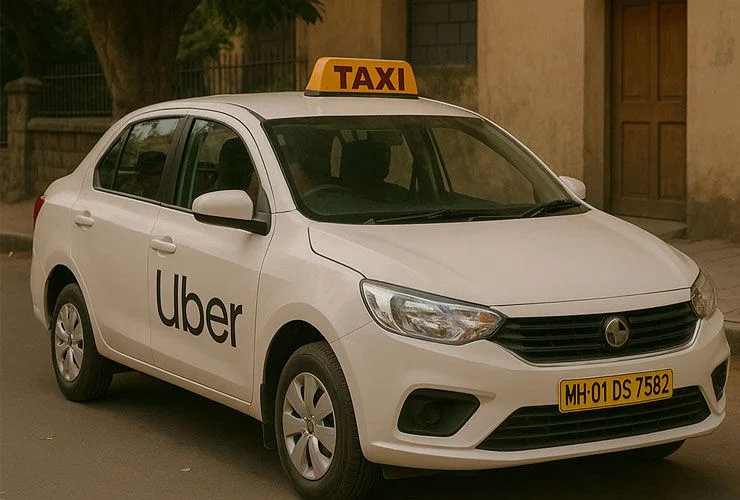
Uber Technologies increased its sales and marketing expenditure by 22.4% year-on-year to $1.56 billion in the third quarter ended September 30, 2026, compared with $1.28 billion a year earlier. The increase comes as the company steps up investments in its marketplace, including efforts to address driver supply constraints in markets such as India.
The higher expenditure coincided with a 20% increase in Gross Bookings to $59.8 billion, marking the company's fifth consecutive quarter of growth above 20%. Revenue rose 10% to $14.77 billion from $13.47 billion in the corresponding quarter of 2025. On a constant currency basis, Gross Bookings and revenue also grew 20% and 10%, respectively.
Uber recorded 4.1 billion trips during the quarter, up 16% year-on-year. Monthly Active Platform Consumers increased 14%, while monthly trips per consumer grew 2%. However, changes in the company's business model reduced reported and constant currency revenue growth by eight percentage points.
India Faces Driver Supply and Fuel Cost Pressures
Driver availability emerged as an operational challenge for Uber in India during the quarter. While consumer demand remained healthy, the supply of drivers did not expand at the same pace. Higher fuel costs also affected marketplace conditions, particularly in price-sensitive markets.
Uber CEO Dara Khosrowshahi said the company was seeing a gap between consumer demand and driver availability across several international markets. Besides India, Brazil remained undersupplied, although conditions improved slightly from the previous quarter. Canada also faced supply constraints amid tighter immigration flows.
CFO Balaji Krishnamurthy said elevated fuel prices had a greater impact in emerging markets such as India and Brazil, where both consumers and drivers are sensitive to changes in operating costs.
To address the imbalance, Uber is directing resources towards driver acquisition, retention and reactivation. Krishnamurthy said the company had seen an acceleration in global supply hours growth in October, with improvements in India and Brazil.
The company is also changing how it distributes incentives between riders and drivers. It has reduced rider incentives compared with the previous year and shifted a larger share of its spending towards driver incentives. While this could put pressure on consumer prices, Uber said it evaluates the impact on demand and profitability before making allocation decisions.
Khosrowshahi said the company's systems assess where incentives are likely to generate better returns, whether through attracting more drivers in one market or encouraging additional rider demand in another. These decisions draw on data from billions of trips across its platform.
Mobility Revenue Declines Despite Higher Trips
Uber's Mobility business reported revenue of $7.52 billion in Q3 2026, down 2% from $7.68 billion in the year-ago quarter. The decline came despite a 16% increase in trips and 17% growth in Gross Bookings.
The segment's operating income rose 27% to $2.36 billion from $1.86 billion, while its operating margin reached a record 8%, according to the company.
Uber attributed the moderation in Mobility Gross Bookings growth largely to supply constraints outside the United States. Higher fuel costs, tighter labour conditions and competition for drivers affected the availability of supply, even as consumer demand remained healthy.
The conflict in the Middle East also weighed on the segment, creating a 75-basis-point headwind to Mobility Gross Bookings growth during the quarter. For Q4, Uber expects a further headwind of approximately 100 basis points following subsequent escalations during the busy travel season.
The US market experienced a more limited moderation in growth, supported by benefits from insurance reforms. California, in particular, recorded a stronger acceleration in trip growth compared with the rest of the country.
Delivery and Freight Businesses Report Growth
Outside Mobility, Uber's Delivery business recorded revenue growth of 23% to $5.49 billion in Q3 2026, compared with $4.48 billion in the corresponding quarter last year. Freight revenue increased 34% to $1.76 billion from $1.31 billion.
At the consolidated level, GAAP income from operations increased 30% to $1.4 billion, while non-GAAP operating income rose 38% to $2.3 billion. Adjusted EBITDA increased 31% to $3 billion, with its margin as a share of Gross Bookings improving to 5% from 4.5% a year earlier.
Uber reported net income attributable to the company of $512 million. This included a pre-tax loss of $476 million from the revaluation of its equity investments. GAAP diluted earnings per share stood at $0.25, while non-GAAP net income increased 29% to $1.8 billion and non-GAAP earnings per share rose 35% to $0.88.
Cash generated from operating activities stood at $2.6 billion, while free cash flow was $2.5 billion. The company ended September with $10.1 billion in unrestricted cash, cash equivalents and short-term investments.
Uber Expects 18-22% Gross Bookings Growth in Q4
For the fourth quarter of 2026, Uber expects Gross Bookings of between $63.25 billion and $65.25 billion, representing year-on-year growth of 18-22% on a constant currency basis. The company expects a currency headwind of approximately one percentage point to
reported growth.
Non-GAAP earnings per share are projected at $0.95-$0.99, representing growth of 34-39% year-on-year. Adjusted EBITDA is expected to range between $3.13 billion and $3.23 billion.
Khosrowshahi said Uber would continue investing in expanding Mobility supply while building on the momentum in Delivery. He also said the company's autonomous mobility strategy was moving towards commercial execution. Uber expects approximately 700 fully driverless vehicles to be available on its platform by the end of 2026, increasing to more than 2,000 in 2027.
Krishnamurthy said non-GAAP operating income margin had reached a record 3.9% of Gross Bookings, compared with 3.4% in Q3 2025. He added that the company remained disciplined in allocating capital across its core businesses and autonomous mobility initiatives.
For India, the immediate challenge remains balancing consumer demand with driver availability. Uber's investment in driver acquisition and retention, alongside its approach to incentives, will be important to managing that gap as fuel costs continue to influence both drivers and riders.


