











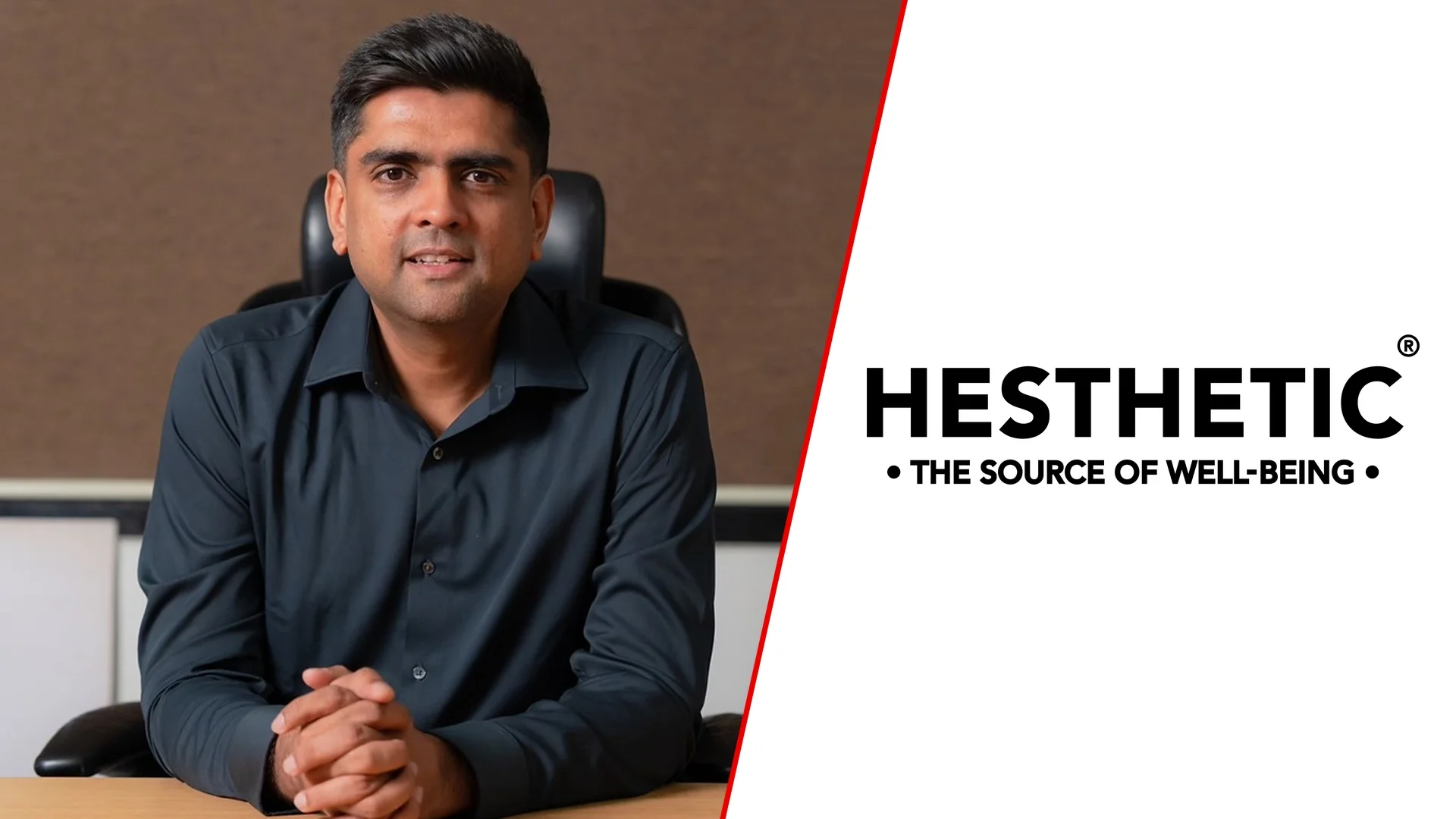
The festive season is no longer just about looking good for the big day. It is increasingly becoming a period of sustained self-care, conscious consumption and premium gifting. For HESTHETIC Life, this shift is visible in rising demand for single-ingredient, cold-pressed oils and purpose-led products as consumers scrutinise what goes into their beauty and wellness routines. In this interaction with AdMirror, Ashish Thesia, Founder and Director, HESTHETIC Life Pvt. Ltd., discusses the changing festive consumer, the rise of ingredient transparency, the growing importance of gifting, and why brands need to start building festive relevance six to eight weeks before the peak.
Festivals have become major beauty and self-expression occasions. How is this changing consumer demand for aesthetics and beauty services?
Festive preparation does not start at the salon anymore; it starts almost a month before, at home. Consumers are becoming more intentional about what they use, choosing fewer but better products and, increasingly, turning the bottle around to read the ingredients before they buy.
We see this shift early because we operate on the manufacturing side. Every year, the run-up to the festive season brings a visible increase in demand for single-ingredient, cold-pressed oils. The consumer question has evolved from "What will make me look good on the day?" to "What am I actually putting on my skin and hair?" That change reflects a broader movement towards conscious beauty, ingredient transparency and products that can become part of everyday routines, not just festive preparation.
Is the festive beauty consumer increasingly looking for subtle enhancement and personalisation rather than a conventional 'festive look'?
Completely. There was a time when there was one defined festive look and everyone broadly followed it. Today, consumers are building their own beauty routines around what works for them. They may choose kalonji for the scalp, castor oil for lashes and brows, or almond and moringa oils for the skin.
The bigger shift is away from the idea of one product that claims to do everything. Consumers are looking for targeted, purpose-led products that can be personalised to their needs. That is also why smaller 100 ml bottles have become one of the fastest-growing parts of our business. They fit naturally into this new mindset: accessible, specific and easy to incorporate into everyday self-care.
How are social media and the rise of multiple celebrations influencing the frequency and nature of beauty treatments around festivals?
There are two clear shifts. First, the festive season is no longer a single night. It now stretches from Navratri through Diwali and into weddings, Christmas and New Year celebrations. Consumers therefore want beauty and self-care routines that can be sustained across several weeks rather than a one-time treatment booked just before an event.
Second, social media has made the consumer significantly more informed. People understand terms such as cold-pressed and are increasingly asking how an oil was extracted, what goes into it and whether the process genuinely delivers what the label promises. For brands that are doing things correctly and transparently, this is a positive development. It raises the standard of the category and rewards businesses that can substantiate their claims.
The Indian festive consumer has changed what is the biggest shift you are seeing in how people spend, celebrate and make purchase decisions?
Gifting is one of the biggest shifts we see. Earlier, the focus was often on how the box looked; today, consumers are equally interested in what is inside it. What you gift increasingly reflects your values, your taste and even the way you think about wellness and self-care.
At the premium end, trust has quietly become more important than price in influencing the purchase decision. Consumers are willing to pay for quality when they understand the product, believe in its provenance and feel confident about the brand behind it. I do not see that shift reversing anytime soon.
What is the importance of the festive period to your business, and what categories, occasions or consumer behaviours are driving that demand?
The festive quarter is the most important period for our consumer-facing brand. Roughly a third of our direct-to-consumer sales come during this window, driven by gifting as well as families stocking up on products for the year ahead.
Our six-oil gift box has become a central part of the festive proposition because it brings together discovery, utility and premium gifting in one offering. While our B2B and export businesses operate on their own calendars, the festive period is where the consumer brand really comes to life and where we see the strongest combination of gifting intent, trial and repeat purchase behaviour.
What percentage of your annual marketing budget is allocated to the festive season, and how has that investment changed over the past two to three years?
We put a disproportionate share of our annual marketing investment behind the festive window, with about a third of our yearly marketing spend concentrated in a single quarter. That allocation has increased over the past two to three years as the brand and consumer business have grown.
However, the bigger change is not simply how much we spend, but when we spend it. We now start our festive marketing six to eight weeks earlier because by the time Diwali arrives, consumers have already formed their consideration set and, in many cases, made their purchase decisions. The festive opportunity is therefore won through early visibility, sustained storytelling and building relevance well before the peak.
"The brands that win during Diwali are usually the brands that were already part of the consumer conversation in September. In a crowded festive market, differentiation, proof and early visibility are what turn attention into lasting brand preference."
Ashish Thesia, Founder and Director, HESTHETIC Life Pvt. Ltd.
Beyond discounts and promotional offers, what does it take for a brand to genuinely stand out during an increasingly crowded festive season?
A discount can buy a sale, but it does not necessarily build a customer. For us, three things have consistently made a difference.
First, the product itself has to be genuinely differentiated. We cold-press on German single-screw machines, and that is a tangible difference consumers can experience rather than simply a claim printed on a label. Second, brands need to show proof instead of relying only on promises. Some of the most premium beauty brands in India and abroad source their oil from us, and that credibility often says more than a campaign can. Third, timing matters. The brands that win during Diwali are usually the brands that were already part of the consumer conversation in September. In a crowded festive market, differentiation, proof and early visibility are what turn attention into lasting brand preference.


