











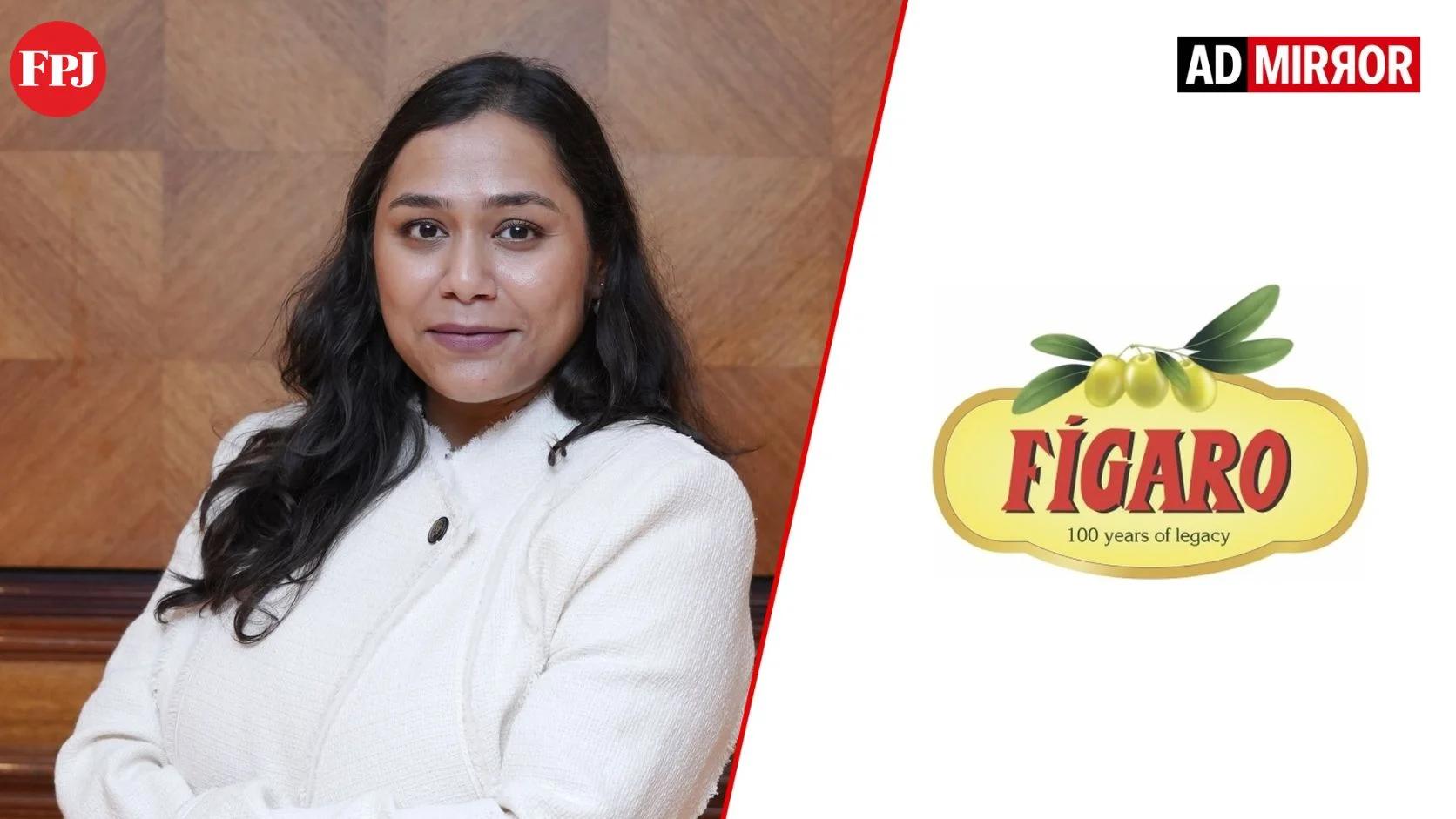
For a brand that has been part of Indian households for over four decades, Figaro's next growth chapter is less about protecting its legacy and more about expanding what that legacy can mean to a new generation of consumers.
The flagship brand of Madrid-headquartered Deoleo, the world's largest olive oil company, Figaro commands over 40% share of India's approximately Rs 880 crore olive oil category. Yet, with household penetration at barely 1%, the opportunity ahead is considerably larger than the market it currently serves.
The challenge is to take a brand traditionally associated with olive oil beyond its established consumption patterns and make it relevant to younger, more informed and increasingly experimental consumers. From repositioning olive oil as a multipurpose product to introducing convenient packaging formats, expanding distribution and leveraging content creators, Figaro is looking to create new consumption occasions.
Its marketing strategy also reflects a changing media landscape. In a departure from the digital-first approach adopted by many FMCG brands, Figaro allocated 55% of its media investment to television this year, supported by print, social media and performance marketing.
In an interaction with AdMirror, Satarupa Majumdar, Director of Marketing & Innovation, Deoleo India, speaks to Kalpana Ravi about Figaro's category leadership, the changing consumer funnel, the economics of digital marketing, regional brand relevance and the opportunities in taking olive oil to younger Indian households.
Figaro has been in India for over four decades. What has changed most dramatically about the Indian consumer, and what has the brand had to change internally to remain relevant without diluting the trust it has built over generations?
India is witnessing a significant consumer shift. Consumers are becoming more aware, discerning and informed in their choices. The
middle class is growing, purchasing power is improving and people are increasingly unwilling to compromise simply for the sake of convenience.
They want to make choices that are good for them.
For Figaro, this presents an opportunity. As one of the largest brands in India's olive oil category, we are seeing category adoption accelerate with increasing awareness. Our responsibility as a market leader is to take the category forward, build awareness and make olive oil more accessible.
We have enjoyed consumer trust for 40-50 years. The next step is to take that relationship further and introduce the category to a much wider consumer base.
Olive oil remains a relatively niche category in India, despite Figaro's leadership. What is the size of the opportunity, and where do you see the biggest headroom for growth?
The Indian olive oil category is approximately Rs 880 crore. While it may be considered niche, it is a significant category. More importantly, household penetration is approximately 1%, which indicates the enormous headroom available.
Figaro enjoys over 40% market share and has grown organically over the years, without aggressive communication or marketing-led penetration initiatives.
However, India has changed. We have a young consumer base, and the next phase of our journey is about making the brand relevant to this generation.
We are looking at four key growth levers.
First, communication. Consumers are already using Figaro in multiple ways, and we need to demonstrate that versatility more effectively.
Second, packaging. We have undertaken our first significant packaging transformation, making the goodness and multipurpose proposition of olive oil more visible.
Third, distribution. We currently have a footprint of approximately 2.5 lakh outlets and are looking to add another 50,000. E-commerce and quick commerce are equally important, contributing approximately 30% of our business.
Finally, accessibility. We are introducing more convenient pack formats, including PET bottles starting from 50 ml, making the product more approachable and affordable.
These four levers will drive our next phase of growth.
Figaro is moving beyond its traditional association with cooking oil towards a broader multipurpose proposition. How do you translate these new usage occasions into incremental consumption and a larger business?
Relevance is important, but so is relatability. As a brand, we do not want to dictate how consumers should use our product.
I don't believe brands grow through a top-down, prescriptive approach. They grow when consumers reshape them. Consumer insights tell us what needs to be done and how it should be done. That can be translated into new formats, innovations or consumption occasions.
We are seeing consumers discover different applications for olive oil, including personal care and wellness. These are not necessarily occasions created by the brand. Consumers have discovered them organically.
Our role is to understand these behaviours, study the underlying needs and see how they can translate into meaningful product offerings.
There are several consumption occasions that could unfold in the future, and these could significantly expand the category.
Historically, Figaro's strongest influence has been word of mouth, particularly through mothers and grandmothers. How do you translate that inherited trust into relevance among younger consumers who discover brands through social media, creators and digital platforms?
That is an important insight, and it presents both an opportunity and a limitation.
Our biggest influencers have traditionally been our mothers and grandmothers. They have built the brand through organic recommendations within households. But they are not necessarily present on Instagram or other digital platforms.
The world has changed, and we must change with it.
I often look at the example of Isabgol. Traditionally, it was associated with digestive health and consumed in a very specific way.
Today, consumers are incorporating it into cereals, brownies and other foods. The product hasn't fundamentally changed; consumers have changed how they perceive and use it.
Olive oil has a natural fit with today's growing interest in health, fitness, exercise and overall wellness.
We see content creators and influencers playing a role in demonstrating how olive oil can become part of everyday life. We don't
necessarily need a celebrity face or a mega influencer. What we need is relatable content that demonstrates different applications and makes the brand relevant to younger consumers.
How much of your innovation and marketing agenda is driven by consumer research and data? How do you distinguish between an emerging consumer need and an opportunity the brand can create?
For a marketer, the best outcome is when consumers tell you what needs to be done.
We work with Nielsen and Kantar, use household panels and have a comprehensive pre- and post-innovation evaluation funnel. We are extremely data-driven.
This extends to how we analyse our marketing investments and performance. We track new-to-brand consumers, retention and acquisition costs, particularly across digital and performance marketing.
For us, it is ultimately about unit economics and contribution margins. It is not enough to acquire consumers or generate awareness. We must understand whether the investment is creating sustainable business value.
The consumer journey itself has changed. Earlier, the funnel was relatively linear: a television commercial generated awareness, consumers purchased the product and then developed trust through experience.
Today, consumers may discover a product through a creator or a video, research it, evaluate it and build trust even before making a purchase.
In many ways, trust is now being established before the transaction rather than after it. Brands have to be responsive throughout this journey and ensure that the trust continues after purchase.
While several FMCG brands are moving towards digital-first media strategies, Figaro allocated 55% of its media investment to television this year. What informed this decision, and how are you balancing traditional media with digital, social and performance marketing?
This year, as we introduced our new packaging, we consciously decided to allocate 55% of our media investment to television.
It was an informed decision based on consumer research conducted with our media partners, Starcom. We looked at our priority markets, including our established markets as well as Tier 1 and Tier 2 cities, and studied what consumers were watching.
The research indicated that television continued to be an important medium for these audiences.
Since this was the first major packaging transformation in the brand's history, we needed to communicate that change at scale. Awareness and reach were the first priorities.
Our campaign featured Sunil Grover, who helped bring the new Figaro proposition to consumers. We supported television with print, social media, digital and performance marketing.
Does this mean television will always command the same share? Not necessarily. The media mix will continue to evolve. AI and newer digital platforms are also changing the landscape.
But our decisions will be based on where consumers are spending their time and what delivers results, rather than following a particular media trend.
Digital offers greater measurability and the ability to optimise campaigns in real time. How are you evaluating digital spends in terms of conversions, new-user acquisition and actual business impact?
Digital is not just measurable; it is highly trackable.
Five years ago, a brand could choose to invest in television, print, outdoor or digital and evaluate the campaign after it had run its course. Today, consumers expect evidence, and brands need evidence too.
For example, if we run a social media campaign and connect it to a platform, we can track whether the call to action is generating impressions or conversions. We can understand whether we are acquiring new-to-brand consumers or engaging existing loyalists.
These insights allow us to make changes while the campaign is running. If something is working, we can scale it. If it isn't, we can modify the approach.
With traditional media, we often have to wait for a longer period before the analytics become available. Digital gives us the ability to monitor performance much more closely.
However, I would not look at digital in isolation. The larger question is whether the entire media investment is contributing to the business. Ultimately, we have to connect marketing, sales and business economics.
Figaro is a global brand, but India has its own consumption habits, cultural nuances and price sensitivities. How do you balance global brand equity with local consumer preferences?
I would say Figaro is more Indian than Spanish in terms of its market identity.
India is a lead market for Figaro. Approximately 95% of the brand's volume comes from India. Whatever Figaro is today, and whatever it becomes in the future, will be shaped by Indian consumers.
We sometimes refer to it as our local jewel.
Take Uttar Pradesh, for example. Consumers there know Figaro as the green tin and hara dibbi wala jaitun ka tel. They don't necessarily need to be told that it is olive oil. That is the language through which the brand has established itself.
The iconic green tin and the association with jaitun ka tel are integral to Figaro's identity. We want to preserve those associations even as we introduce new formats and make the brand more contemporary.
The tin remains an important part of our heritage, but we also recognise that consumers want convenience. That is why we have introduced PET bottles and smaller formats that are easier to carry, dispense and use.
The objective is to evolve without losing the distinctive identity that consumers have embraced for generations.
With the next decade of Figaro focused on winning younger Indian consumers, what is the one thing the brand must fundamentally rethink, and what is the one part of its legacy it can never afford to lose?
Relevance. Relevance and relevance.
The ambition is to make Figaro part of everyday life. I often draw parallels with categories such as tea and coffee, which are deeply embedded in Indian households. Consumer behaviour around these categories has evolved over time, and brands have had to evolve alongside it.
We want consumers to discover Figaro through new usage occasions, understand its versatility and make it part of their lives in ways that are relevant to them.
We will continue to build awareness and demonstrate the different ways in which the product can be used.
But what we cannot afford to lose is the trust and familiarity that the brand has built over four decades.
That is what we aspire to take forward as we make Figaro more relevant to young India.


