











Mumbai: AI is rapidly democratising content creation. From editing and design to ideation, production and content workflows, tools that once required specialised skills are now accessible to almost everyone. But as the barriers to creating content fall, a bigger question emerges: when everyone has access to the same AI tools, what will differentiate the creators who succeed?
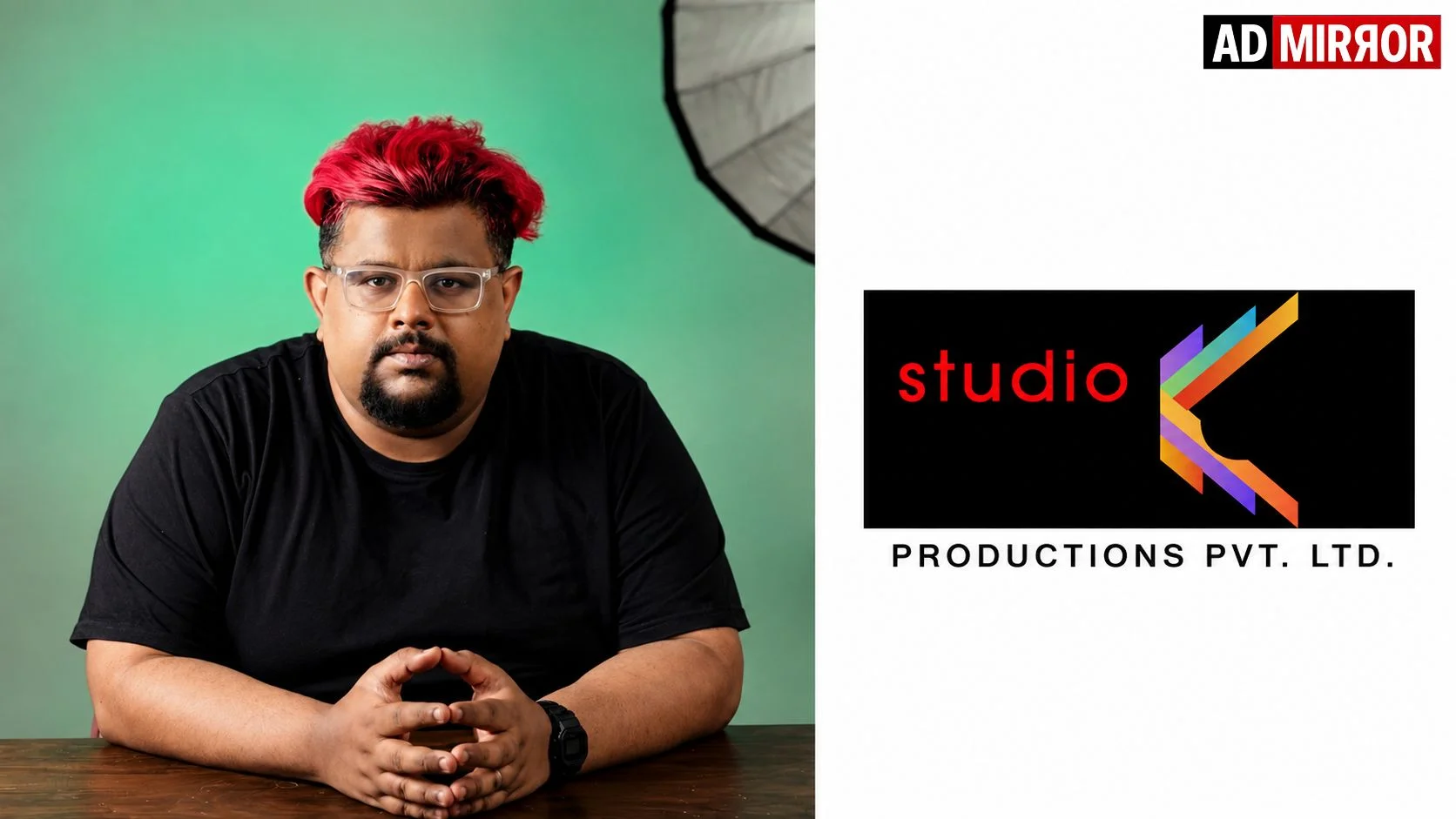
In this interaction with Ad-mirror.com, Archisman Misra, Founder & CEO of StudioBackdrops.com, argues that the answer lies beyond technology. As AI makes technical execution faster and cheaper, creative judgement, production knowledge, originality and the ability to understand an audience are becoming more or less valuable.
Drawing on nearly two decades across photography, visual arts, videography, advertising and content creation, Misra believes the creator economy is undergoing a fundamental shift. AI has not eliminated the need for craft; it has moved the bottleneck from production to decision-making. The challenge is no longer simply producing more content, but knowing what is worth making, what to reject and when something moves from finished genuinely good.
The conversation also explores the implications for India’s fast-growing creator ecosystem from the democratisation of professional production and the importance of practical skills to originality, audience trust and the commercial realities of building a sustainable creative business.
For Misra, the next generation of creators will not be defined by how quickly they master the latest AI tool. Their advantage will come from what they bring to the tool that AI cannot supply: judgement, experience, point of view and a reason to be heard.
AI is rapidly democratising content creation, from editing and design to ideation and production. If everyone has access to similar tools, what will ultimately separate successful creators from the rest?
Every few years a new content creation tool arrives that is touted as the next revolution. Cheap DSLRs, ring lights, Instagram, editing apps on the phone. Each time we are flooded by content that largely looks similar in terms of execution. And there is nothing setting one video apart from the other.
Tools have never been the problem, it's the value judgement, the understanding of your audience and the execution. When AI tools make execution free, the only thing that separates successful creators from the rest is this judgement. Just like all trends before, the content being created with AI is commonplace, acceptable. After a point it becomes boring, repetitive and largely ignored.
I’d like to add the example of the 2024 animated movie Flow. This animated movie has been touted as revolutionary for its storytelling, emotional payoff and beautiful animation. It won several awards too. It is a product of free software that’s available to everyone. But it wasn’t the tool that created an award winning movie. It was the creator behind the story who used their creativity and judgment to make something unique.
Is AI making technical execution less valuable or is it actually increasing the value of creative judgement, production knowledge and the ability to turn an idea into high-quality content?
AI tools are making technical execution easier, not less valuable. The reason an age-old adage like “practice makes perfect” exists is because it holds true no matter what you’re working on. Good work doesn’t come from a great idea. It comes from years of practice, failure, repetition, improvement and learning.
With the increase of dependence on AI tools, people are removing the practice part of their craft. Without the practice, the repetition, and the boring work the final result we get is a hollowed version of an idea.
Yes, the value of creative judgement and production knowledge becomes more important now. And this judgement can only be the result of hours of practice, years of developing skills. The problem is once the boring work is removed from the process, the judgement becomes weaker, the ability to turn an idea into anything viable becomes less probable.
How are you seeing creators change their day-to-day workflows as AI becomes embedded in content production? Which parts of the process are being transformed most significantly?
The middle of the job went first. Mood boards, first drafts, background clean-up, cutting one video into nine formats. Nobody misses any of it.
The two ends have barely moved. Deciding what to make is still a person sitting with a problem. The last ten percent, the part where something goes from finished to good, is still a person being annoying about details.
The change I find most interesting is not speed. It is that the cost of trying a version fell to zero, so people now make forty versions and choose badly. When a variant cost you three hours, you thought hard before making it, and that thinking was doing work you did not notice. Now the thinking arrives after, when you are tired and looking at forty things that are all fine.
The bottleneck moved from production to deciding. Very few people have trained for that.
There is a growing argument that as AI makes content creation easier, originality and authenticity will become harder to achieve. How can creators use AI without losing their individual voice or compromising audience trust?
A voice is not a style. It is a list of things you refuse to do. That is why it survives a change of medium and why it cannot be prompted.
These models are built to give you the middle of everything they have seen. That is the whole design. So if you take what comes out and ship it, you have published the average, and the average has no author. Your voice lives precisely where you disagree with the middle, and the only way to keep it is to notice when the output is easier to accept than the thing you actually meant.
On trust, audiences are more forgiving than people expect about how something was made and much less forgiving about being lied to. Nobody minds that you used a tool. They mind being told a story about a person who was never there.
Does the rise of AI make practical production skills and creative education more important? What are the capabilities that emerging creators should be investing in beyond learning AI tools?
More important, and for a duller reason than the one usually given. Practical skill is not romantic. It is diagnostic. When a shot is not working, someone who has done it four hundred times knows whether it is the light, the lens or the subject, and everyone else guesses expensively.
Three things worth the investment. Light, because it is the one thing every visual medium shares and it does not go out of date. People, because most creative work fails on a set for human reasons rather than technical ones. And finishing, which almost nobody teaches, because the gap between ninety percent and done is where careers are actually made.
I would add one that sounds unrelated. Learn what things cost. Pricing, quoting, chasing an invoice. Plenty of genuinely talented people leave this industry not because the work was bad but because the maths never worked.
India has one of the world's fastest-growing creator ecosystems, with thousands of new creators entering the market every year. What opportunities does AI create for India's next generation of creators and where do you see the biggest gaps in their preparedness?
The opportunity is geographic and it is real. We sell to photographers and studios in towns most people in Bombay could not place on a map, and for the first time the distance between them and a metro studio on pure execution is close to nothing. That gap used to be a decade of access.
The gap in preparedness is that most of them learned from tutorials rather than from standing next to someone better. A tutorial teaches you a result. It does not teach you to recover when the result fails, and recovery is most of the job.
The second gap is commercial. Enormous craft, very little negotiating position. People underprice, take verbal briefs, and absorb three rounds of unpaid revisions because saying no feels rude. AI does nothing about any of that. It just means you produce work you are underpaid for considerably faster.
As AI-generated and AI-assisted content becomes more commonplace, will audiences become more discerning about production quality and authenticity? Could professional production standards become a competitive advantage?
Audiences are not discerning and I would not build a business assuming they become so. They are impatient, which is more useful. They do not grade your lighting. They feel that something is slightly off and they leave, and if you ask them why they will not be able to tell you.
That is where production standards actually pay. Not as sharpness or resolution, which nobody has cared about for years. As evidence that somebody decided. A frame where the background was chosen, the colour was handled and one thing was removed reads as care, and care is legible even to people with no vocabulary for it.
So yes, an advantage, but a quiet one. It will not look like better production. It will look like your work holding attention for slightly longer than the thing beside it, over and over, for years.
Looking ahead three to five years, how do you see the creator economy evolving? Will the winners be those who master the latest AI tools, or those who combine technology with strong creative thinking, production expertise and a deep understanding of audiences?
Tool mastery has a shelf life of about eight months now. I have watched people build an identity on being early to a piece of software and then spend the following year defending a skill that stopped being scarce. Anyone whose advantage is a tool is renting that advantage, and the rent goes up.
Three to five years is long enough that the current tools will look quaint, so I would not bet on any of them. I would bet on the people who used this period to build the thing that is not the content. An audience that would follow them into a completely different format. A business underneath that survives a bad quarter. A body of work with a point of view running through it.
The ones still standing in 2031 will not be the ones who were best at the tools. They will be the ones who were building something the tools were only ever serving.


