











Ten years ago, hoichoi entered India's streaming market with a proposition that was both focused and differentiated: build a platform around Bengali storytelling and create a deeper relationship with an audience that was underserved by the early OTT ecosystem. A decade later, that proposition evolved into something considerably larger.
For hoichoi, the next phase is no longer just about being a Bengali OTT platform. It is about building a homegrown entertainment ecosystem where original content, owned technology, intellectual property, audio, microdramas, AI-led storytelling and multiple distribution formats come together to create value beyond a single platform or language.
What makes hoichoi's journey particularly relevant is the business model behind that evolution. The company has chosen to retain ownership of its core technology, build a direct relationship with its audience and, importantly, treat content as intellectual property that can have multiple lives through licensing, syndication, dubbing, adaptations and distribution partnerships.
From Indu becoming Vadhuvu in Telugu and Taqdeer travelling as Dayaa, to Sampurna finding another life as Chiraiya, hoichoi is demonstrating how regional IP can travel across languages and markets without losing its underlying value.
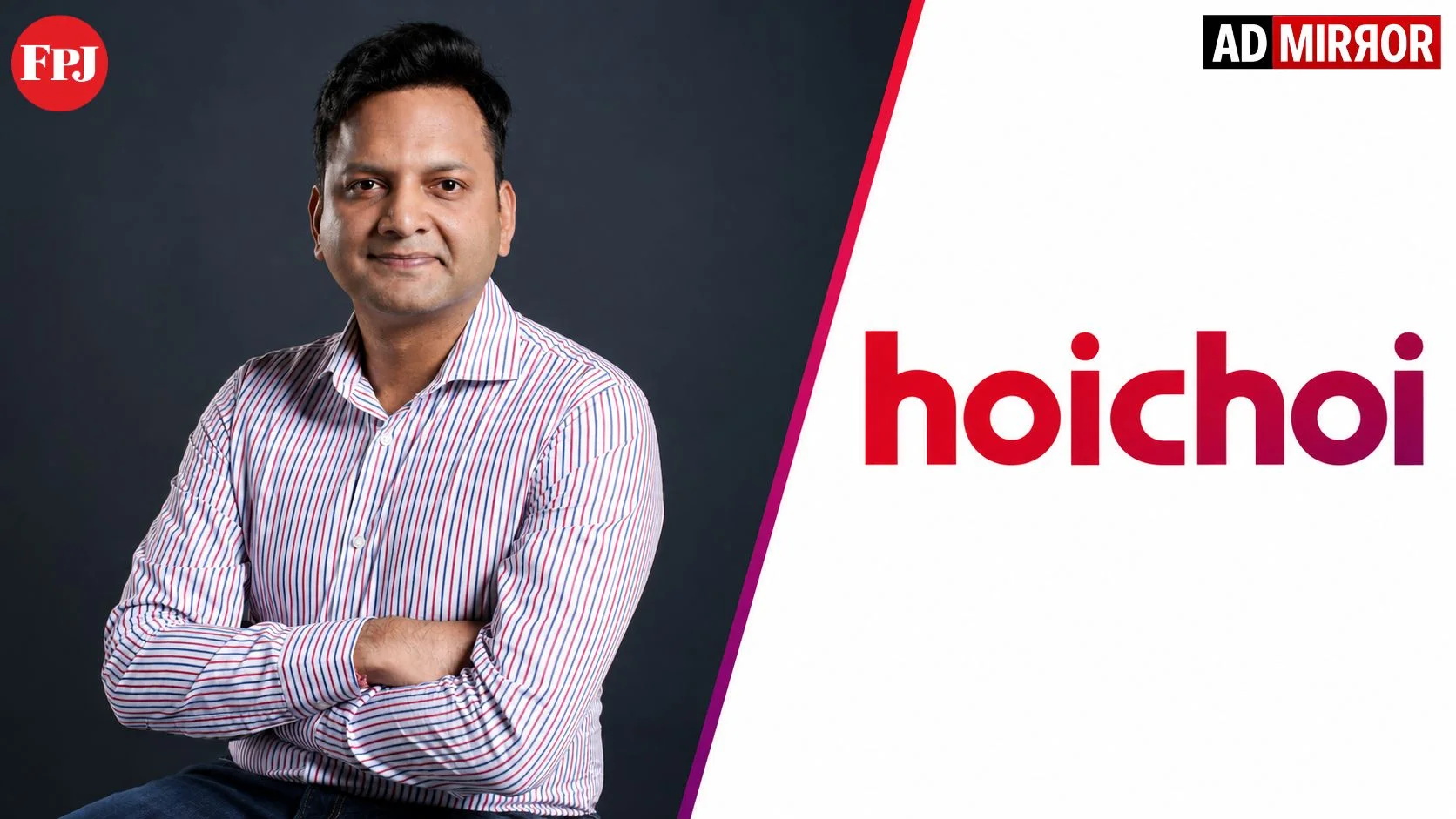
In this conversation with AdMirror, Vishnu Mohta, Executive Director SVF Entertainment and Co-founder, hoichoi, reflects on the platform's first decade, the strategic value of owning its technology, the economics of IP, the role of distribution partnerships and how a Bengali-born entertainment company is thinking about its next ten years.
Ten years ago, hoichoi set out to build a streaming platform around Bengali storytelling. Today, you describe it as a broader homegrown entertainment ecosystem spanning content, technology, audio, micro dramas and AI-led storytelling. What has changed most fundamentally in the way you think about the business and what has remained non-negotiable?
When we started hoichoi, the opportunity was very clear: Bengali audiences deserved a streaming platform that understood their language, culture and storytelling preferences deeply. But over the last decade, the business has evolved significantly. Streaming itself has changed, audience behaviour has changed, and technology has changed the way entertainment is created, distributed and consumed.
What has remained constant is our belief in the strength of homegrown storytelling. What has changed is the number of ways in which we can take that storytelling to audiences.
Today, we are looking at entertainment much more holistically. Original content remains at the heart of the business, but we are also exploring audio, microdramas, technology-led experiences and AI-enabled storytelling. So, the journey from being a Bengali streaming platform to building a broader entertainment ecosystem is about expanding the possibilities around our core strengths.
The ambition is not to move away from our Bengali foundation. It is to build on it.
At a time when many OTT platforms rely heavily on external technology ecosystems, hoichoi chose to build and retain ownership of its core technology. What business advantage has that given you?
Technology is not simply an infrastructure layer for us. It is an important part of the consumer experience and, therefore, an important part of the business.
Owning our core technology gives us greater control over how consumers discover content, how they interact with the product and how we understand their behaviour. It allows us to make product and business decisions based on what we learn directly from our audience.
For an OTT platform, the relationship with the consumer is extremely valuable. You want to understand what audiences are watching, what they are searching for, where they are dropping off and how their preferences evolve. Having control over the product and technology stack helps us respond to those signals much more effectively.
It also gives us the flexibility to experiment. As formats evolve and new technologies emerge, we can build and adapt rather than simply wait for an external ecosystem to determine what is possible.
hoichoi was born in Kolkata, but the ambition today is clearly much larger than Bengal. How do you take a deep regional storytelling DNA and make it relevant across languages, geographies and audience segments without diluting what makes the IP distinctive?
We don't see being regional and being global as contradictory.
In fact, strong regional storytelling can travel precisely because it is authentic. Audiences don't necessarily need a story to originate in their own language or geography to connect with it. What they need is a compelling story and characters they can relate to.
Our Bengali content remains the foundation of what we do. But once you create distinctive IP, there are several ways of taking that IP to new audiences through dubbing, adaptations, licensing and distribution partnerships.
The objective is not to make every story generic so that it can travel. It is to preserve what makes the original story interesting and then find the right format and language for another audience.
That is where we see a very large opportunity for Indian content. India has enormous storytelling diversity, and technology and distribution are making it increasingly possible for those stories to travel.
Titles such as Indu, Taqdeer, Sampurna and Noshtoneer have travelled into other languages through adaptations. Does the future of regional OTT lie not just in creating more content, but in creating IP that can have multiple lives?
Absolutely. One of the most important lessons of the last decade has been that the value of content does not necessarily end with its first release.
When we create an original IP, we think about the story and the audience first. But a successful IP can subsequently have multiple lives through another language, another platform, another territory or another format.
For example, Indu travelled into Telugu as Vadhuvu, Taqdeer became Dayaa, and Sampurna was adapted into Hindi as Chiraiya. Noshtoneer also travelled into Hindi as Sampoorna.
That creates a very different economic model around content. You are not simply spending money to produce a show and then moving on to the next title. You are building an intellectual property asset that can potentially continue to generate value.
For us, therefore, IP ownership is extremely important. The more lives a good story can have, the greater its potential reach and commercial value.
"You are not simply spending money to produce a show and then moving on to the next title. You are building an intellectual property asset that can potentially continue to generate value."
Vishnu Mohta, Executive Director, SVF Entertainment and Co-founder, hoichoi
The OTT conversation has increasingly moved from subscriber acquisition and scale to profitability, retention and monetisation. What does a sustainable OTT business look like for hoichoi today?
We have always believed that scale by itself is not the only measure of a healthy OTT business. You need a sustainable relationship between content investment, audience engagement, revenue and profitability.
For hoichoi, the strength of the model comes from having a very clear understanding of our core audience and owning distinctive intellectual property. Bengali content continues to be our foundation, but the opportunity to monetise that IP extends beyond the original platform.
Licensing, syndication, dubbing and adaptations can all create additional value from content that we have already invested in.
The other important aspect is audience ownership. When you have a direct relationship with your audience, you understand their preferences better and can build the product and content proposition accordingly.
So sustainable growth, for us, is about balancing three things, creating content audiences genuinely want, building a direct relationship with those audiences, and finding multiple ways to monetise the intellectual property we create.
hoichoi has expanded the reach of its content through OTT partnerships, licensing, syndication and telecom collaborations. How do you decide what stays exclusive to hoichoi and what should travel to another platform?
We look at distribution as a way of extending the life and reach of our IP.
Our owned platform and direct subscriber relationship remain extremely important. At the same time, there are audiences who may discover our content through other platforms or distribution partners. We don't necessarily see those two approaches as mutually exclusive.
The question is what role a particular partnership can play in extending the reach or value of a piece of content. If an IP can reach a new audience through a different platform, a different language or a different distribution arrangement, that can create incremental value for business while also bringing more people into the hoichoi ecosystem.
We have therefore built partnerships with leading OTT platforms as well as telecommunications partners in Bangladesh, alongside licensing and syndication arrangements.
Going forward, we will continue to look at strategic partnerships that can help our content travel further while ensuring that the core relationship between hoichoi and its audience remains strong.
As hoichoi enters its second decade, where do you see the biggest growth engines new languages, new formats such as microdramas and audio, AI-led storytelling, international audiences, or deeper monetisation of the IP you already own?
We don't see this as either or question.
The next phase is likely to involve several of these opportunities coming together. Our existing Bengali IP will continue to be extremely important, and we see significant potential in taking that IP into other languages and markets.
At the same time, audience behaviour is changing rapidly. Short-form storytelling, microdramas, audio and other emerging formats are creating new consumption occasions. AI is also beginning to influence how content can be conceived, developed and produced.
The important thing is to experiment without losing sight of what audience's value.
Our technology capabilities also allow us to learn quickly from audience behaviour and adapt the product accordingly. So the second decade is about building on the foundation we have created while remaining open to new formats, new technologies and new markets.
If we were to meet again ten years from now, what would you want hoichoi to be known for a successful Bengali OTT platform that expanded globally, or as the company that demonstrated how a homegrown Indian entertainment IP can build a much larger ecosystem around itself?
I would like us to be recognised for the latter.
Bengali storytelling will always be at the heart of hoichoi. That is where we started, and it is an important part of who we are. But our ambition has never been limited to geography.
If, ten years from now, we can demonstrate that a company can build world-class intellectual property from India, develop the technology to understand and serve its audiences, take those stories across languages and markets, and create multiple businesses around that IP, that would be a meaningful achievement.
India has extraordinary storytelling talent and enormous cultural diversity. There is an opportunity to build entertainment businesses that originate here but are not restricted to one market.
That is the larger journey we see for hoichoi from a Bengali streaming platform to a homegrown entertainment company with the ability to create, own, distribute and scale stories across audiences and markets.


