











Mumbai: Westside has spent 25 years building one of India's most trusted fashion brands without relying on constant discounting, celebrity endorsements or third-party marketplace listings. With more than 300 stores across 97 cities, the Trent Limited-owned retailer is now looking to almost double its footprint, targeting a 500-store network while preparing for its first meaningful expansion beyond India.
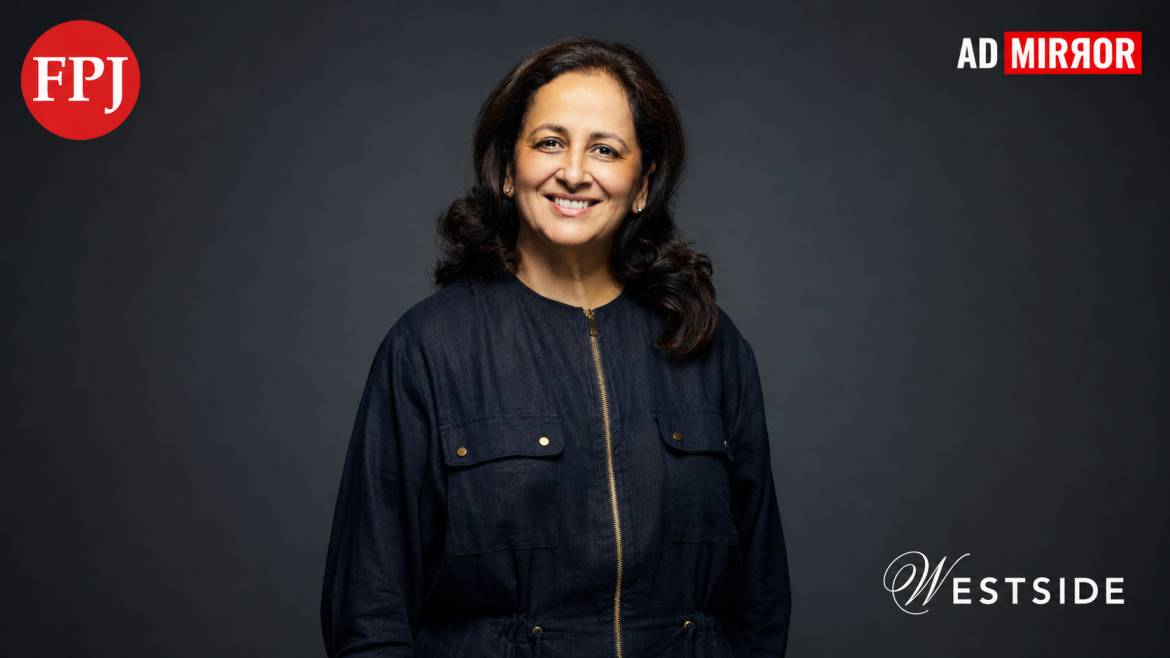
Two months into her role as Chief Executive Officer, Shailina Parti says her mandate is straightforward. "Making the big bigger," she told AdMirror.
"Stepping in as CEO is the push to scale, grow faster, fashion at speed with a team that can really deliver good design and have that global international feel ready so that we can step outside of India," she said.
The strategy is already translating into growth. Westside added 60 stores in FY26, the highest annual expansion in its history. Its e-commerce business grew more than 35 percent year on year. Youth fashion brands delivered over 30 percent like-for-like growth. And Pome, the company's lab-grown diamond venture, is set to expand from five pilot locations to 30 stores over the next 12 months.
"We have had a very interesting fashion pivot journey and landed the brand as a fashion-first brand but we have been growing slowly in the sense of opening 10 to 20 stores a year. Last year we opened 50 but our ambition now in the next 18 months is to really go and build a portfolio of 500 stores over the next two to three years," she said.
The expansion will not follow a blanket Tier II and Tier III push. "We are a metro and Tier I and Tier II brand and we have a sister brand, Zudio, which is really doubling down on Tier II and Tier III. It is important as brands that we have our own space in the Indian market," Parti said. Tier III cities are not ruled out entirely. "It is not a no if it is a Tier III that will within 18 months become Tier II in the nature of how its population is shifting," she added.
International expansion has already begun. Westside has started selling online in the GCC. "We have just started in a very small way to sell Westside online in GCC. We are thinking of the next strategy and the next roadmap of geographies," Parti said. The UK and possibly the US remain under consideration, although the current geopolitical environment has prompted a reassessment. "What we thought before the war is different to our thinking now. We are just reviewing our strategy," she said.
One of Westside's most distinctive strategic choices has been its refusal to sell through third-party marketplaces. While competitors list on Myntra, Ajio and Flipkart, Westside sells exclusively through its own stores, website and app.
"For every Myntra or every Flipkart or every online brand where I would pay 30 percent commission for the privilege of being on someone else's platform, diluting my brand handwriting, I control my assets, my marketing vision, I choose my models, I create my stories. That slight exclusivity and that feeling of missing out is also part of the success. If you are too accessible and too much everywhere, you lose a bit of that premiumisation and exclusivity, that mystery around the brand."
Shailina Parti, CEO, Westside
Westside is a 100 percent private-label retailer. Around 80 percent of its merchandise is manufactured in India.
"Being a 100 percent private-label retailer gives us end-to-end control from design through to delivery. This enables us to bring global trends to the Indian consumer with speed while maintaining a clear design vision, a consistent brand identity and stronger margins. It also allows us to respond quickly to changing customer preferences without compromising on quality or value," she said.
Artificial intelligence is increasingly reshaping Westside's product development process. "Where a physical designer could design 20 things a day, an AI support can give us 500 a day. So the speed of ideas has 10X," Parti said. The result is shorter lead times and less stock committed upfront.
Footwear, innerwear and beauty are becoming increasingly important growth categories for Westside, with Parti describing all three as categories that continue to offer significant headroom for growth. In beauty specifically, Westside's products are vegan and cruelty-free.
"We continue to see strong momentum in fragrance, a category where we believe we have only just scratched the surface," she said.
Pome, the lab-grown diamond brand, currently sits at approximately 2 percent of revenue but Parti expects it to reach 5 percent.
"It will never be the driving force because we are a fashion brand. What it will be is a premiumisation offer in selected stores that have a much more premium look and feel," she said.
"We will take iconic stores and give them experiential retail concepts that allow us to bring customers in for more than just clothes and apparel," she added.
Home products are deliberately held at around 5 percent of revenue.
"If we start to become a home decor or a big home offer, we will lose the ability to stand for fashion first," she said.
Despite Zudio crossing one billion dollars in sales, Parti does not see the two brands in conflict.
"There is room for both. Westside has the headroom and the opportunity to premiumise its offer. Zudio has the fast fashion vision that means they want to infiltrate every possible market in the country," she said.
On international competition, Parti is measured. Zara, part of Trent's own portfolio through a joint venture with Inditex, has 23 stores in India. H&M has fewer than 100.
"We will have 350 stores. We sell more units online than Zara does. We have gone beyond metros to Tier I and Tier II. I am not competing with them. I am doing my own version of affordable fashion which is resonating," she said.
Youth fashion brands within Westside are delivering over 30 percent like-for-like growth, which Parti says reflects people moving into the Westside environment for an international look and feel at more affordable prices.
"We have a clear mandate to keep engaging this audience through initiatives such as YNG, a platform created by Westside to discover, nurture and showcase India's next generation of fashion creators. Programmes like these help us build deeper engagement and keep Gen Z customers coming back," she said.
The next generation of Westside stores will move beyond traditional retail formats. "We want to roll out an enigma of surprises. That suite of surprises is what will keep customers coming back to discover more and different things. We are opening up periods of discovery that allow selling in an environment that is always unexpected. We do not want a cookie-cutter formula approach," Parti said.
"A sustainable fashion brand is built on consistency. It starts with having a very clear vision of what the brand stands for and being disciplined about bringing that vision to life with every new collection. That consistency has built trust over time, and ultimately, that trust is what creates a truly sustainable brand."
Shailina Parti, CEO, Westside
"Making the big bigger is the most simple way I can say what I am doing as CEO," Parti said.
For Westside, the next phase is no longer just about opening more stores. It is about proving that an Indian fashion brand can build meaningful scale beyond its home market.
"I think there is no big fashion brand that has really made its mark beyond the shores of India and we would like to consider that."
This story was co-published with the Free Press Journal's BrandSutra section on 6 July 2026. Read the print edition here


