











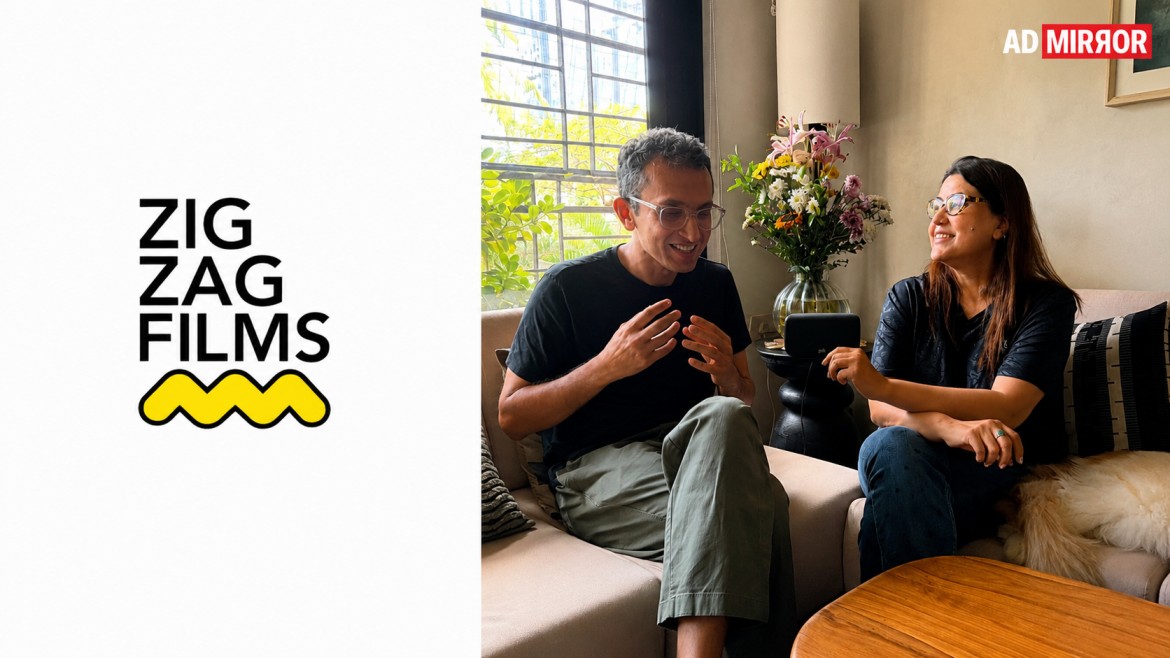
Mumbai: At a time when brands are increasingly obsessed with performance metrics, platform algorithms and short-form content, humour remains one of advertising's most powerful differentiators. Few production houses understand that better than ZigZag Films.
Founded in 2018 by filmmaker Abhijit Sudhakar and producer Anupama Ahluwalia, ZigZag has built a reputation for creating some of India's most recognisable and culturally resonant advertising campaigns. From PhonePe's long-running films featuring Aamir Khan and Alia Bhatt to memorable campaigns for Swiggy, Meesho, MakeMyTrip, Khatabook and Samsung, the company has consistently delivered work rooted in everyday observations, relatable characters and sharp comedic storytelling.
In a conversation with AdMirror, the duo reflected on why humour is becoming more valuable in a cluttered attention economy, how cultural insights emerge from observation rather than trends, why AI is more likely to transform production than replace it, and the lessons they have learned while building one of India's most respected independent production houses.
Humour Is No Longer Optional. It's Becoming a Competitive Advantage.
Contrary to the belief that performance marketing has reduced appetite for creative storytelling, Sudhakar believes humour and visual quirkiness are becoming increasingly important as brands fight for attention.
"Everybody is trying to stand out," he says. "Quirk and visual humour are things clients are actively trying to latch on to because there is so much clutter. The time for simple slice-of-life storytelling has probably reduced. Humour has become a new normal."
For him, successful humour begins with respecting the script. "A lot of it is script-driven. I don't start with a treatment and retrofit it onto a script. The question is always: what does this script need and how do I enhance it?" While ZigZag often contributes ideas during development, Sudhakar says understanding the creative journey behind a script is equally important. "You have to understand why earlier versions were rejected and how the script arrived where it did. Once you understand those boundaries, you can push within them."
Great Advertising Comes From Observation, Not Trends
Many of ZigZag's campaigns feel instantly familiar because they are rooted in everyday Indian behaviour. According to Ahluwalia, that stems from Sudhakar's ability to observe people and situations others often overlook. "He's constantly noticing things. Sometimes he'll post the most random thing happening on the street and immediately connect it to human behaviour. A lot of his work comes from being a keen observer."
But observation alone is not enough. The duo believe the real challenge is avoiding clichés. "When we receive a script, one of the first things we ask is: what are the obvious choices we can discard?" says Ahluwalia. "Whether it's performance, characterisation or the type of joke, we try to move away from the expected. Once you remove the obvious, you begin discovering what makes the work distinctive."
Sudhakar adds that authentic storytelling comes from focusing on shared human behaviour rather than cultural stereotypes. "Human behaviour is similar across cultures. The goal is never to lean on clichés. It's to find something truthful and relatable."
Production Versus Creativity: The Founders' Eternal Debate
As co-founders, Sudhakar and Ahluwalia represent two sides of the advertising ecosystem — creative ambition and production discipline. Naturally, disagreements happen. "This is the eternal fight between creative and production," Ahluwalia laughs. Yet both founders say they aligned on one principle from day one: the project comes first. "We agreed that whatever works best for the project wins," she says. "That doesn't mean there aren't arguments. There are plenty. But the discussions are always about where we can compromise and where we shouldn't."
Sudhakar adds that the company's culture was built around having fun, being transparent and treating people fairly. "We told ourselves we'd never take ourselves too seriously. Advertising should be enjoyable. And we'd always be fair and transparent with everyone we worked with."
Ahluwalia points to another value that has become increasingly important. "Pay people on time. It sounds simple, but it's not always common. We've made sure that regardless of our own payment cycles, our people are paid on time. That's something we've never compromised on."
AI Will Transform Production. It Won't Kill Storytelling
Like many in the industry, ZigZag has begun experimenting with AI workflows. But Ahluwalia is quick to dismiss the idea that AI simply means generating images with prompts. "People think AI is just sitting in front of a machine and generating content. It isn't. There's planning, budgeting, workflows, timelines and execution involved. A lot of production thinking still goes into AI."
Rather than replacing filmmaking, she believes AI will expand creative possibilities. "It's fascinating because it gives filmmakers more freedom to think, visualise and experiment."
"I think most of the industry will eventually move towards AI-assisted creation. Traditional shoots won't disappear completely, but they may become more specialised. You'll still need directors, editors, sound designers and creative vision. The tools will change. Storytelling won't."
Abhijit Sudhakar, Co-founder, ZigZag Films
The 30-Second Film Is Becoming a Luxury
Perhaps the most striking observation from the conversation is how dramatically content formats have changed. According to the founders, modern advertising campaigns are designed simultaneously for television, digital, commerce platforms, social media and multiple aspect ratios. "It's no longer just one film," says Ahluwalia. "You're delivering horizontal, vertical, square formats, multiple language versions, subtitles, performance marketing assets and creator content. The volume is enormous."
The consequence is shrinking storytelling space. "Thirty seconds itself feels like a luxury now," says Sudhakar. "Sometimes you watch a beautiful film and before you've settled into it, it's over." The pressure comes from platform metrics. "Brands want something to happen in the first three seconds because data says viewers drop off after five seconds. Those constraints inevitably shape the story."
The Future Belongs to Risk-Takers
Looking ahead, both founders believe experimentation will define the next era of advertising. For Sudhakar, the challenge is constantly reinventing the way stories are told. "What keeps me excited is finding a different way of telling the same story. That's what keeps you relevant." He points to projects such as Slice's surreal animal-world campaigns and PhonePe's miniature-driven visual environments as examples of creative risks that paid off. "If you don't take those chances, what's the point?"
"Be fearless. If you're constantly worried about budgets, outcomes or whether something will work, you'll never take the leap. You don't know where you'll land until you jump."
Anupama Ahluwalia, Co-founder, ZigZag Films
For ZigZag Films, that combination of creative curiosity, production discipline and a willingness to embrace change may explain why, in an industry obsessed with the next trend, they continue to create work that people actually remember.


