











Mumbai: When global advertising networks merge, the headlines often focus on scale, valuations and structural realignments. But inside the market, the real question is far more human: What happens to the people, the culture and the client relationships that built those agencies in the first place?
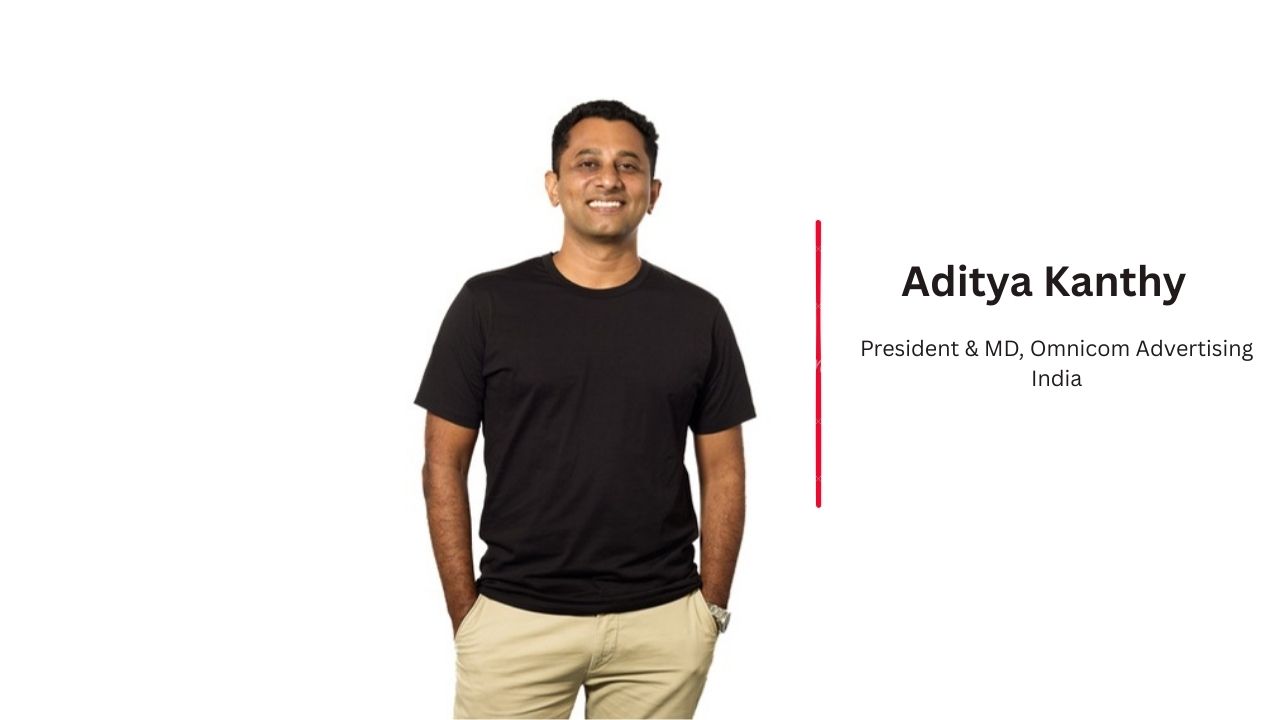
As global advertising networks consolidate, the real test of integration often plays out not in boardrooms but in local markets where client relationships, agency culture and talent ecosystems have been built over decades. In this conversation with AdMirror, Aditya Kanthy - President and Managing Director of Omnicom Advertising India. Shares how the newly integrated Omnicom advertising entity in India approached this transition.
Kanthy explains why protecting agency culture, retaining leadership talent and preserving client trust became the central pillars of the integration and even as the group brought together brands such as Lintas, Mudra, Ulka, Kinnect, 22feet and MRM under a stronger, future-ready structure.
When a merger of this scale happens at the top of the global advertising world, what is the first thing a leader in India really starts thinking about? People, clients, culture or structure?
In reality, it is a combination of all those factors.
In this particular case, one of the most important considerations was protecting the strengths that already existed. The agencies involved brought with them strong foundations, and there was significant thought applied to ensuring that those strengths were preserved rather than diluted.
You can see that reflected in the way the architecture has been structured the decisions around brands such as Lintas, Mudra and Ulka, and the emphasis on leveraging capabilities across Kinnect, 22feet and MRM. These decisions were taken with a clear understanding of what the Indian market requires and where these brands bring distinctive value.
Equally important were the people decisions. Talent is arguably the most critical asset in any acquisition of this nature. You are not just acquiring agency brands or revenue streams you are bringing together some of the most capable creative, strategic and digital talent in the industry.
“Talent is arguably the most critical asset in any acquisition of this nature. You are not just acquiring agency brands or revenue streams you are bringing together some of the most capable creative, strategic and digital talent in the industry.”
In the newly combined Omnicom advertising entity, we now have what is arguably one of the widest and deepest pools of top advertising talent in the country across our agencies.
So the thinking is both strategic and human creating the right structures and capabilities to win in the local market while also protecting the culture, talent and ways of working that made these agencies successful in the first place.
From your experience, what separates integrations that remain financial exercises from those that genuinely reshape how agencies operate and create value?
The difference often comes down to a deep understanding of culture.
Every successful agency has a core, a set of values, ways of working and creative energy that define how it operates. That culture is not incidental; it is central to why clients choose to partner with an agency and stay with them for years, sometimes decades.
In our industry, long-standing relationships are common. You have brands that have stayed with their agencies for 10, 20, even 40 or 50 years. Relationships with brands like Tata or Amul are built on shared history, trust and consistent delivery over time.
Clients also understand that the industry is evolving and that consolidation is inevitable in many parts of the business. They are pragmatic about change. What matters most to them is continuity in the teams they trust.
In many of our conversations with clients during this integration, the key question was simple: Will the teams we work with remain the same?
As long as the people who understand their brands and businesses continue to lead the relationship, most clients are open to the broader structural changes happening at the holding group level.
So the real success of an integration lies in balancing two things a)preserving the continuity and b) trust that clients have in their teams, while also bringing new capabilities, perspectives and structures that make the partnership even stronger.
When those two elements come together stability and new opportunity integrations move beyond financial consolidation and begin to genuinely create value for clients and agencies alike.
Were these client conversations happening in tandem with the developments unfolding globally within the group?
Client conversations could only begin after the acquisition was formally completed. Because of regulatory requirements, there were clear boundaries around what could be discussed before the deal received approval.
However, there was considerable preparation behind the scenes. We spent time thinking through what needed to be communicated, who needed to communicate it, and how those conversations should unfold. That planning was critical because in relationships as long-standing as ours with many clients, the messenger is just as important as the message.
Clients are far more reassured when they hear directly from the people they already know and trust, rather than from someone new or unfamiliar. So we were very deliberate about ensuring that the conversations would be led by the leaders who had built those client relationships over the years.
Once regulatory approvals came through which happened quite quickly towards the end of November and early December those conversations began.
One of the most reassuring signals for clients was the continuity of leadership. Many of the leaders who represented these agencies before the acquisition continue to hold significant roles within the new structure. Their presence sends a clear message that what has been built over the years is valued, and that the integration is about strengthening those foundations rather than replacing them.
For clients, hearing this directly from the teams they trust makes a significant difference. It reinforces both the continuity of the partnership and the opportunity to bring new capabilities and perspectives to the relationship.
Where do global integrations often underestimate the complexity of the Indian market? Is the real challenge about systems and processes, or about mindset and legacy ways of working?
If you look at the history of our industry in India, there are several examples where global integration decisions were made without fully accounting for local market realities. And over time, those decisions have offered valuable lessons.
One of the biggest mistakes global networks sometimes make is underestimating the strength of local agency equity. In India, agency brands such as Lintas, Mudra or Ulka carry decades of credibility and not just with clients but also with talent. They are deeply embedded in the market and in long-standing client relationships. Ignoring that local equity can create unnecessary disruption.
“One of the biggest mistakes global networks sometimes make is underestimating the strength of local agency equity.”
That is why, in our case, considerable thought went into preserving those brands and recognising the leadership and relationships that have been built around them. Those agencies and their leaders have longstanding partnerships with clients, and maintaining that continuity was an important priority.
The second aspect that is often underestimated is the depth of client relationships in India. Our market operates on a very strong foundation of trust and long-term partnerships. In many cases, agencies in India are responsible for managing multiple parts of a client’s marketing ecosystem, from brand building to performance and digital capabilities.
That kind of integrated responsibility means the client-agency relationship becomes far more strategic and interconnected than in some other markets.
So when integrations happen, the real challenge is not just about systems or processes. Those can always be aligned over time. The deeper challenge is about mind-set and understanding the value of local relationships, legacy partnerships and the trust that agencies have built with clients over many years.
For us, the goal has been to strike the right balance: between continuity and change, between global scale and local relevance, and between brand-building and performance-driven capabilities.
Getting that balance right is ultimately what determines whether an integration simply consolidates businesses or genuinely strengthens how agencies compete and create value for clients.
Global networks often design integration blueprints centrally. How much of that realistically works in India without local reinterpretation?
Local interpretation is absolutely essential in a market like India. Global structures provide direction and scale, but they have to be adapted to the realities of the local market.
In our case, we have remained aligned with the global architecture of the network with brands such as TBWA and BBDO continuing to anchor the global framework. There is significant value in that alignment.
Clients appreciate being part of a global ecosystem that is investing in new technologies, capabilities and modern ways of working.
At the same time, the model also has to work for India. The challenge and the opportunity is to build a structure that connects seamlessly to the global network while still being relevant to the Indian market.
That is why we have tried to ensure that while the global framework remains intact, the local agency ecosystem and its strengths continue to be preserved and leveraged.
How should India’s leadership teams balance global mandates with local market realities? In moments like this, uncertainty often spreads faster than clarity among talent. What should leaders communicate first to prevent drift?
The first and most important step is communication.
In large integrations, leaders are often so focused on getting the operational side right that communication sometimes takes a back seat. But in reality, clear and timely communication is what prevents uncertainty from spreading within the organisation.
“Clear and timely communication is what prevents uncertainty from spreading within the organisation.”
This communication has to happen on multiple fronts not only with clients, but internally with teams as well. And just as importantly, it needs to come from people who are known and trusted within those relationships.
Because these changes happened quite quickly following regulatory approval, leaders also needed a little time to fully understand the new structure before they could speak with clarity and authority. Once that confidence is established, it becomes much easier for them to communicate with their teams and provide reassurance.
Equally important is being transparent about the fact that not every stage of an integration is easy. There will be uncertainty, and there may be difficult decisions that affect parts of the organisation.
Acknowledging that reality openly is far more effective than pretending that everything is seamless. When people understand the context and the intent behind decisions, it helps create a sense of collective ownership in navigating the transition.
There was, for instance, a fair amount of speculation externally about large-scale job losses linked to the integration. Many of those narratives were exaggerated. Which is why honest communication both internally and externally becomes critical in ensuring that speculation does not overshadow the actual direction and intent of the integration.
The integration moved quickly after regulatory approval, leaving little time between announcement and implementation. How did you reassure employees and address concerns around job losses?
The only way to address uncertainty in situations like this is through transparency.
From the beginning, we were clear that any integration of this scale would involve some degree of restructuring. In large organisations, there are areas such as overheads, support functions and shared services where consolidation can make the overall structure more efficient. Being upfront about that reality was important.
At the same time, we also clarified where those changes were likely to occur. In our case, the focus was largely around support and shared service functions, where efficiencies naturally emerge when organisations combine.
What was equally important to communicate was where we were not making changes. The vast majority of client-facing roles, the people who create the work, manage relationships, and drive marketing outcomes for clients, remain central to the organisation.
In a market like India, which continues to be a strong growth market, our clients value the people who work closely with them and understand their businesses. Those teams are critical to the future of the agencies and to the success of the brands we partner with.
So while there is always a need to address efficiency in certain parts of the organisation, there is also a strong case for continued investment in the capabilities, talent and leadership that directly support clients and drive creative and strategic excellence.
Balancing those two priorities, efficiency in structure and investment in capability is ultimately how we approached the transition.
What typically triggers senior exits during mergers is the loss of role clarity, cultural shifts, or perceived loss of autonomy? And how can leaders turn integration into an opportunity for talent retention and attraction?
Senior exits during mergers can happen for a variety of reasons, and often it is a combination of factors rather than just one.
People may feel a loss of autonomy, a lack of clarity around their role in the new structure, or a shift in the cultural environment that makes them uncertain about whether they can continue to do their best work. Any of these factors can influence how leaders evaluate their future within the organisation.
The most effective way to address that is through clarity and conviction. When leaders are clear about the platform they are building, the roles people will play within it, and the opportunities that lie ahead, most talented professionals are willing to engage with that change.
In our case, what makes this integration particularly exciting is the scale of the opportunity it creates. Both organisations were already strong in India, and bringing them together creates a significantly larger stage for leaders and teams to operate on.
For many of our leaders, the opportunity is clear to build and grow some of the world’s most powerful agency brands in a market like India that continues to expand and evolve. With a deeper talent pool and broader capabilities, we can now do things collectively that would have been far more difficult to achieve independently.
That vision becomes an important part of the internal conversation: what we are building, what the goal looks like, and the role each leader can play in that journey.
From a talent attraction and retention perspective, the combined organisation also offers something uniquely powerful a portfolio of exceptional agencies and clients. Within the Omnicom ecosystem in India, we now have agencies such as McCann, BBDO Group India, TBWA Lintas, 22feet, Kinnect and MRM.
For young talent entering the organisation, this creates the possibility of multi-stage career journeys within the same network. Someone could spend time working with different agencies, leaders and brand portfolios over the course of their career, gaining diverse experiences while remaining within the broader ecosystem.
Even if career cycles today are shorter than they used to be, the presence of multiple strong agencies and leadership teams creates an environment where people can continuously learn, grow, and take on new challenges.
If organisations are thoughtful about designing those pathways enabling talent mobility, mentorship, and cross-agency exposure, holding groups can play a much stronger role in retaining talent.
And in today’s environment, talent retention has become one of the most important challenges across industries. Creating a platform where people can see long-term growth and opportunity is ultimately the most powerful way to address that.
From a client’s lens, what does consolidation at this scale signal: efficiency, conflict, risk, or opportunity? And how should clients evaluate agencies in such a scenario?
For most clients, consolidation of this scale is less about risk and more about continuity combined with new capability.
One of the key things we were conscious of during the integration was ensuring that the agencies and leaders who have built long-standing client relationships remain central to the structure. Leaders associated with agencies such as Lintas, Mudra and Ulka and the teams that have worked with iconic brands like Amul, Air India and many others continue to play significant roles in the new organisation.
That continuity is extremely important for clients because those relationships have been built over years, sometimes decades. At the same time, consolidation allows us to bring new capabilities to those relationships.
Across agencies such as Kinnect, 22feet and MRM, we are able to bring deeper strengths in areas like digital transformation, influencer ecosystems, commerce, technology and content. Increasingly, these are capabilities that clients expect their agency partners to deliver alongside traditional brand and creative
expertise.
The reality is that keeping pace with all these evolving capabilities is difficult for any single agency to do independently. These kinds of investments are often best made at the holding group level and then delivered through the agencies that clients work with.
So from a client perspective, the expectation is quite clear: retain the experience and continuity that comes from trusted agency relationships, while gaining access to new capabilities that help brands compete in a changing marketplace.
How does consolidation change the power equation between agencies and media owners in markets like India? Does it accelerate the shift from agency brands to capability platforms in the eyes of advertisers?
There is certainly a degree of rebalancing happening across the industry as consolidation takes place.
If you look at the global landscape today, large holding groups such as Omnicom, WPP and Publicis have built significant scale in their media and marketing ecosystems. That scale inevitably changes the dynamics of how agencies and media owners engage with each other.
However, I’m not sure it is purely about power. More than anything, it reflects the structural changes required to meet client expectations today.
Many clients increasingly recognise that their own marketing ecosystems have become highly fragmented, across creative, media, data, digital platforms, commerce and technology. Managing that complexity through dozens of disconnected partners can dilute brand consistency and slow decision-making.
As a result, there is growing interest among clients in having greater stewardship and integration across their marketing ecosystem.
Holding groups are often well placed to support that because they can bring together multiple specialised agencies under one umbrella, while still maintaining distinct teams, capabilities and governance structures. Clients today also take a more pragmatic view of potential conflicts as long as teams, data protections and governance mechanisms remain clearly separated.
Ultimately, clients are balancing two priorities: access to advanced capabilities and maintaining the integrity of their brand relationships.
And in many cases, they see consolidation as a practical way to achieve both enabling agencies to invest in the capabilities required for the future, while still delivering the consistency and stewardship that strong brands need.
At the same time, we also recognise that clients may choose to work with multiple partners or even with internal teams in certain areas. Being open to those partnerships and doing what is best for the client’s brand remains fundamental to how we approach the relationship.
As global networks rethink their operating models, where does India sit today as a growth market, a talent hub, or a capability backbone?
India is increasingly emerging in global conversations in two distinct ways.
The first is as a high-growth strategic market in its own right. India today is one of the most exciting advertising markets globally. It is a large and rapidly expanding economy with ambitious brands, a highly dynamic media landscape and an extraordinary pool of creative and strategic talent.
The market also benefits from a unique combination of data, technology, content ecosystems and highly engaged consumers, which creates the conditions for innovative marketing solutions. Work created in India increasingly has the potential not only to succeed locally but also to influence thinking in other markets.
“India today is one of the most exciting advertising markets globally.”
For Omnicom, the Indian market itself is becoming more significant in scale and influence. As the business grows, India will naturally play a larger role in shaping benchmarks for certain types of work and capabilities within the global network.
The second dimension is India’s role as a global capability and talent hub.
Alongside the teams serving the Indian market, Omnicom also has a substantial presence through Omnicom Global Solutions (OGS), where several thousand professionals based in India support international markets. Across areas such as data, technology, content, production and digital operations, Indian talent is increasingly contributing to global mandates.
Today, Omnicom’s total workforce in India is over 10,000 people — roughly half serving the domestic market and the other half supporting global clients and operations. This dual role makes India both a critical local market and a strategic capability backbone for the network globally.
What new roles or functions do you see emerging in agency structures as operating models evolve?
It is difficult to answer that question without acknowledging the impact that AI and new technologies are beginning to have on agency workflows.
On one hand, we will see the emergence of roles that go deeper into the intersection of technology, data and creativity professionals who understand how AI and advanced tools can influence strategy, content creation, production and media optimisation.
At the same time, the marketing ecosystem itself is becoming increasingly fragmented. Brands today operate across multiple platforms, channels and specialised partners. That complexity creates a growing need for roles focused on orchestration and integration.
These will be professionals who understand how to bring together different capabilities strategy, media, creative, commerce, data and technology and ensure that the brand experience remains coherent and consistent.
In many ways, the agency of the future will need people who can operate at both ends of the spectrum: specialists who push the boundaries of technology and creativity, and integrators who can connect those capabilities into a seamless marketing system for brands.
Five years from now, when we look back at a merger of this scale, what do you think will have changed in advertising and what will remain surprisingly the same?
Five years from now, the way advertising is produced, delivered and organised will likely look quite different. Technology, automation and AI will continue to transform workflows, production models and the way agencies collaborate across capabilities.
However, what may surprise many people is how much the fundamentals of advertising remain unchanged.
At its core, advertising is still about storytelling for brands, creativity and a deep understanding of human emotions and behaviour. Big ideas, strong brand narratives and the ability to connect meaningfully with audiences will remain central to how brands build value in the marketplace.
Even as technology evolves, the importance of brands as long-term business assets will not diminish. Companies will continue to rely on brand-building to differentiate themselves, build trust and win in competitive markets.
What will change is how these ideas are brought to life the structures of agencies, the tools they use, and the collaborative ecosystems that power the work.
But the variables that ultimately make brands successful, creativity, human insight and emotional connection will remain constant. As long as human beings are making decisions about the brands they buy, those fundamentals will continue to matter.


