











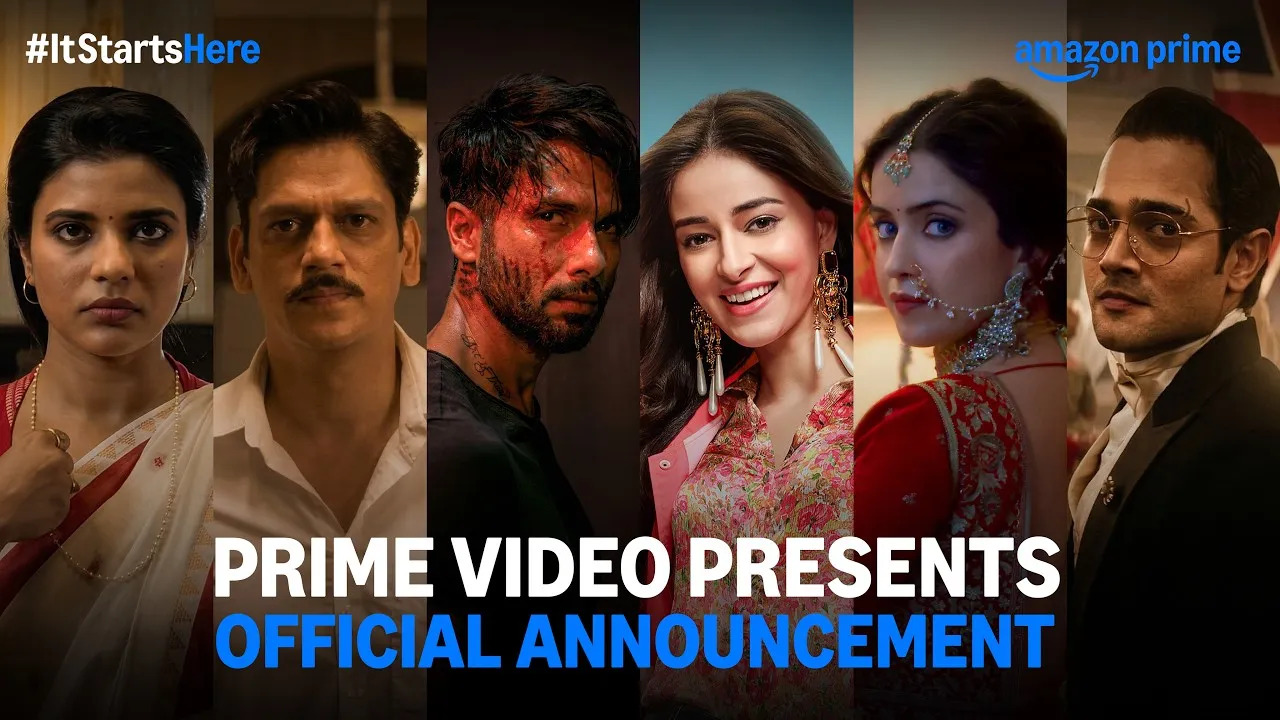
Mumbai: With close to 55 titles unveiled and over half of its top 50 non-English content in 2025 driven by India, Prime Video’s latest slate signals the country’s growing weight in its global content strategy.
The announcement comes at a time when streaming platforms are increasingly shifting from volume-led expansion to IP-led, franchise-driven growth.
Prime Video’s 2026 slate reveal, featuring Originals, theatrical films and licensed content, marks more than just scale. It positions India as a central engine for global content creation, distribution and audience growth.
The announcement was made at a star-studded event held at the Grand Hyatt in Mumbai, attended by Hrithik Roshan, Alia Bhatt, Bobby Deol, Shahid Kapoor, Vijay Varma, Sonakshi Sinha, Jyotika, Ali Fazal, Sonali Bendre, Preity Zinta, Ravi Kishan and others, underscoring the platform’s deep ties with India’s creative ecosystem.
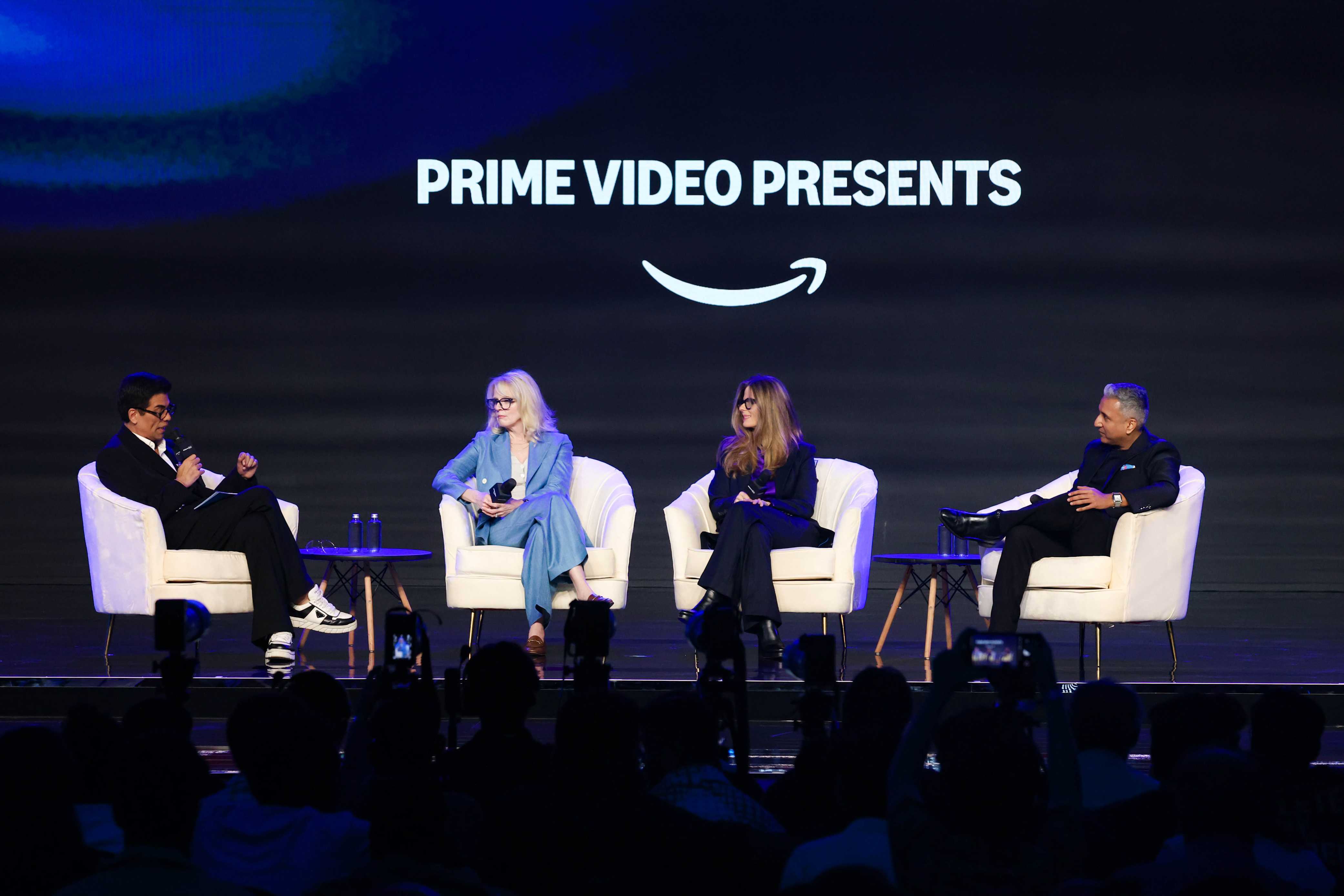
While the showcase leaned on major announcements and talent presence, deeper insights emerged from a fireside conversation featuring Kelly Day, vice president of Prime Video and Amazon MGM Studios International, Nicole Clemens, vice president of international Originals, and Gaurav Gandhi, vice president, APAC and ANZ, Prime Video. The discussion highlighted how India is shaping both product innovation and content strategy globally.
Prime Video’s journey in India, executives noted, has been as much about building the streaming category as it has been about building the platform itself.
India as a strategic growth and innovation hub
India remains one of Prime Video’s most important markets globally, both for subscriber growth and engagement.
“India is by far one of the most important markets for us anywhere around the world,” said Kelly Day. “It is one of our biggest Originals programmes anywhere in the world.”
The scale and diversity of Indian content continues to act as a key growth engine for the platform globally, with India also emerging as a core acquisition driver for the broader Prime ecosystem.
This comes amid intensifying competition in India’s streaming market, where platforms are doubling down on regional content, pricing innovation and franchise IP.
This importance is also reflected in how the platform has innovated its business model locally. A fragmented, multilingual and price-sensitive audience base has led to the development of tiered offerings such as mobile-only plans, Prime Lite and ad-supported viewing through Amazon MX Player.
The platform’s model spans subscription, rentals and ad-supported viewing, creating multiple entry points for users.
Several of these access models were pioneered in India and later expanded to other markets, positioning the country as a testing ground for streaming innovation.
This is also reflected in consumption behaviour, with close to two-thirds of users in India watching content in more than four languages.
From local stories to global travelability
A recurring theme across the leadership team was the growing global appeal of Indian content. Nearly 25% of viewership for Indian Originals now comes from outside India, underlining what Clemens described as the “travelability” of locally rooted stories.
“Indian content is core to our international success,” Clemens said. “When we get authenticity right, these stories travel.”
Unlike traditional theatrical models, Prime Video enables day-and-date releases across more than 240 countries, allowing Indian films and series to reach global audiences instantly.
The shift also reflects a broader industry trend. “English is no longer the default language of global storytelling,” Clemens added.
Franchises such as Mirzapur, The Family Man and Paatal Lok have helped establish India as a consistent exporter of content within Prime Video’s global ecosystem.
Franchises over one-off hits
Prime Video is increasingly leaning into long-term IP building as a core strategy. Over 60% of its Original series in India have moved into multiple seasons, signalling strong audience retention and repeat viewing
behaviour.
The shift also reflects evolving consumer behaviour, where audiences are moving from passive viewing to franchise-led, repeat engagement.
This is backed by a robust development pipeline, with over 100 shows currently in production and development.
Newer titles such as Call Me Bae and Dupahiya are already being extended, reflecting a clear shift from experimentation to franchise-building. The slate also brings back returning titles such as Farzi Season 2, alongside new announcements like Teen Kauwe starring Bobby Deol.
“We are proud to present our largest-ever slate of Originals,” said Nikhil Madhok, director and head of Originals, Prime Video India.
Expanding beyond streaming with theatrical play
Another key pillar of Prime Video’s strategy is its expansion into theatrical releases through Amazon MGM Studios.
The platform announced a slate of Indian films including Raftaar, VIBE and Dilkashi, among others, which will release in cinemas before streaming on Prime Video.
This hybrid distribution model allows content to scale across formats, combining theatrical reach with digital accessibility and aligning with evolving audience behaviour.
The slate also includes extensions of existing IP, such as Mirzapur: The Movie, further reinforcing the platform’s franchise-led approach.
Betting on diversity of formats and partnerships
The 2026 slate reflects a broader diversification in content strategy, spanning regional storytelling, unscripted formats and emerging genres.
The event also highlighted production partnerships with Hrithik Roshan’s HRX Films and Alia Bhatt’s Eternal Sunshine Productions, alongside collaborations with Dharmatic Entertainment, D2R Films, Excel Entertainment, Tiger Baby Films, Emmay Entertainment, Abundantia Entertainment, The Viral Fever and Wallwatcher Films, among others.
New titles such as The Revolutionaries, Matka King, Raakh, Lukkhe and Vansh – The Kalyug Warriors underline the push towards fresh IP, while regional expansion continues with titles like the Telugu adaptation of The Traitors, Guvvala Cheruvu Ghat and the Tamil series Exam.
Gandhi noted that the global expansion of Indian content is still in its early stages, with significant headroom for growth. He added that there also remains considerable headroom for streaming adoption within India itself.
The bigger picture
“India remains central to Prime Video’s global growth, ranking among the top territories worldwide for attracting new Prime members,” said Shilangi Mukherji.
She added that “over half of the most-watched Top 50 non-English titles in 2025 came from Prime Video India.”
The announcement reinforces India’s role as a key growth market for Prime Video globally, both in terms of subscriber acquisition and content consumption across languages.
More importantly, it signals a shift from scale-driven expansion to a more structured strategy, where content is increasingly being built in India not just for domestic audiences, but for global consumption.


