











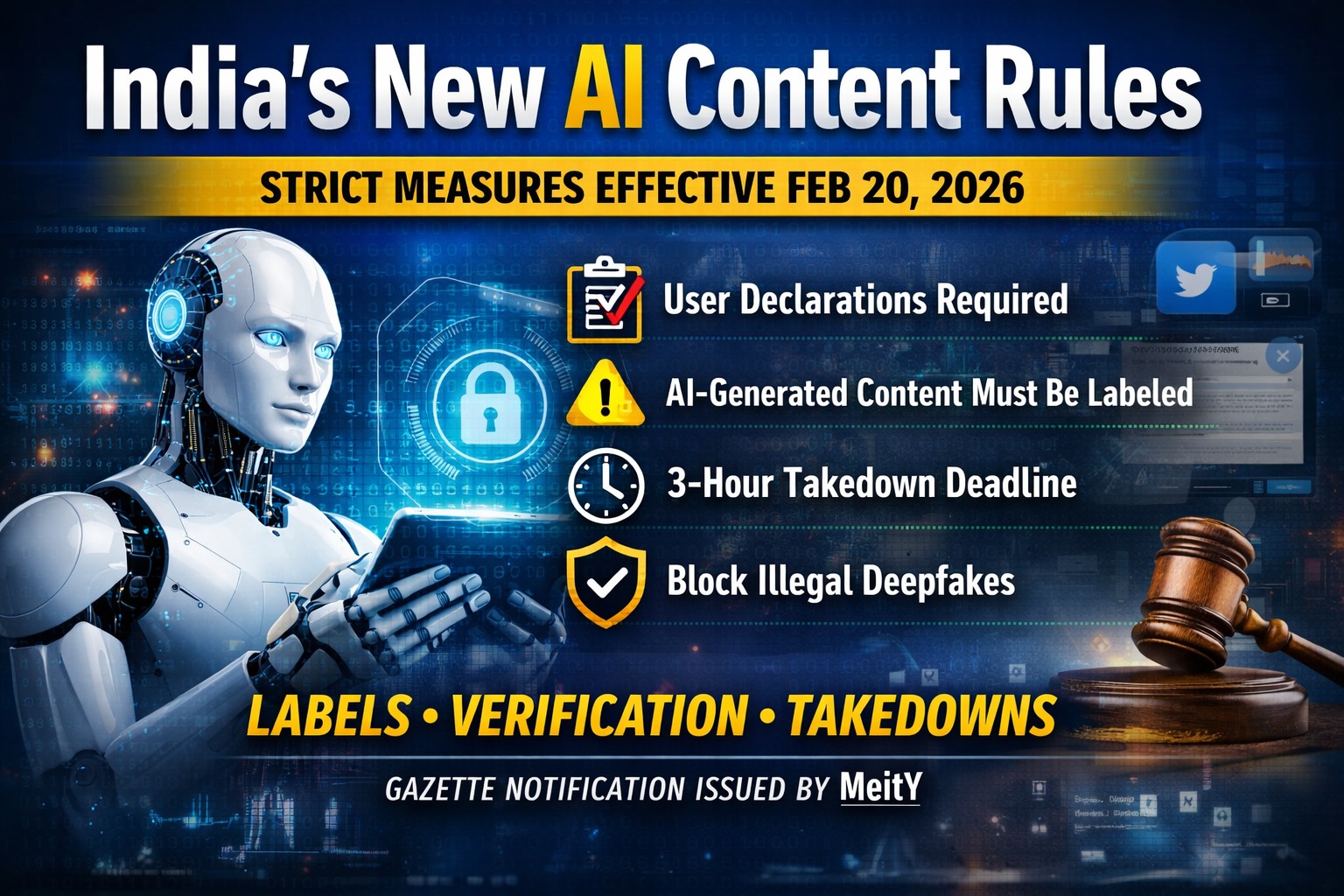
MUMBAI: In a significant regulatory push to curb the misuse of artificial intelligence online, the government has notified amendments to the Information Technology (Intermediary Guidelines and Digital Media Ethics Code) Rules, 2021, imposing stricter compliance obligations on online platforms for AI-generated and synthetically altered content.
As per a Gazette notification issued by the Ministry of Electronics and Information Technology (MeitY), the amended rules will come into force from February 20, 2026.
Mandatory user declaration before publishing
A key insertion requires significant social media intermediaries to obtain a user declaration, prior to publishing, stating whether uploaded content is “synthetically generated”. Platforms must also deploy reasonable and appropriate technical measures, including automated verification tools, to assess the accuracy of such declarations based on the nature, format and source of the content.
Where verification establishes that content is AI-generated or altered, platforms must ensure it is clearly and prominently labelled.
What qualifies as “synthetically generated”?
The amendments formally define “synthetically generated information” as audio, visual or audio-visual content that is artificially or algorithmically created or altered in a manner that appears real, authentic or true, and is likely to be perceived as indistinguishable from a real person or real-world event.
However, the rules carve out exclusions, including:
- Routine edits that do not materially misrepresent content
- Good-faith creative or design work that does not result in false documents or records
- Accessibility or quality enhancements such as translation or improved searchability that do not manipulate material elements
Mandatory labels, permanent metadata
Intermediaries enabling the creation or sharing of synthetic content must embed clear and prominent labels, along with permanent metadata or provenance mechanisms, including unique identifiers, “to the extent technically feasible”. Once applied, platforms are barred from allowing the removal, modification or suppression of such labels or metadata.
Platform responsibility to prevent illegal AI content
The amendments place explicit responsibility on platforms to proactively prevent the creation or dissemination of unlawful AI-generated content using automated tools. Flagged categories include:
- Child sexual abuse and exploitative material
- Non-consensual intimate imagery
- Content resulting in false documents or electronic records
- Explosives or arms-related material
- Deceptive impersonation-like depictions of persons or events
MeitY clarified that content removal or access disabling undertaken in compliance with these rules will not be treated as a violation of safe harbour protections under Section 79 of the IT Act.
3-hour takedown mandate, faster grievance redressal
Compliance timelines have been sharply tightened. Platforms must now remove or disable access to unlawful content within three hours of receiving lawful directions from courts or competent authorities, compared to the earlier 36-hour window.
User grievance handling timelines have also been compressed:
User grievance handling timelines have also been compressed:
- Acknowledgement of complaints: within 2 hours (earlier 24 hours)
- Disposal of complaints: within 7 days (earlier 15 days)
The notification further specifies that police-issued intimations must come from an officer not below the rank of Deputy Inspector General of Police, duly authorised by the appropriate government.
AI content treated on par with “information”
The amendments clarify that references to “information” under unlawful content determinations will explicitly include synthetically generated information, bringing AI content fully within the IT Rules’ compliance and enforcement framework.
Platforms are also required to periodically inform users, at least once every three months, about applicable rules and consequences, in English or any language listed in the Eighth Schedule of the Constitution.
Additionally, the notification updates statutory references by replacing the Indian Penal Code with the Bharatiya Nyaya Sanhita, 2023.


