











Mumbai: In an increasingly fragmented media landscape, Sony Entertainment Television is doubling down on non-fiction content, family co-viewing and high-impact entertainment IPs to strengthen its proposition for both audiences and advertisers. The strategy comes into focus with Family Full House with Rohit Sharma, which premieres on 19 September 2026, airing every Saturday and Sunday at 9:30 PM on Sony Entertainment Television and Sony LIV, with India's World Cup-winning captain Rohit Sharma making his entertainment debut as host.
The first season features a mix of cricket and entertainment personalities, including Shreyas Iyer, Shardul Thakur, Archana Puran Singh, Bharti Singh, Shikhar Dhawan, Kunal Kemmu, Maniesh Paul and Neena Gupta, among others. The property has attracted a diverse advertiser base spanning automotive, fintech, AI, renewable energy, FMCG and D2C, with Škoda, PhonePe and Google Search AI Mode as Co-Presenting Sponsors, Avaada, UltraTech Cement Ltd and Fortune Refined Soyabean Oil as Co-Powered by Sponsors, Reserve Bank of India as Large Partner and BHIM Payments App and Supersox as Associate Partners.
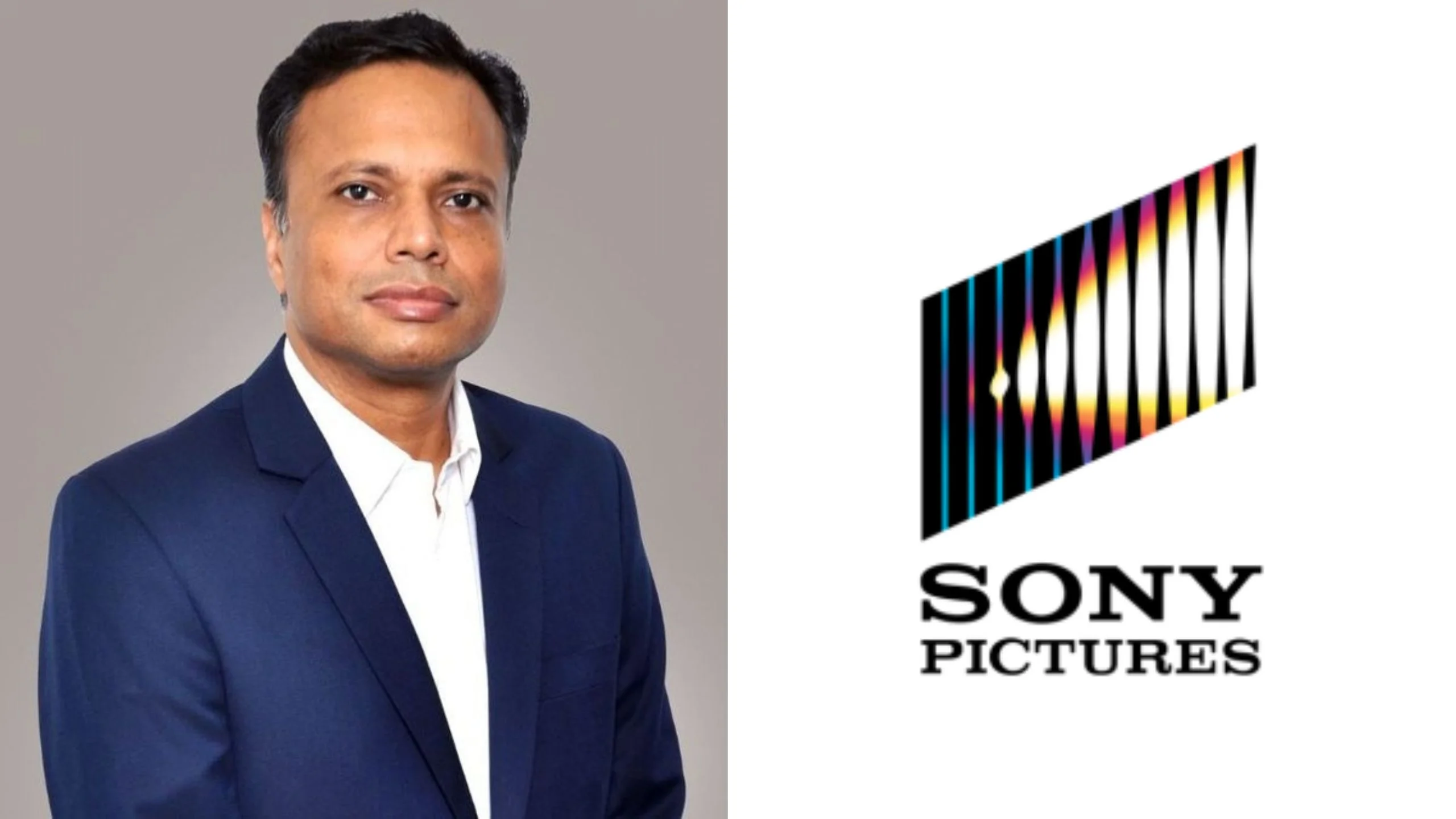
In this interaction with AdMirror, Akshay Agrawal, Head of Linear Ad Sales at Sony Pictures Networks India, discusses Sony's renewed focus on non-fiction, the advertiser proposition behind Family Full House, Rohit Sharma's cricketainment appeal, the emergence of newer advertiser categories, content that travels beyond TV and OTT, and why native, recurring brand integrations can turn sponsorships into long-term memory structures.
Sony's renewed focus on non-fiction is rooted in its legacy, but the next opportunity is participative family entertainment
If you look at our history, we have always believed in the power of non-fiction formats. We were among the first networks to bring several of these formats to the country, and in recent times, we have doubled down on that belief.
We are investing heavily in new formats. While we have established franchises such as the 18th season of KBC, the upcoming 17th season of Indian Idol, the fifth season of India's Best Dancer, MasterChef and Shark Tank, we are equally focused on bringing fresh formats to India and pairing them with some of the biggest names as hosts.
Whether it is Wheel of Fortune with Akshay Kumar, one of Bollywood's biggest celebrities, or Family Full House with Rohit Sharma, one of the country's most credible and recognisable personalities, the intent is to combine new formats with strong talent.
Within non-fiction, we have a particular focus on family game shows because they work strongly from both a viewer and an advertiser standpoint. The viewer remains at the core of our business, and what these formats do particularly well is bring the entire family together.
It is not about appealing to just one member of the household. A family game show creates an opportunity for everyone from children to senior citizens to watch and participate together. These are not passive viewing experiences. Because they are question-and-answer formats, viewers naturally want to lean in and participate. Whether they are formally playing through an app or simply answering along with the contestants, there is an inherent desire to compete with other members of the family and see who gets the answer right.
Those moments of conversation, participation, sharing and competition are moments audiences genuinely cherish. And those are precisely the moments that advertisers and brands want to be part of.
The opportunity today is therefore no longer just about chasing passive reach; it is about creating participative reach and participative engagement. I think that is what brands increasingly want, and it is also the ambition we have as a network.
That is why we are investing heavily behind these game shows. When you combine a compelling format with the credibility and appeal of personalities such as Rohit Sharma, Akshay Kumar or Mr Bachchan, it adds another layer of viewer interest and credibility to the proposition.
The challenge is whether family viewing can still bring households together when urban audiences have more content choices and increasingly fragmented viewing habits.
Our shows are not designed only for urban audiences or the top metros such as Delhi and Mumbai. They are meant for India as a whole, including Tier 2 and Tier 3 towns, where many households still largely have a single television set.
What we also see in the data is that family game shows have a high co-viewing index, with the entire family sitting together to watch the show.
Of course, not every content piece is able to bring the entire family together. But game shows, particularly those featuring big celebrities and well-known anchors, have a stronger ability to bring family audiences together. That is our belief as content creators.
And we are putting significant investment behind that belief.
Rohit Sharma's value to advertisers goes beyond fandom, with his cross-generational appeal and the show's cricketainment format creating multiple opportunities for brands to integrate into a high-engagement family environment.
Rohit Sharma is among the biggest and most credible names in the country. As a current cricketer and World Cup-winning captain, he has enormous fandom in India and globally, particularly among the Indian diasporas. His appeal cuts across age groups, demographics and income strata from children to senior citizens.
That makes Family Full House a distinctive proposition: cricket and entertainment coming together in a family game-show environment. We call it cricketainment. The format is based on everyday-life questions, with answers drawn from surveys, making it relatable and accessible rather than a conventional knowledge-based quiz.
From an advertiser standpoint, that creates a broad and flexible platform. Brands can leverage Rohit's credibility and recognition, family co-viewing, the participative nature of the format and contextual integrations within the show, rather than relying only on conventional advertising spots.
We have already seen strong interest across diverse categories, including auto, AI, gold and digital gold, payments, building materials, BFSI, renewable energy and consumer brands. The breadth of categories coming on board reflects the versatility of the property.
The other important advantage is the credibility of communication. When Rohit speaks about a brand or its role within the show, the message is integrated into an entertainment environment rather than appearing as a standalone commercial break.
So, for advertisers, the proposition is not simply access to Rohit's fandom. It is the combination of celebrity equity, cross-generational family viewing, participation, contextual integration and a brand-safe environment giving brands multiple ways to become part of the entertainment itself.
For advertisers, Family Full House is moving beyond reach and GRPs to offer bespoke, content-native brand solutions built around family co-viewing, Rohit Sharma's equity and the show's participative format.
Brand solutions are core to what we do today, and that is the belief we have as a network. For Family Full House, the proposition is a combination of family co-viewing, Rohit Sharma's fandom and credibility, the ability to develop bespoke solutions for clients, and the brand-safe environment that Sony offers.
Reach and GRPs provide scale, but that is no longer the only thing marketers are looking for. Brands are not in the business of simply buying GRPs; they are in the business of selling products and delivering business outcomes. So, our focus is on creating solutions and narratives that can contribute to those outcomes.
"Brands are not in the business of simply buying GRPs; they are in the business of selling products and delivering business outcomes."
Akshay Agrawal, Head of Linear Ad Sales, Sony Pictures Networks India
That is where bespoke brand integration becomes important. The solutions we build around Family Full House must be native to the content. If brand integration simply sticks out from the storyline, it is unlikely to be as effective. The objective is to make the brand part of the viewer experience whether that means helping a contestant, adding to the gameplay, creating a moment of discovery or engaging the viewer differently.
Google's AI Mode is a good example. Family Full House is a question-and-answer format where the answers are based on surveys, not conventional textbook knowledge. That naturally creates curiosity. There can be moments when Rohit wants to know more about a particular question, why a certain answer emerged as the top response or what the facts behind it are. Google AI Search can become part of that journey by providing the trivia and context behind the question, thereby adding value for Rohit, the contestants and the viewer. The integration works because it enhances the content rather than interrupting it.
Similarly, Avaada, which operates in the clean-energy space, is partnering around a round for contestants. With AI becoming increasingly embedded in everyday life and energy consumption rising, the need for clean and always-on energy is an important conversation. The partnership gives us an opportunity to educate viewers around that subject while remaining relevant to Avaada's business proposition.
Škoda, meanwhile, is the grand-prize partner for the winning family across the season, creating a natural reward mechanism within the format.
These partnerships demonstrate the range of opportunities available to brands from product integration and contextual storytelling to contestant journeys, gameplay, education and rewards. Each solution is built around the brand's business objective, but equally importantly, it must enable and elevate the content.
That relevance is critical. Cultural and contextual relevance is at the heart of how we craft these solutions. We want the brand to feel like an organic part of the show, not a distraction or something happening outside the content. That is ultimately what makes a bespoke integration meaningful for both the brand and the viewer.
Launching Family Full House in the September-to-Diwali window gives Sony an opportunity to combine family co-viewing, cultural relevance and a portfolio of high-impact non-fiction properties at a time when brands are looking to maximise festive engagement.
The festive period is a very critical period for us. If you look at our calendar, this is when a lot of our blockbuster franchises and IPs come alive, so naturally it is an important period for our advertisers and brands as well.
This year, we already have the 18th season of KBC on air, we are launching Family Full House in September, and then we have the new season of Indian Idol coming up in October. So, across the festive period, we have a very strong non-fiction slate.
What that allows us to do is build different narratives for brands around the moments that are culturally relevant during this period. As for brands, the festive season is not just about putting more money behind media. It is about being present when consumers are celebrating, spending more time with their families, shopping and making purchase decisions.
This is where content can play a very important role. Through these shows, we can create narratives and integrations that are relevant to what consumers are experiencing during the festive period, rather than just placing a traditional advertisement around the content.
Family Full House fits particularly well into that because, at its heart, it is a family entertainment show. You have families coming together, participating in and sharing those moments. During the festive period, when family and togetherness become even more important, I think that proposition becomes even stronger. It gives brands an opportunity to be part of those moments through bespoke integrations and solutions.
At the same time, we are looking at Family Full House beyond just this festive season. KBC is now in its 18th season, Indian Idol is going into its 17th, and we have India's Best Dancer, MasterChef and Shark Tank as other established non-fiction properties.
Our belief is that Family Full House can have that kind of longevity as well. We see enough legs in the format for it to go from one season to another and potentially become a multi-season franchise.
So, there are really two opportunities for us. The immediate opportunity is to have a strong family entertainment property during one of the biggest advertising windows of the year. The longer-term opportunity is to build another enduring non-fiction IP for Sony.
Ultimately, the idea is not just to deliver scales during the festive period. It is to create a high-impact environment where brands can participate in the cultural and family moments that matter to consumers.
The content strategy is no longer about creating properties for television or OTT alone but building IPs that can travel seamlessly across platforms and reach audiences wherever they are consuming content.
Absolutely. When we look at Family Full House, we are not creating the content with just one platform in mind. It must travel across platforms. It is not just about television and OTT; we also want the content to live on social media and reach new audiences through influencers and content creators.
The consumer journey has become very fluid today. Audiences are constantly moving between platforms, so the content also must move with them. That is the lens we are applying to the content we create across the network.
When you look at our non-fiction portfolio, we are also bringing together some of the biggest names in the country, Akshay Kumar on Wheel of Fortune, Amitabh Bachchan on KBC, Rohit Sharma on Family Full House, Karisma Kapoor on India's Best Dancer, and Ajay Devgn and Madhuri Dixit as well. It is a very strong house of stars.
These are significant investments, but we see them as investments in strong IPs that can evolve and grow over time. Our belief is that these formats have the legs to go beyond one or two seasons and become long-standing franchises.
The host is one part of that proposition, the format is another, but the larger opportunity is the ecosystem we can build around these properties the television audience, OTT, social platforms, creators and influencers. That ecosystem impact is what can help an IP stay relevant and grow season after season.
Sony is seeing new advertiser categories enter its non-fiction properties, while deeper, recurring integrations are giving brands the opportunity to become part of the cultural memory of a show.
In the last few months, we have seen some interesting new categories emerge. We saw it on KBC, and we are seeing it on Family Full House as well.
AI has emerged as a significant new category, but it comes with an important caveat. These brands are not necessarily going to buy every property. You need to create a customised, bespoke solution that works for their business. Google Search AI is a good example of that on Family Full House.
Clean and renewable energy is another category that has opened up significantly for us. What is interesting is that these companies are increasingly looking to communicate with end consumers rather than limiting their communication to a B2B audience. We have Avaada on Family Full House, and we are also having conversations with other brands in the category across our properties. We have seen this category on KBC as well.
We have also attracted newer D2C brands such as Supersox, which is not traditionally an advertiser on our network. At the same time, the core categories, including FMCG, continue to be part of Family Full House. We are seeing both things happening: the core advertiser base remains strong, while new categories are coming into television through relevant content solutions.
And I think that is a real testament to the advertiser pull of properties like KBC, Family Full House and Wheel of Fortune. The opportunity is not simply about putting a new category into a show; it is about understanding what that category needs and creating the right solution for it.
The other thing that becomes very powerful when brands commit to a property season after season is memory. When a brand comes alive around a particular moment in a show repeatedly, it starts becoming part of the viewer's memory structure.
Take Govardhan Ghee on KBC, for example. We have had contestants come on the show and say that their families tell them, 'Whether you win the money or not, get us that year's supply of Govardhan Ghee.' That is a very powerful outcome for a brand.
At that point, the integration has gone beyond advertising. It has become part of the culture and memory of the show. That is the kind of long-term association we want to build for brands where the integration is native to the content, repeated over time and eventually becomes something viewers recognise, remember and even talk about.


