











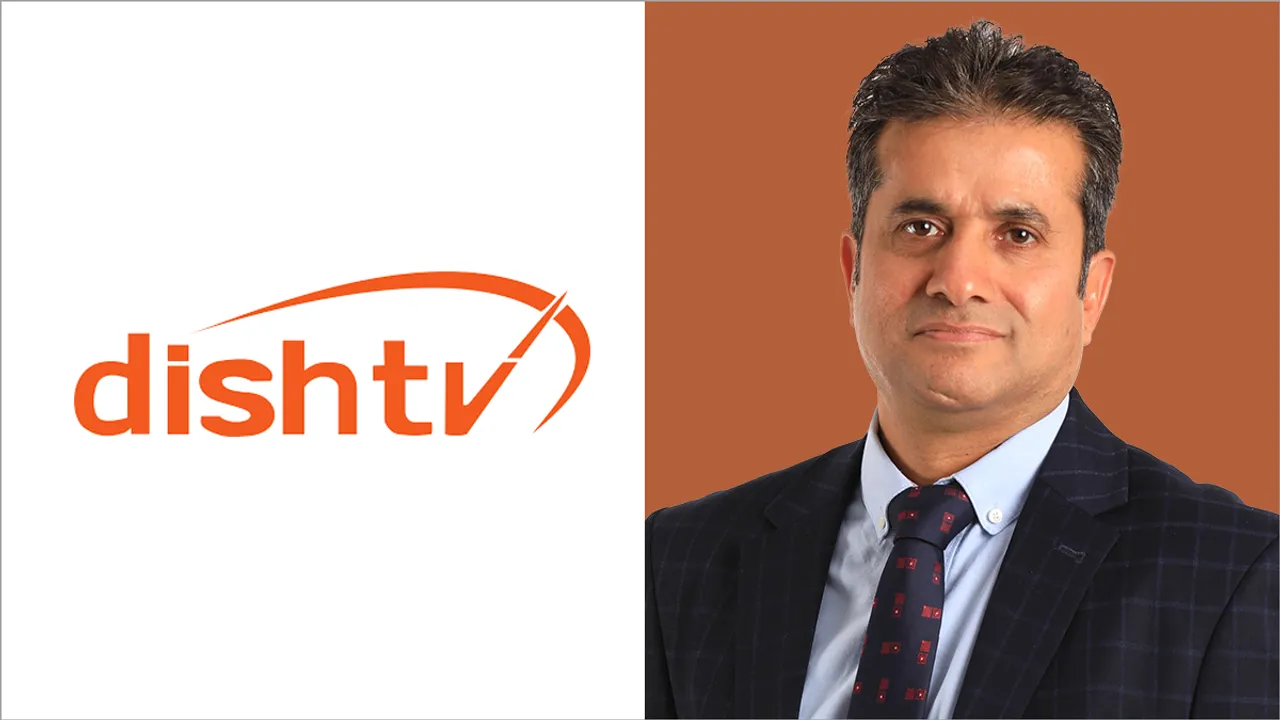
Mumbai: At a time when India’s pay-TV ecosystem is being squeezed from both ends—free content at the bottom and OTT disruption at the top—the question is no longer whether DTH is under pressure, but how it plans to stay relevant.
On the side-lines of the Content India Summit, Manoj Dobhal, CEO of Dish TV India, doesn’t shy away from the reality. He calls out structural challenges from rising content costs and unsustainable pricing models to the industry’s long-standing failure to solve content discoverability.
Yet, Dobhal is clear: DTH isn’t losing relevance it’s being forced to reinvent itself. With hybrid DTH-OTT bundles, smart TV play, and a renewed focus on simplifying consumer choice, Dish TV is attempting to pivot from a traditional distribution platform to an integrated entertainment ecosystem.
In this candid conversation, Dobhal lays bare the real battle for pay-TV: not just growth, but survival—and the urgent need to “arrest the decline” before the industry can script its next phase.
DTH is often seen as a declining business globally. In India, is it structurally under threat—or simply mis-priced?
I wouldn’t call it a dying business at all, it’s a misunderstood one. In India, television is still a shared, family experience, and DTH continues to sit at the center of that ecosystem.
What’s really happening is pressure from both ends of the market. At the bottom, consumers are moving to free platforms, and at the top, to OTT. The issue is not relevance—it’s value perception. If we can rework pricing and packaging to reflect what consumers actually watch, the model remains very viable. The real task is to serve the entire spectrum, not just a slice of it.
If most consumers watch just a handful of channels, has the industry overcomplicated the pay-TV model?
Absolutely. We’ve given consumers an ocean of content when most of them need just a glass of water.
No household watches 100 channels. Most stick to 5–10 channels, and even those preferences change over time. The industry’s challenge is that we’ve built complexity into packaging instead of simplicity into choice. The future lies in giving consumers sharper control—letting them pick what they want, when they want, without overwhelming them.
You’ve called out discoverability as a key issue. Why hasn’t linear TV solved this despite years of evolution?
We’ve focused more on distribution than on experience.
We’ve aggregated content extremely well but we haven’t made it easy to navigate. Discoverability is still a friction point. Ironically, even digital platforms are struggling with it despite algorithms.
For DTH, solving discoverability helping users quickly find relevant content across genres will be a game changer. That’s where the next phase of innovation needs to happen.
Hybrid DTH+OTT bundles are gaining traction. Does that risk reducing DTH to just a pipe for OTT?
Not at all if done right, it actually strengthens the ecosystem.
Hybrid is the future because consumers don’t think in silos. They just want seamless access to content. What we’ve seen is that customers who opt for OTT within the DTH ecosystem tend to stay longer they’re more sticky.
So, the idea is not to become a pipe, but to become an aggregator and enabler—bringing the best of both worlds into a single, simplified experience.
You’ve highlighted broadcaster control over pricing and ads. Is the current model sustainable for DTH players?
It’s definitely under stress.
Content costs are rising, and those costs are controlled by broadcasters. At the same time, platforms can’t pass that burden on to consumers without risking churn. So, the squeeze is very real.
This is where collaboration becomes critical. Broadcasters and platforms need to work together to first stabilise the ecosystem—arrest the decline—and then look at growth. Without that alignment, sustainability will remain a challenge.
With so much free content available, how do you convince consumers to keep paying?
That’s the toughest part of the business today.
Indian consumers are extremely value-conscious. If something is available for free, many are willing to compromise on quality. So, the only way to compete is by delivering consistent, high-quality, seamless experiences that justify the price.
You can’t win on price alone you have to win on reliability, curation, and ease of use.
Dish TV’s move into smart TVs signals a broader play. Is this diversification or necessity?
It’s both strategic and necessary. The consumer is moving towards connected homes, and we have to be present where the consumer is. Our smart TV proposition integrates linear and OTT into a single offering—that’s exactly what the market is asking for.
This isn’t about moving away from DTH—it’s about expanding the ecosystem around it.
You’ve said the immediate goal is to “arrest the decline.” What needs to change for the industry to move back to growth?
Three things: pricing discipline, better packaging, and improved discoverability. We need a more balanced cost structure across the value chain, simpler and more relevant consumer offerings, and a significantly better content discovery experience.
If we can stabilise the base, growth will follow. But right now, the priority is very clear retain the customer.
“Television in India is far from over—it just needs to become simpler, smarter, and more aligned with how consumers actually watch.”


