











Mumbai: As India Inc celebrates International Women’s Day, the conversation around women in leadership is shifting from representation to real influence and decision-making power. Over the past decade, more women have entered boardrooms, leadership panels and CXO roles across sectors from media and marketing to technology and finance. Yet the deeper structural question remains: are women equally present where capital, revenue and growth bets are decided?
Despite progress in visibility, women remain underrepresented in P&L ownership, revenue-driving roles and succession pipelines, the positions that ultimately lead to CEO and board-level leadership. Industry studies repeatedly show that while companies have improved hiring diversity, the transition from inclusion to institutional power remains uneven.
To mark International Women’s Day, AdMirror is bringing together a series of candid conversations with women leaders across industries who are shaping business, communications, marketing and technology in India. In this special series, they unpack the realities behind leadership journeys from bias and career inflection points to the structural changes organisations must make to build more equitable and future-ready leadership pipelines.
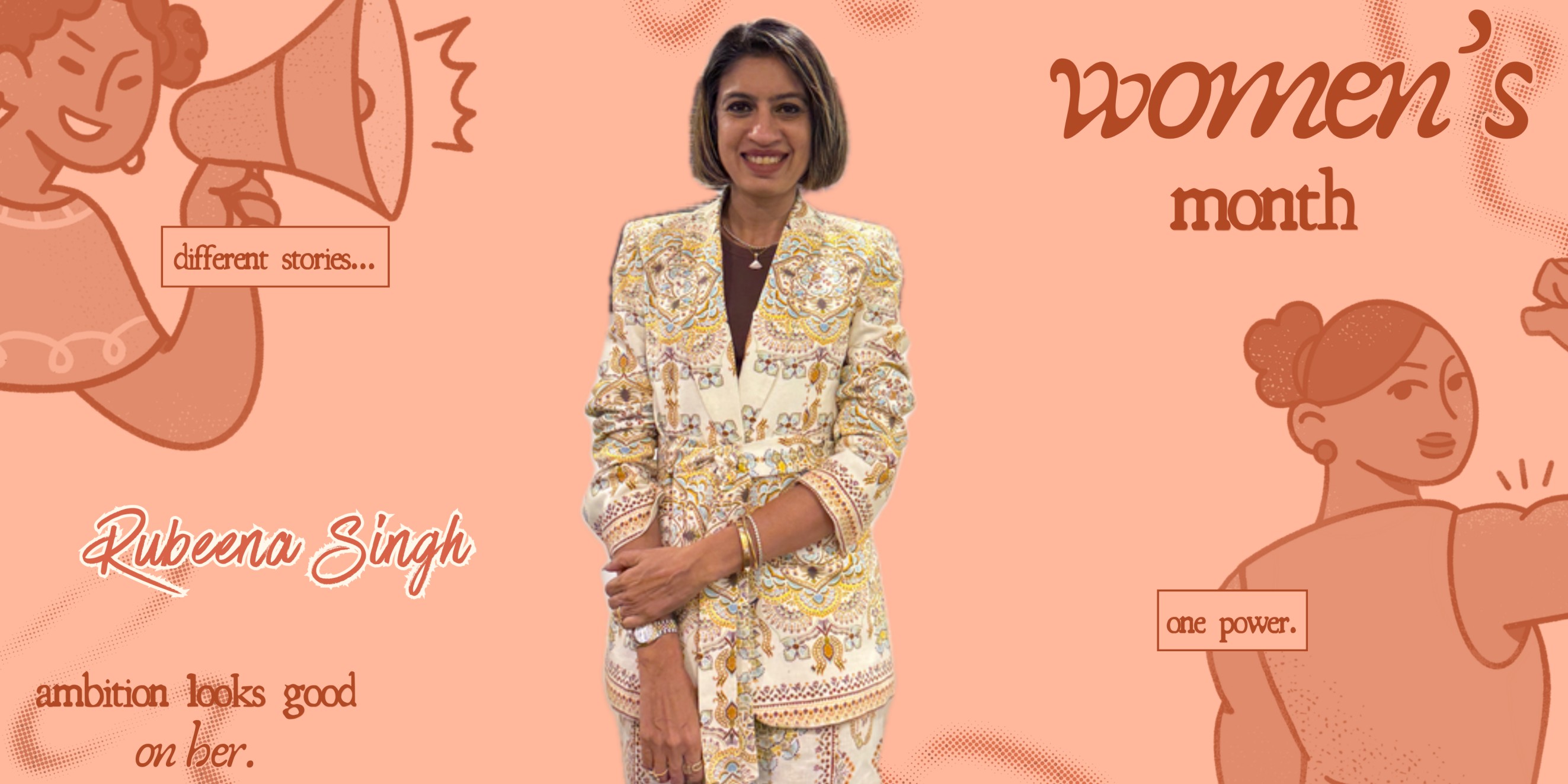
With over two decades of experience in digital marketing and media, Rubeena Singh has built a reputation as a leader who blends strategic vision with operational excellence. As Managing Director of NP Digital India, she is focused on driving business growth, scaling performance marketing capabilities, and ensuring the company stays ahead in an increasingly competitive digital ecosystem.
Prior to joining NP Digital India, Rubeena held several high-impact leadership roles, including CEO of iProspect India, COO at Moneycontrol, and Country Manager for Josh. During her stint at AnyMind Group, she successfully expanded operations into the UAE and Saudi Arabia, diversifying the business and driving strong regional growth.
Known for her dynamic leadership and ability to navigate complex market shifts, Rubeena continues to push the boundaries of performance-driven marketing. At NP Digital India, she is focused on delivering measurable outcomes for clients while shaping the next phase of digital transformation in the industry.
Edited Excerpts
We’ve made progress on representation but not necessarily on redistributing power. In your sector, are women included in leadership, or are they actually influencing capital allocation, hiring priorities, and strategic direction? Where does the real decision-making still remain male-dominated?
The honest answer is: both are true, and I think that is actually a sign of how far we have come. When I look back over my career , the shift in who is in the room has been real and meaningful. Women are in leading roles in agencies, heading large client relationships and shaping strategy in ways that simply were not as common when I started out.
Where the work continues is at the intersection of strategy and capital. Revenue ownership, P&L accountability, the decisions that shape a business's direction over the next three to five years: that is still where representation thins out. Not always because of deliberate exclusion, but often because of how access and opportunity have historically flowed. The encouraging part is that this conversation is now being had openly, which was not always the case. Awareness is not transformation, but it is a precondition for it. And I am genuinely optimistic about the direction, even if the pace needs to quicken.
Across industries, data shows that women leaders are often held to higher performance and behavioural standards than men in similar roles. Have you experienced this “prove it again” bias and how does it quietly shape promotion pipelines and leadership evaluations within organisations today?
I would be less than honest if I said I had not encountered it. Most women who have spent serious time in senior roles will recognise the pattern, even when it is subtle. It is rarely confrontational. It tends to live in quieter moments: the instinct to back a man's potential while asking a woman to demonstrate a little more, the assumption that a strong track record still needs one more proof point before a bigger step is warranted.
What I have also seen, though, is that as women have taken on more visible roles across the industry, the benchmark itself is shifting. Younger women entering the field today are doing so with more confidence, more access to networks and more visible role models than my generation had. I do think organisations are becoming more conscious of how these biases operate. The shift is uneven, but it is happening. The responsibility, on those of us who are further along, is to name it when we see it and to help build the kind of culture where it happens less.
Despite progressive policies, senior leadership pipelines still see a sharp drop-off post-motherhood. Is this a policy failure, a cultural failure, or a measurement failure in how organisations define leadership commitment and productivity?
It is a bit of all three, and I think different organisations sit at different points on that spectrum. Some have genuinely progressive policies but a culture that has not caught up. Others have the culture but still measure leadership in ways that penalise anyone who needs flexibility, which disproportionately affects women.
The deeper fix, and where I have seen real progress happen, is when organisations redefine what commitment and contribution actually look like. When the measure shifts from presence to output, the conversation changes entirely. I returned from maternity leave and step straight into high-impact role because the organisations trusted me and made space . That is not a utopian scenario; it is entirely achievable. It just requires leaders who are willing to question inherited assumptions about what a "leadership track" is supposed to look like.
Corporate India often speaks about male allyship but in practice, how many male leaders are willing to sponsor women into profit-and-loss roles or revenue-driving positions rather than support roles like HR, marketing, or communications? What needs to change structurally for that shift to happen?
This is a question I feel personally rather than just professionally. There is a meaningful difference between mentorship, which is advice and guidance, and sponsorship, which is someone with organisational capital actively putting your name forward for the right opportunity. The former is far more common. The latter is what actually changes careers.
If I am honest, when I look back across my career, most of the people who sponsored me, who opened doors and backed my instincts, were men. With the exception of one woman early on who shaped how I thought about leadership, I have not had many female mentors along the way. That is not a complaint; it is simply the reality of the industry at the time, and in many ways it reflects how few women were in those senior positions to begin with. But it does mean I understand, quite personally, what that absence feels like and how much more it would have meant to have had more of those voices in my corner.
That is precisely why I take this responsibility seriously now. I have been fortunate to experience genuine sponsorship, including at NP Digital, where the leadership team has given me real ownership, backed my decisions and created the kind of environment where I can operate with authority. Being in that position makes me want to do the same for the women coming up behind me, not just as a mentor but as someone who will genuinely advocate for them when it matters. For that to happen at scale across the industry, it needs to move from individual generosity to a structural expectation: tracked, recognised and embedded in how good leadership is defined. That is the shift worth pushing for.
Many companies now meet diversity hiring targets yet boardrooms and executive committees remain skewed. Are DEI initiatives becoming a compliance checkbox rather than a business transformation lever? How should organisations link diversity to measurable business outcomes like innovation, market expansion, or shareholder value?
Some are, and I think most people in the industry know it when they see it. The tell is usually in whether diversity is a boardroom conversation or purely an HR exercise. When it is the former, it tends to produce real change. When it is the latter, it often produces good-looking reports without much movement underneath.
The more useful shift is when the business case is made clearly and consistently: that diverse leadership teams make better decisions, that they read complex markets more accurately and that in a country as layered as India, with its range of languages, cultures and consumer behaviours, homogeneity at the top is a commercial risk. When DEI is linked to innovation, market expansion and client outcomes rather than headcount alone, it stops being a values conversation and becomes a strategy conversation. That, I think, is when it really sticks.


