











MUMBAI: As India Inc celebrates International Women’s Day, the conversation around women in leadership is shifting from representation to real influence and decision-making power. Over the past decade, more women have entered boardrooms, leadership panels and CXO roles across sectors from media and marketing to technology and finance. Yet the deeper structural question remains: are women equally present where capital, revenue and growth bets are decided?
Despite progress in visibility, women remain underrepresented in P&L ownership, revenue-driving roles and succession pipelines, the positions that ultimately lead to CEO and board-level leadership. Industry studies repeatedly show that while companies have improved hiring diversity, the transition from inclusion to institutional power remains uneven.
To mark International Women’s Day, AdMirror is bringing together a series of candid conversations with women leaders across industries who are shaping business, communications, marketing and technology in India. In this special series, they unpack the realities behind leadership journeys from bias and career inflection points to the structural changes organisations must make to build more equitable and future-ready leadership pipelines.
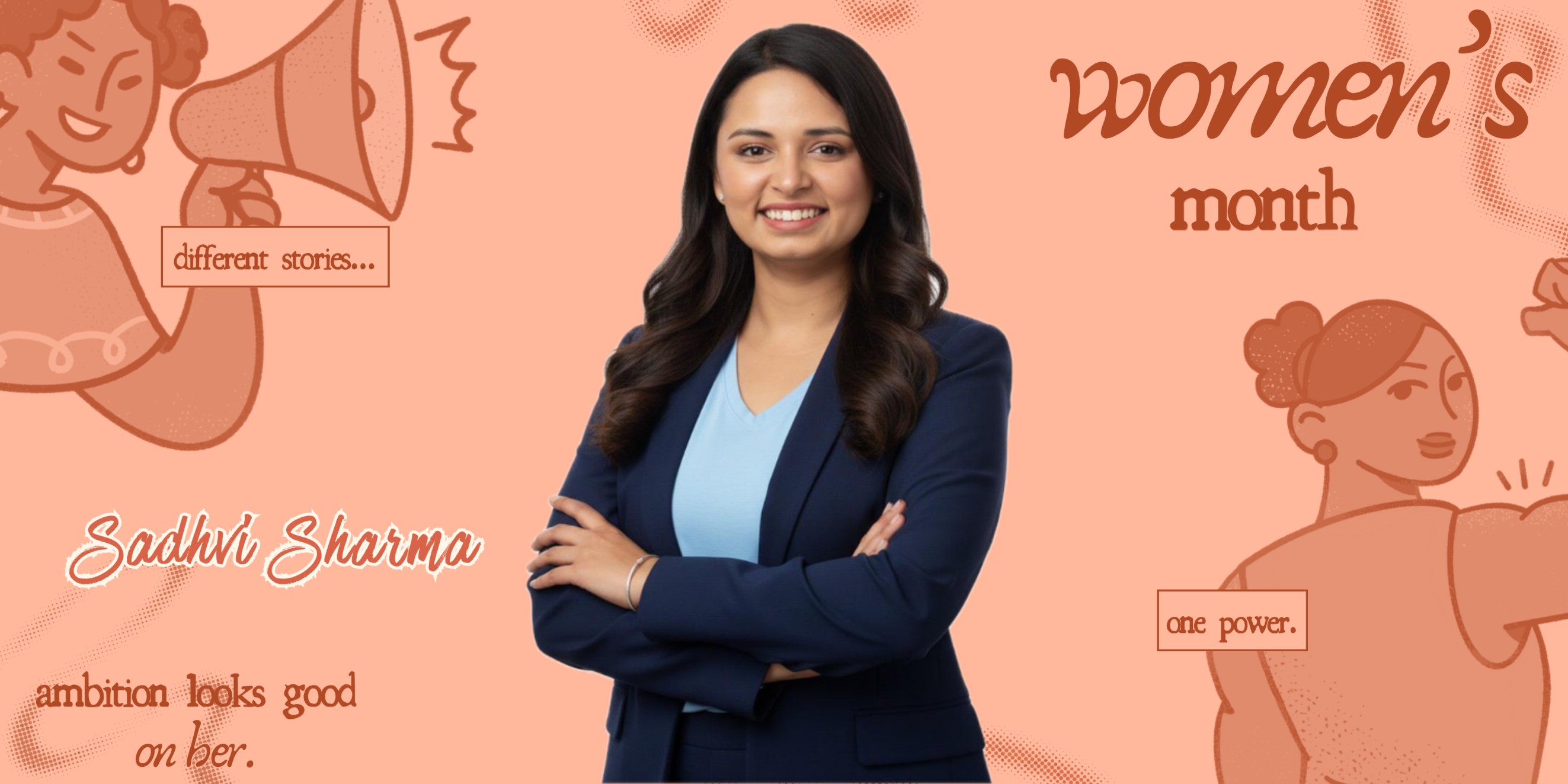
In the fast-evolving world of HR technology and talent intelligence, Sadhvi Sharma is focused on reimagining how organisations discover, evaluate, and hire talent. As Co-Founder of TheHireHub.AI, she is building solutions that combine artificial intelligence with human insight to make hiring smarter, faster, and more efficient for modern businesses.
With a strong entrepreneurial mindset and a deep understanding of the evolving talent landscape, Sadhvi is passionate about leveraging technology to simplify recruitment processes while empowering companies to identify the right talent at scale. Her work sits at the intersection of innovation, people, and business growth helping organisations navigate the increasingly complex hiring ecosystem.
Through TheHireHub.AI, Sadhvi is part of a new generation of women entrepreneurs shaping the future of HR tech in India, bringing together data, automation, and human judgement to redefine how companies build their teams.
Edited Excerpts
We’ve made progress on representation but not necessarily on redistributing power. In your sector, are women included in leadership, or are they actually influencing capital allocation, hiring priorities, and strategic direction? Where does the real decision making still remain male dominated?
Over the ten years we have made some progress with women being part of important meetings. You see women in leadership discussions and boardrooms now more than you did before. Just because women are represented does not mean they have power.
In a lot of companies women get to join in conversations. However the people who really decide how money is spent, what to invest in for the term and where the company is going are still the ones who have always been in charge. Women may be heard and their thoughts may be respected but they do not always get to make the final decisions.
There are some examples where women are really in charge of what the company does. They help decide who to hire, how to invest money and what direction the business should go. This is not happening often enough. Things will really get better when women are not just in the room when important decisions are made. They are also trusted to make decisions that will affect the future of the company. Women in leadership positions should be able to influence what happens to the organisation.
Across industries, data shows that women leaders are often held to higher performance and behavioural standards than men in similar roles. Have you experienced this “prove it again” bias and how does it quietly shape promotion pipelines and leadership evaluations within organisations today?
The "prove it again" thing is something a lot of women can relate to even if people do not usually talk about it out in the open. Women who are leaders often feel like they need to show that they are good at their job all the time even after they have already shown that they are capable of doing it.
“Women leaders often feel they have to prove their capability again and again, even after they have already demonstrated it.”
When it comes to how people behave there are some differences in what people expect from men and women. When a man talks in a way during a meeting, people usually think that he is confident and knows what he is doing. When a woman does the same, people might think that she is being too aggressive. These small differences in how people think about men and women can quietly affect how people decide who has the potential to be a leader.
It is also interesting to see how people think about empathy. Empathy is something that people think is a very important quality of leadership. When women show empathy people might think that they are too soft or willing to give in. When men show empathy people name them as a good leader. These small biases add up over time and affect who gets promoted. Women often have to be very careful about how they behave and constantly show that they are good at their job.
Despite progressive policies, senior leadership pipelines still see a sharp drop off post motherhood. Is this a policy failure, a cultural failure, or a measurement failure in how organisations define leadership commitment and productivity?
The thing with women who have children and then stop being leaders is not usually because they are not capable. It is more about how companies think about being committed to a job and getting work done.
Many places where people work still think that people should always be available and not have to take care of anyone. When women go back to work after having a baby, people often think they are not as interested in their job or that they cannot handle a leadership role.
This is a problem because people do not see the things that women get from being mothers like being able to deal with hard things and know what is important. Instead companies think that being a mother is a role of responsibility in itself and mothers cannot take up leadership roles in the organisation.
Until companies change their thoughts on leadership and what makes a good leader, women will rarely be considered for leadership roles.
Corporate India often speaks about male allyship but in practice, how many male leaders are willing to sponsor women into profit and loss roles or revenue driving positions rather than support roles like HR, marketing, or communications? What needs to change structurally for that shift to happen?
Male allyship is now a part of the conversation. The truth is, it only really matters if women get the jobs that control money and strategy.
In a lot of industries women are still stuck in support jobs. Men are the ones who mostly get the jobs that deal with profit and loss. Research from McKinsey and LeanIn shows that even though women make up a part of the workforce they are not well represented in jobs that involve financial decisions. These jobs are important because they can lead to leadership positions like CEO and board member.
What needs to change is not just what people want to happen but how things are actually done. Having a mentor is helpful but having a sponsor is what really makes a difference. A sponsor is a leader who speaks up for women when important decisions and
responsibilities are being handed out.
Organisations also need to shift towards more objective and competency based leadership evaluations. When opportunities are distributed based on capability rather than long standing assumptions about who “looks like” a business leader, leadership pipelines begin to change in meaningful ways.
Many companies now meet diversity hiring targets yet boardrooms and executive committees remain skewed. Are DEI initiatives becoming a compliance checkbox rather than a business transformation lever? How should organisations link diversity to measurable business outcomes like innovation, market expansion, or shareholder value?
In some organisations diversity initiatives are at risk of becoming about following rules, rather than truly changing the way things are done. They might meet their hiring targets, report their diversity numbers but the people in charge like executive leaders and board members often stay the same.
The business case for diversity is getting clearer. Research by McKinsey on how companies perform shows that those with leaders from diverse backgrounds are more likely to perform better financially. These diverse teams bring viewpoints that can solve problems better and understand customers more deeply.
For diversity to really help a business it needs to go beyond hiring. It must be part of developing leaders planning for the future to make decisions.
When diversity is directly tied to coming up with ideas expanding into new markets and creating long-term value it stops being just something you have to do and becomes a way to get ahead.


