











Mumbai: As India Inc celebrates International Women’s Day, the conversation around women in leadership is shifting from representation to real influence and decision-making power. Over the past decade, more women have entered boardrooms, leadership panels and CXO roles across sectors—from media and marketing to technology and finance. Yet the deeper structural question remains: are women equally present where capital, revenue and growth bets are decided?
Despite progress in visibility, women remain underrepresented in P&L ownership, revenue-driving roles and succession pipelines, the positions that ultimately lead to CEO and board-level leadership. Industry studies repeatedly show that while companies have improved hiring diversity, the transition from inclusion to institutional power remains uneven.
To mark International Women’s Day, AdMirror is bringing together a series of candid conversations with women leaders across industries who are shaping business, communications, marketing and technology in India. In this special series, they unpack the realities behind leadership journeys—from bias and career inflection points to the structural changes organisations must make to build more equitable and future-ready leadership pipelines.
As Women’s Day 2026 approaches, the conversation around leadership is shifting from representation to structural influence who defines brand direction, who shapes culture, and who builds institutions that scale. In India’s fast-evolving D2C and omnichannel landscape, marketing leadership today demands more than campaigns; it demands cultural architecture.
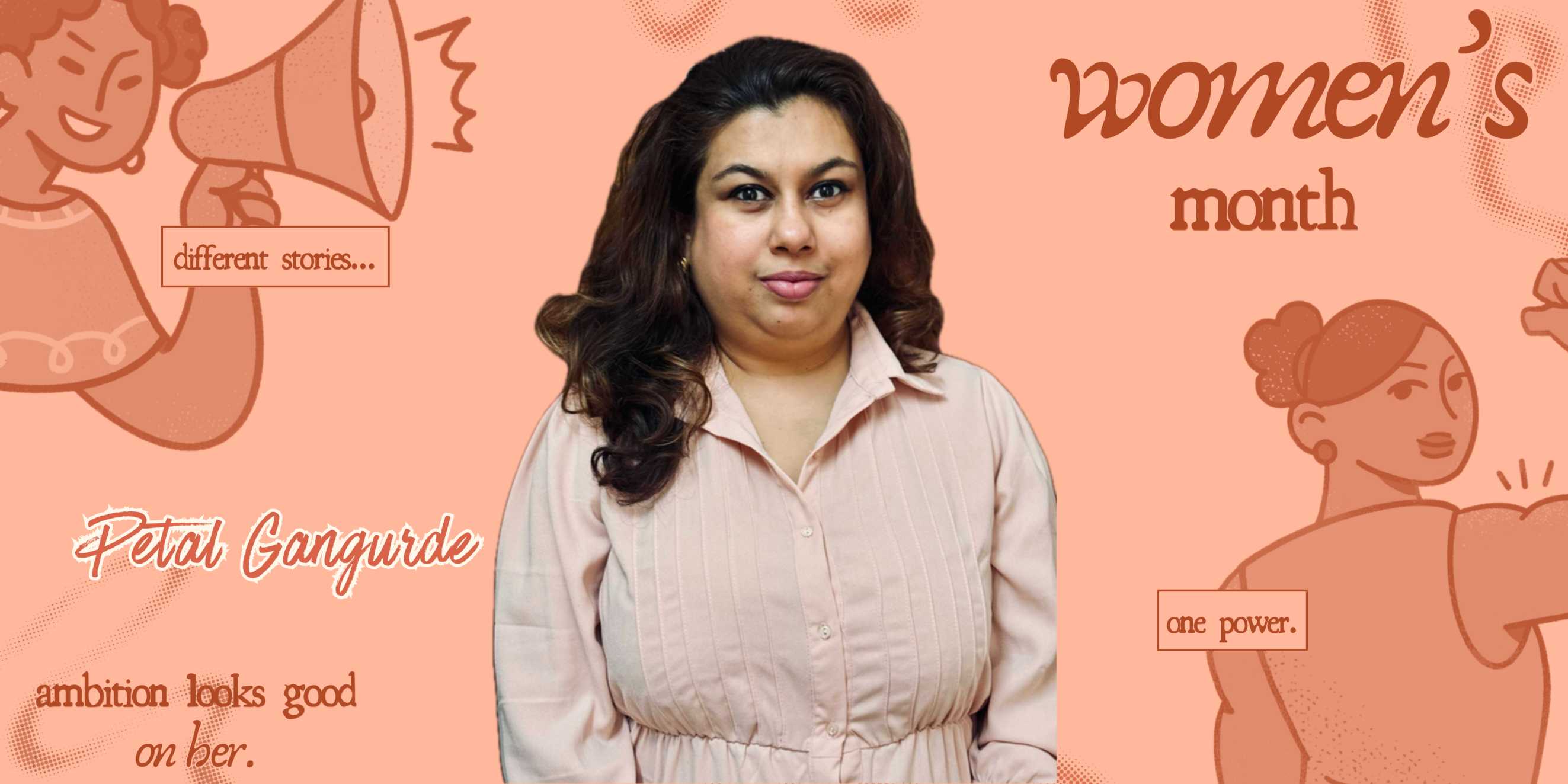
At XYXX Apparels, Petal Gangurde has operated at the intersection of brand ambition and workplace design building not just a challenger innerwear label, but an emotionally intelligent organisation. In this interaction, she reflects on leadership, inclusion, performance bias, and why culture is no longer an HR function it is a growth engine.
With over 15 years of experience across advertising, media, and design, Petal Gangurde represents a new generation of brand leaders who view marketing as systems-building, not storytelling alone.
Edited Excerpts
At XYXX Apparels, she has played a pivotal role in elevating the brand into one of India’s top three Omni channel innerwear players crafting positioning that blends consumer insight, behavioural science, and future-forward storytelling. But her mandate extends beyond market share.
As Chief of Brand & Culture, Petal has been equally focused on building a modern, inclusive, emotionally safe workplace embedding culture into business strategy rather than treating it as a side initiative. Her leadership style centres on cohesion: assembling teams with creative magnetism, fostering collaboration, and championing professional and personal growth.
Prior to XYXX, Petal held key leadership roles at The Glitch (now VML), Condé Nast India, Rediffusion Wunderman, and JWT, where she built an expansive portfolio spanning brand strategy, advertising, product design, UI/UX, content ecosystems, and spatial retail design. This multidisciplinary grounding enables her to connect brand expression with consumer experience across every touch point.
In an industry where performance marketing often dominates the conversation, Petal’s approach is clear: sustainable growth is built at the intersection of culture, creativity, and commercial discipline.
We’ve made progress on representation but not necessarily on redistributing power. In your sector, are women included in leadership, or are they actually influencing capital allocation, hiring priorities, and strategic direction? Where does real decision-making still remain male-dominated?
Representation without redistribution of power is optics. Real inclusion shows up in who controls budgets, who shapes product strategy, and who influences growth bets.
In the apparel and consumer space, we are seeing more women in leadership roles, but influence over capital allocation and revenue strategy is still disproportionately male in many organizations. Marketing and HR often see stronger female leadership, but P&L ownership and investor-facing roles unfortunately still remain skewed.
At XYXX, we’ve consciously worked towards empowering women to have a seat at every table and take on pivotal roles that shape not just brand narrative, but business architecture, from talent strategy to long-term positioning. Decision-making becomes more equitable when diverse leaders are trusted with commercial accountability, not just cultural stewardship.
Across industries, women leaders are often held to higher performance and behavioural standards. Have you experienced this “prove it again” bias, and how does it shape promotion pipelines and leadership evaluations?
The “prove it again” bias is subtle but persistent. Women are often expected to demonstrate consistent excellence, while men are sometimes evaluated on potential.
Early in my career, I noticed that assertiveness in women was interpreted differently than in men. The calibration was tighter - on tone, visibility, and even ambition. Over time, I learned that the most powerful counter to bias is institutional clarity. Transparent metrics, documented performance reviews, and structured promotion criteria reduce subjectivity.
If leadership evaluations rely on perception rather than measurable outcomes, bias creeps in. The solution isn’t resilience alone; it’s system design.
Senior leadership pipelines see a sharp drop-off post-motherhood. Is this a policy failure, cultural failure, or measurement failure?
It’s all three.
Policy matters - parental leave, flexible work, re-entry pathways. But culture determines whether those policies are used without penalty. And measurement determines whether organizations track post-maternity attrition as a red flag.
Many women don’t opt out because they lack ambition; they opt out because the cost-benefit equation becomes unsustainable. If leadership tracks motherhood as a “risk variable” instead of a “retention challenge to solve,” the drop-off continues.
Companies that succeed treat career paths as nonlinear, not broken. Leadership pipelines must account for life stages without equating pauses with decline.
Corporate India speaks about male allyship, but how many male leaders sponsor women into revenue-driving roles? What needs to change structurally?
Allyship is easy to articulate and harder to operationalize.
True sponsorship is when a senior leader puts reputational capital behind a woman, recommending her for a high-risk, high-visibility role tied to revenue or growth. That is where structural power shifts.
What needs to change is incentive alignment. If leadership KPIs include diversity in revenue-driving roles and succession planning, sponsorship becomes strategic, not symbolic. We also need men in leadership to actively question homogeneous shortlists and create stretch opportunities for women before they feel “100% ready.”
Power redistributes when opportunity does.
Are DEI initiatives becoming compliance checkboxes rather than transformation levers? How should diversity link to measurable business outcomes?
DEI becomes performative when it’s disconnected from business metrics.
Diversity should not sit in a separate report, it should reflect in innovation velocity, employee retention, employer brand equity, and consumer resonance. In consumer brands, especially, diverse teams build sharper insights because they reflect lived realities.
The question isn’t “Do we have representation?” but “Is representation improving performance?”
At XYXX, culture isn’t separate from growth. An emotionally safe workplace fuels creative risk-taking, sharper storytelling, and better business outcomes. When diversity is treated as strategic infrastructure rather than moral positioning, it stops being a checkbox and starts becoming a competitive advantage.


