











Mumbai: Radio has been written off for over a decade, outpaced by digital, overshadowed by performance marketing, and often reduced to a low-cost add-on. Yet, quietly, the medium is reinventing itself.
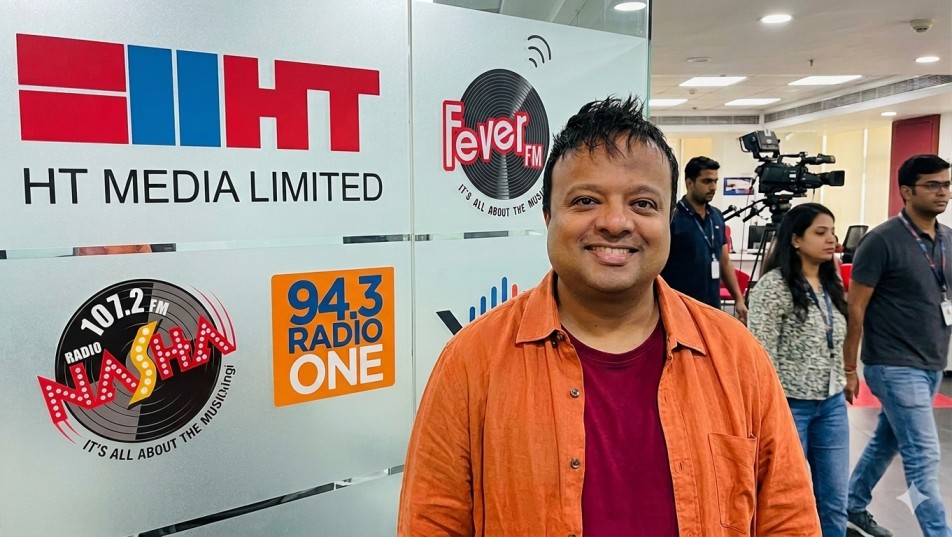
At the heart of this shift is Hrishikesh Kannan (Hrishi K), now Chief Solutions Officer at HT Media Radio. A defining voice in urban radio for over two decades, he is leading the transformation of brands like Fever FM, Radio Nasha, and Radio One into content-led, IP-driven platforms and reshaping radio from a spot-buy medium into a multi-platform solutions engine.
In this candid one-on-one with AdMirror, Hrishi K lays bare the structural challenges facing radio, from broken measurement systems to perception battles against digital, and outlines a clear, unapologetic pivot: radio can no longer compete on cost or spots; it must compete on ideas, integration, and impact.
Hrishi, you are in a very challenging position. You have moved from building brands on air to now architecting solutions across platforms. What does Chief Solutions Officer mean in today's radio business and how different is this role from what you have done so far?
Early on, we realised spot ads drive recall and not brand building. They nudge action, but don't create affinity.
Real impact comes from branded solutions and IP-led integrations where brands are part of the content, not interruptions. With cluttered ad breaks and listener tune-out, the industry's shift from inventory to impact was inevitable.
"Get Some Sun with Radio One" is a case in point, celebrity-led travel storytelling integrated with a brand, evolving into a long-running, multi-platform IP across digital and on-ground.
Today, radio is an integrated content engine. The role of "Chief Solutions Officer" reflects this bridging programming, sales, and strategy to co-create bespoke, client-first solutions.
Don't sell airtime. Build stories brands can live inside.
Radio has been declared dying more times than it can count. Yet you have just stepped into a role betting big on its future. What are we missing about radio that the industry still doesn't get?
Radio isn't dying, it's growing up.
The pandemic disrupted its core habit, drive-time listening, and forced a reset. Instead of resisting, radio evolved beyond audio. Every interaction became multi-format: audio on-air, video on digital, and content repurposed into podcasts and social, unlocking audiences beyond geography.
Today, radio is no longer just broadcast. It's a content and distribution ecosystem. Clients don't want radio spots; they want integrated solutions across audio, digital, and on-ground.
Crucially, one audience no longer fits all. Legacy RJs bring credibility, while creator ecosystems drive Gen Z relevance.
The biggest constraint remains measurement. While digital offers real-time data, radio still relies on outdated systems, impacting its credibility in performance-driven planning.
Radio isn't competing with streaming, it complements it. Streaming is personal and on-demand; radio is free, passive, and communal. Both will coexist.
Radio hasn't survived by defending its past, but by reinventing its role. Its future lies not as a medium, but as a multi-format storytelling platform with audio at its core.
Let's be blunt. Most advertisers still treat radio as a low-cost add-on. What's broken in radio's value proposition and why hasn't the industry fixed it yet?
The "low-cost add-on" tag didn't happen by accident. The industry allowed it. But competing on cost alone is no longer viable. Against hyper-targeted digital platforms, radio will lose that game.
The shift is clear: radio must stop selling spots and start delivering brand outcomes, driving awareness, consideration, and real campaign impact.
This means moving from inventory to ideas, content-led, IP-driven, and integrated across on-air, digital, and on-ground. Not add-ons, but full campaign architecture.
The bigger challenge is mindset. Agencies still see radio as a cost play. Changing that requires re-education, showing that radio can deliver strategic, integrated solutions, not just airtime.
The reset is underway. Radio's future depends on moving from "cheap reach" to "meaningful brand integration."
With podcast and streaming platforms owning the premium audio narrative, has traditional radio already lost the perception battle, even if not the audience?
Perception battle? Maybe. Relevance battle? Not really.
Radio didn't get disrupted by streaming. It helped build it, supplying early content before platforms scaled their own ecosystems. By then, radio had already evolved.
Its edge remains distinct: a hybrid experience of music, conversation, and discovery in one seamless flow. Curated, unpredictable, and hard to replicate, especially given streaming's music rights constraints.
Consumption today is fluid. Audiences dip in for music, talk, or both across platforms. Radio is no longer a closed loop; it's part of a multi-platform ecosystem, extending into podcasts, video, and on-demand archives.
If radio sees itself as just FM, it loses. If it positions itself as a curated, hybrid audio experience, it stays relevant.
In an age of algorithm fatigue, radio's unpredictability is its strength.
In an era of performance marketing and measurable ROI, how do you defend radio spends in boardrooms that are increasingly obsessed with attribution?
The real challenge isn't convincing leadership. It's convincing marketers who've been conditioned by digital. Boards at legacy media companies already understand radio's long-term value. The real pressure comes when pitching to brands spoilt by dashboards, attribution models, and real-time metrics.
The only way to deal with that is honesty. Radio's limitations on precise attribution are real. The pitch has evolved: radio for influence and recall, and digital extensions for measurement and attribution. In many ways, a dual-layer solution, one that builds the brand, and one that proves it.
The smarter approach is to reposition radio within the funnel. Top and mid-funnel impact through storytelling and integration, and bottom-funnel validation through digital amplification. That's how you stay relevant in a performance-driven ecosystem.
The days of excess are over. Radio today is being forced to operate like a lean, high-efficiency business, smaller teams, smarter integrations, and better use of tech. Importantly, most radio networks are still profitable, because they've adapted faster than they're given credit for.
Radio for influence and recall. Digital extensions for measurement and attribution. That's the dual-layer solution.
AI is rewriting content creation, targeting, and media planning. Does this finally give radio a second life, or does it risk making traditional formats even more irrelevant?
AI is not theoretical for us. It's already on-air. We run a weekend show built entirely using AI where the news is sourced via AI, converted into lyrics, performed in AI-generated voices, and packaged into a full-fledged audio experience called AI Den and Quinn, and it's won awards for innovation.
But here's the key distinction: AI can enhance format and efficiency, but it cannot replace human storytelling, at least not in India.
The push to replace RJs with AI is growing. But in India, audio is emotional and cultural, not just functional.
AI will improve efficiency, enable new formats, and streamline operations. But it can't replace human connection or storytelling credibility. The real risk isn't AI replacing radio. It's radio using AI only to cut costs.
In an attribution-first world, radio must partner with digital. In an AI era, it must amplify creativity, not automate it away.
HT Media Radio straddles legacy and digital. How difficult is it to drive real transformation internally, without being slowed down by legacy mindsets and structure?
Transformation in legacy media isn't frictionless and it shouldn't be. Questions around focus and overreach are valid. The real risk isn't just inertia, but dilution while chasing new revenue.
Our approach is simple: we're not entering new businesses, we're extending our IPs. On-ground is not a pivot. It's a multiplier, activated only when there's strong content, audience traction, and clear revenue and brand value.
The bigger shift is mindset. Earlier, radio was the product. Now, ideas start with brand and audience, then scale across radio, digital, and on-ground.
There will always be naysayers. The key is to address them with clarity, not hype.
Radio remains the core. We're not abandoning it, we're building layers around it. As client expectations shift to integrated solutions, evolution isn't optional. Relevance is the real choice.
This isn't a defence of radio. It's a blueprint for reinvention: move from selling inventory to building brand ecosystems. Integrate with digital, data, and on-ground. Treat content as currency, not airtime. Use AI as an enabler, not a replacement. And fix measurement, but don't wait to innovate.
Ultimately, the shift is from being a declining medium to a transitioning platform. The real battle isn't with podcasts or streaming. It's against irrelevance.


