












Mumbai: A new study by Ipsos highlights a clear pattern in how Indians experience happiness: the same factors that drive well-being also emerge as the biggest causes of unhappiness when absent.
The findings point to a growing “access versus absence” dynamic, where happiness is increasingly defined by the ability to secure and sustain key aspects of life.
For Indian respondents, the top drivers of happiness are rooted in personal and emotional well-being. Feeling in control of life (32%), having a sense of meaning (31%), financial stability (30%), friendships (30%) and mental health (28%) rank among the leading contributors. Family, physical health and living conditions also play an important role.
However, these very factors turn into sources of dissatisfaction when they are lacking. Financial situation emerges as the biggest contributor to unhappiness at 39%, followed by lack of meaning (33%), loss of control (30%), friendships (30%) and concerns around mental and physical health.
This overlap underscores a key insight: happiness is not driven by new factors, but by consistent access to the same core elements. When access weakens, the impact on well-being is immediate.
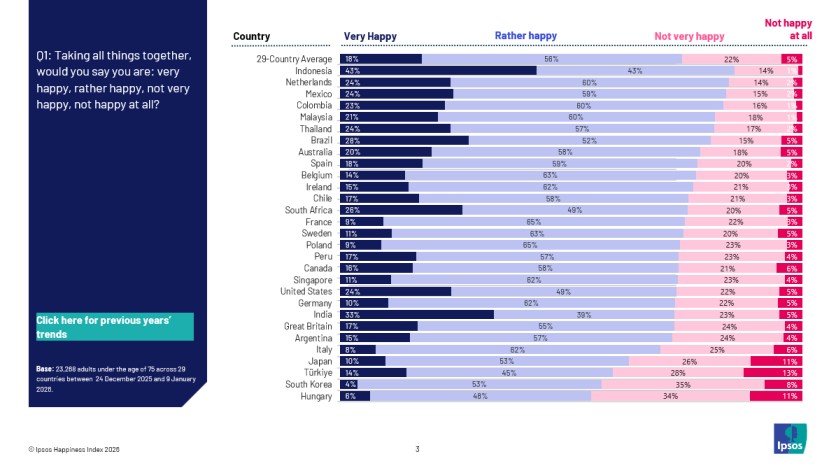
Global happiness levels vary widely, with emerging markets reporting higher “very happy” scores compared to developed economies
Source: Ipsos Happiness Index 2026
Globally, emotional and social connections continue to dominate happiness drivers. Feeling appreciated and loved (37%) and family and children (36%) rank highest across markets.
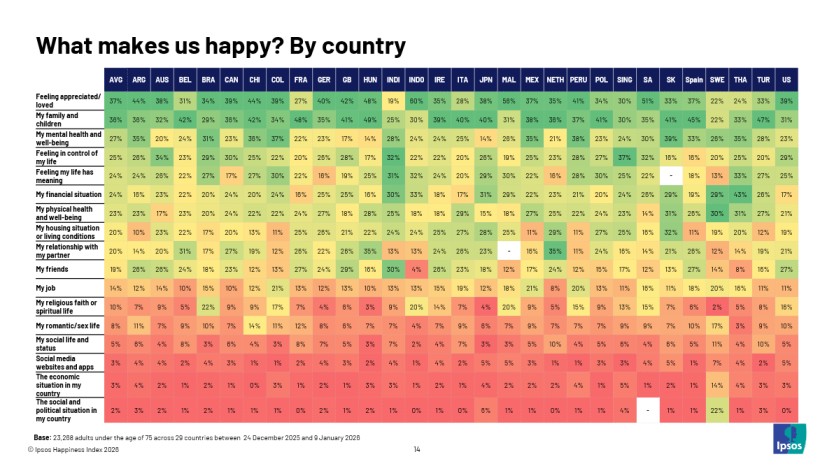
Feeling appreciated, family and emotional well-being rank as the top drivers of happiness across countries
Source: Ipsos Happiness Index 2026
At the same time, financial stress remains the single largest contributor to unhappiness worldwide, cited by 57% of respondents, reinforcing the link between economic stability and overall well-being.
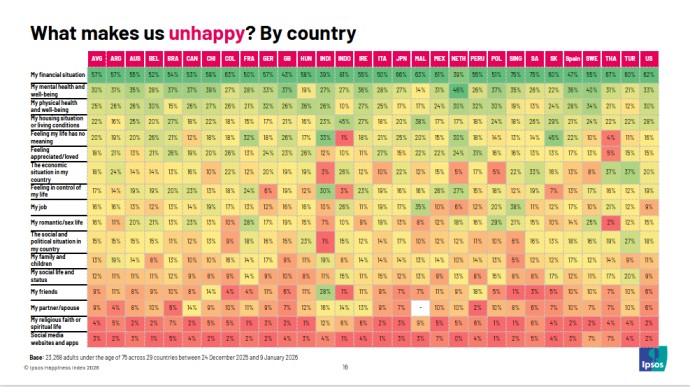
Financial stress remains the leading cause of unhappiness globally, followed by lack of meaning and control in life
Source: Ipsos Happiness Index 2026
Commenting on the findings, Suresh Ramalingam, CEO, Ipsos India, said,
“India’s happiness narrative is deeply tied to resilience in the face of ongoing macro challenges. Financial security, a sense of purpose, strong social connections, and mental and physical well-being are central to how Indians experience happiness today. Crucially, the absence of these factors can quickly reverse that experience.
In an environment shaped by global uncertainties, economic pressures, and the dual impact of emerging technologies like AI, both as a value creator and a disruptor, individuals are navigating a delicate balance.
Financial instability, in particular, has a cascading effect across all aspects of life. These pressures, combined with broader global disruptions, have contributed to the noticeable decline in happiness levels this year.”


