











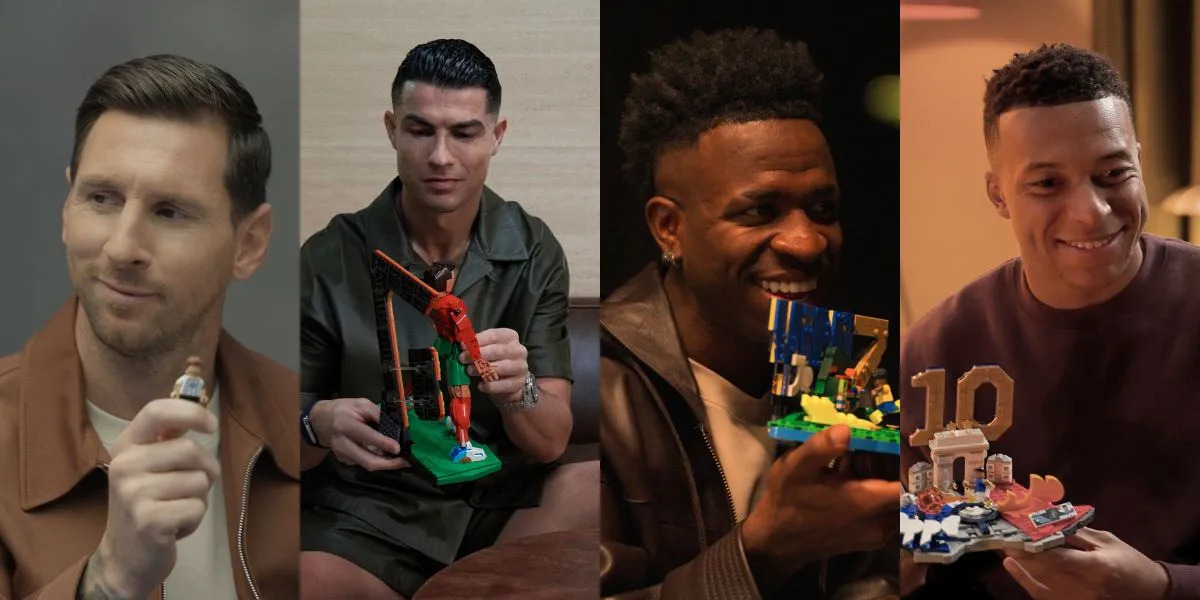
Mumbai: The Lego Group has pulled together Lionel Messi, Cristiano Ronaldo, Kylian Mbappe and Vinicius Junior for a campaign built around FIFA World Cup 2026, co-hosted by the United States, Mexico and Canada.
Seeing all four on the same stage, outside of a Ballon d'Or ceremony or a Champions League fixture, is rare enough to register. Lego has used that novelty deliberately, anchoring a product launch to a moment of peak global football attention.
What the campaign film does
The ad film places the four players around a table, building a Lego version of the World Cup trophy. What unfolds is a contest of ego and playfulness, each trying to outdo the other, a direct nod to the rivalries that have defined their careers.
The pivot comes at the end. A young boy steps in, finishes the build, and places his own personalised minifigure on top. In that single moment, the story moves from elite competition to something far more universal. It is a clean piece of brand storytelling, and very much in Lego's register.
Source: @lego_group | FIFA World Cup 2026 Campaign Film
The narrative shifts from elite competition to universal play, and that interplay is exactly where Lego has always lived.
The Editions collection and what it includes
The film anchors a wider product launch. Lego's new Editions collection reimagines each footballer as an official minifigure, extending a line the brand began with its World Cup trophy build set, released in January 2026.
Within the collection, the Football Highlights sets offer stylised snapshots of each player, mounted on letter-shaped bases that correspond to their initials. The product detail is considered: national team colour palettes, jersey numbers, collectible plaques, and a player minifigure are all included in each set.
The design logic is straightforward. Lego is positioning collectibility alongside fandom, making the product work both as a display piece and as something to build. The minifigure in each set is the bridge between the two.
Lego is using one of sport's most watched moments to sit at the intersection of football culture and childhood imagination, a space few toy brands have occupied this deliberately.
Why this campaign reads as more than a licensing deal
Lego has done footballer licensing before. What makes this different is the narrative frame. Rather than positioning the players as trophies to be collected, the Editions line pivots to celebrating the individuals who have shaped the sport. The film reinforces that shift.
It also builds on existing momentum. The World Cup trophy set from January performed well as a cultural product, not just a toy. This campaign extends that positioning into the player IP space, ahead of the tournament itself.


