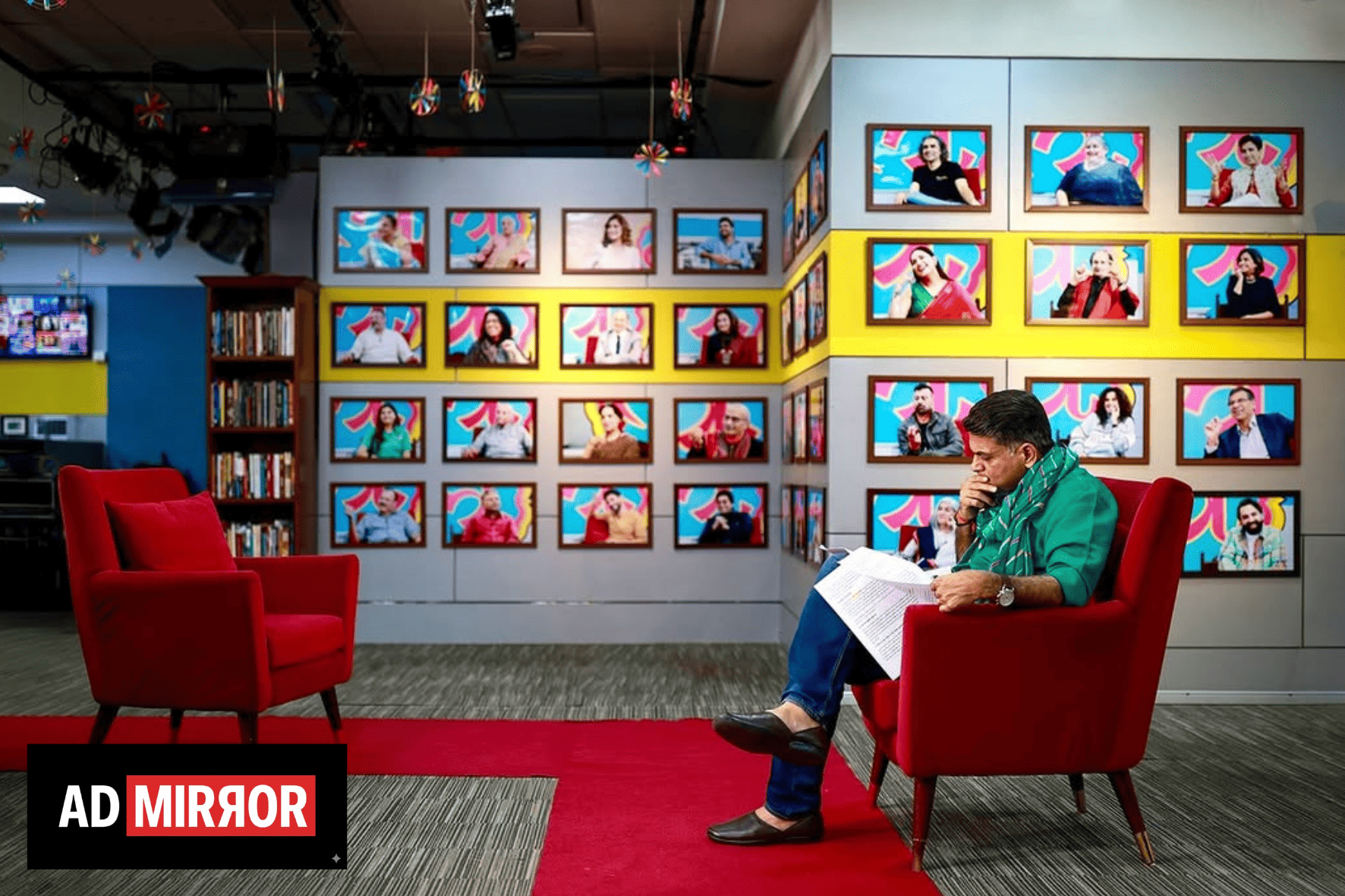
MUMBAI: Saurabh Dwivedi’s exit from the India Today Group closes a 12-year chapter that reshaped Hindi digital journalism. Beyond Lallantop’s popularity, his journey offers key lessons for media companies navigating scale, credibility, and youth audiences in a platform-first era.
Why Saurabh Dwivedi’s exit matters to the media industry
Saurabh Dwivedi’s decision to move on from the India Today Group is more than a leadership transition—it marks the end of one of Indian digital media’s most instructive experiments. Over 12 years, Dwivedi helped demonstrate how editorial credibility, platform-native storytelling and scale can coexist, particularly in the Hindi news ecosystem.
At a time when digital journalism is increasingly shaped by algorithms, speed and monetisation pressures, the Lallantop story stands out for what it chose not to do.
Lallantop: A business-editorial bet that paid off
When Lallantop was launched, Hindi digital news was largely driven by volume-led traffic models and high-decibel content. Dwivedi’s approach was a strategic departure—build habit, not hysteria.
The editorial thinking was clear:
Conversational Hindi without dumbing down content
Explainers and interviews over constant breaking news
Trust and recall over short-term virality
From a business perspective, this positioning helped Lallantop emerge as a distinct brand within the India Today Group—one that advertisers could associate with credibility, youth reach and depth, rather than just scale.
Understanding platform behaviour, not chasing It
One of Dwivedi’s key contributions was recognising early that digital news consumption would be platform-first—especially on YouTube and social feeds—but that editorial tone couldn’t be dictated entirely by platform incentives.
Shows like The Lallantop Show proved that long-form, context-driven conversations could thrive even in a scroll-driven environment, provided the storytelling was authentic and well-paced.
For the industry, this was an important signal: attention is not just about duration; it’s about trust.
Talent, Culture and Sustainability
Beyond content, Dwivedi’s leadership helped create a newsroom culture that balanced experimentation with editorial discipline. Lallantop became a training ground for journalists fluent in digital storytelling, camera-facing formats and audience engagement—skills increasingly critical for modern newsrooms.
In an environment where burnout and churn are common, building a stable editorial culture was itself a competitive advantage.
What his departure signals for media companies
Dwivedi’s exit comes at a time when Indian media companies are reassessing:
Platform dependence
Monetisation beyond traffic
Audience trust in an AI-accelerated content ecosystem
His journey underscores a larger lesson: brands in news are built over time, not through formats or features. Leadership clarity, editorial patience and consistency remain decisive differentiators.
The Lallantop Legacy
As Dwivedi steps away from India Today, he leaves behind:
A scalable model for Hindi digital journalism
Proof that credibility can be commercially viable
A blueprint for engaging younger audiences without compromising seriousness
For an industry often chasing the next disruption, the Lallantop story is a reminder that sustainable media brands are still built the old-fashioned way—through trust, leadership and a clear point of view.
NEWSLETTERS
By submitting your email, you agree to our Terms of Use and Privacy Policy. You may opt out anytime by clicking 'unsubscribe' from the newsletter.